A Voice on Paper: 50 years of Moluccan magazines
With the relaunch of Marinjo, a familiar voice returns to Moluccan Netherlands. Since the 1970s the magazine has offered room for stories, opinion and culture – and now it is gaining a new generation of writers and readers. That revival raises the question: which voices came before it?
The archives of Museum Maluku hold countless magazines that can answer that question – or raise new ones. Small bulletins, publications by youth organisations, churches and political movements offer insight into the ways Moluccan communities in the Netherlands have developed over the past decades. From magazines about political ideals and "loyalty" to publications focused on connection, emancipation, identity and cultural pride.
What can eleven issues, spread across fifty years, tell us about the Moluccan community in the Netherlands? And how do we see in them the search to preserve one's own story – then and now?
1950-1960: De Stem van Ambon and Mena Muria
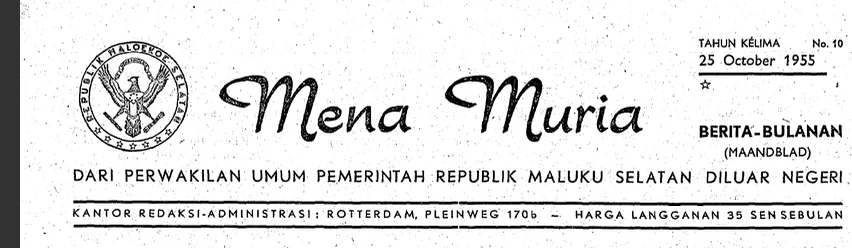
Around 1950 the first Moluccan magazines appear in the Netherlands: De Stem van Ambon (1950) and Mena Muria (1955). These publications reflect the ideals and expectations of a community in motion. Where De Stem van Ambon still speaks confidently about the bond with the Netherlands, Mena Muria already carries the disappointment over promises that were not kept.
"And now I would like to know whether those little rooms still have cabinets with portraits in them… Is there a single sideboard in the Netherlands with so many portraits of the House of Orange?"— De Stem van Ambon, no. 5 (1950)
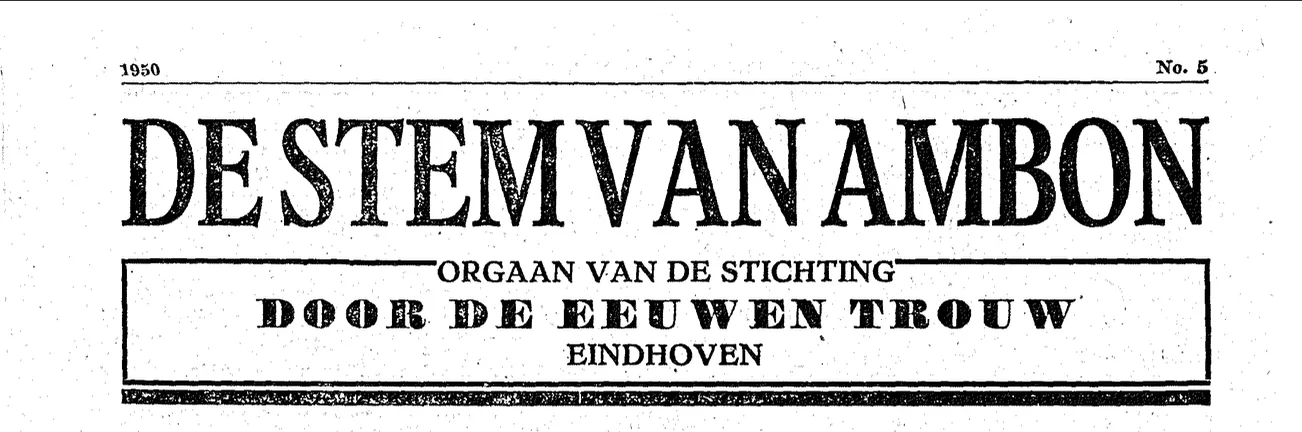
De Stem van Ambon appears shortly before the arrival of the Moluccans in the Netherlands. The magazine is steeped in political idealism and tries to win support for the dream of an independent South Moluccan state. The tone is loyal and respectful towards the Netherlands. The writers stress the Moluccans' loyalty to the royal house, hoping in this way to win the sympathy of the Dutch public for the RMS ideal.
Five years later, Mena Muria strikes a different note. The magazine, published by the P.P. B.P.R.M.S. in Rotterdam, shows that trust in the Dutch government has sharply declined. The community, by now settled in the Netherlands after the dismissal of the Moluccan KNIL soldiers, feels abandoned. The struggle for a republic of their own continues, but without the help they once counted on.
1960-1970: Tanuar, Pertemuan and the ICCAN-Brief
Around 1960 the first version of Tanuar appears, calling itself with some pride "the smallest bulletin in the world". The magazine presents itself as a weekly binding agent for the Moluccan community in the Netherlands and tries to bridge the self-declared divisions between South Moluccan organisations such as the BPRMS and the PPKM.
"But wishes to serve only the general interest. Tanuar supports the RMS (ideal), which is our just aspiration."— Tanuar, no. 1 (1960)
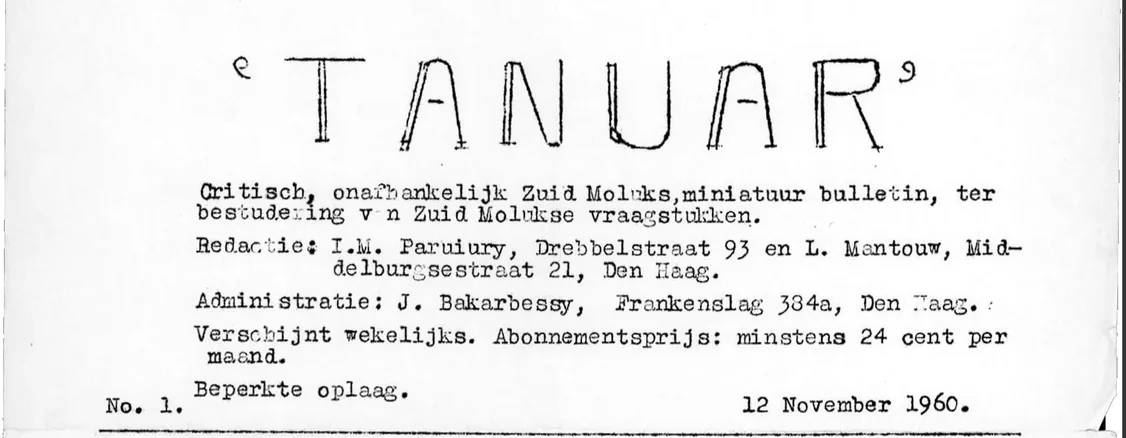
Although Tanuar endorses the RMS ideal, the magazine's tone is strikingly open and unifying. Rather than spreading party political positions, it invites readers to share ideas and reflect together on the future of the Moluccan community. In that way Tanuar marks the beginning of a shift: from political struggle to community building.
In the 1960s the position of Moluccans in the Netherlands changes profoundly. What was once seen as a temporary stay turns out to be permanent. The Dutch government encourages integration and promotes the move to Moluccan neighbourhoods. That change is reflected in the media of the time.
"Parents of Ambonese children attending vocational education can qualify for a contribution towards the costs in the same way as Dutch parents."— Pertemuan, June 1965
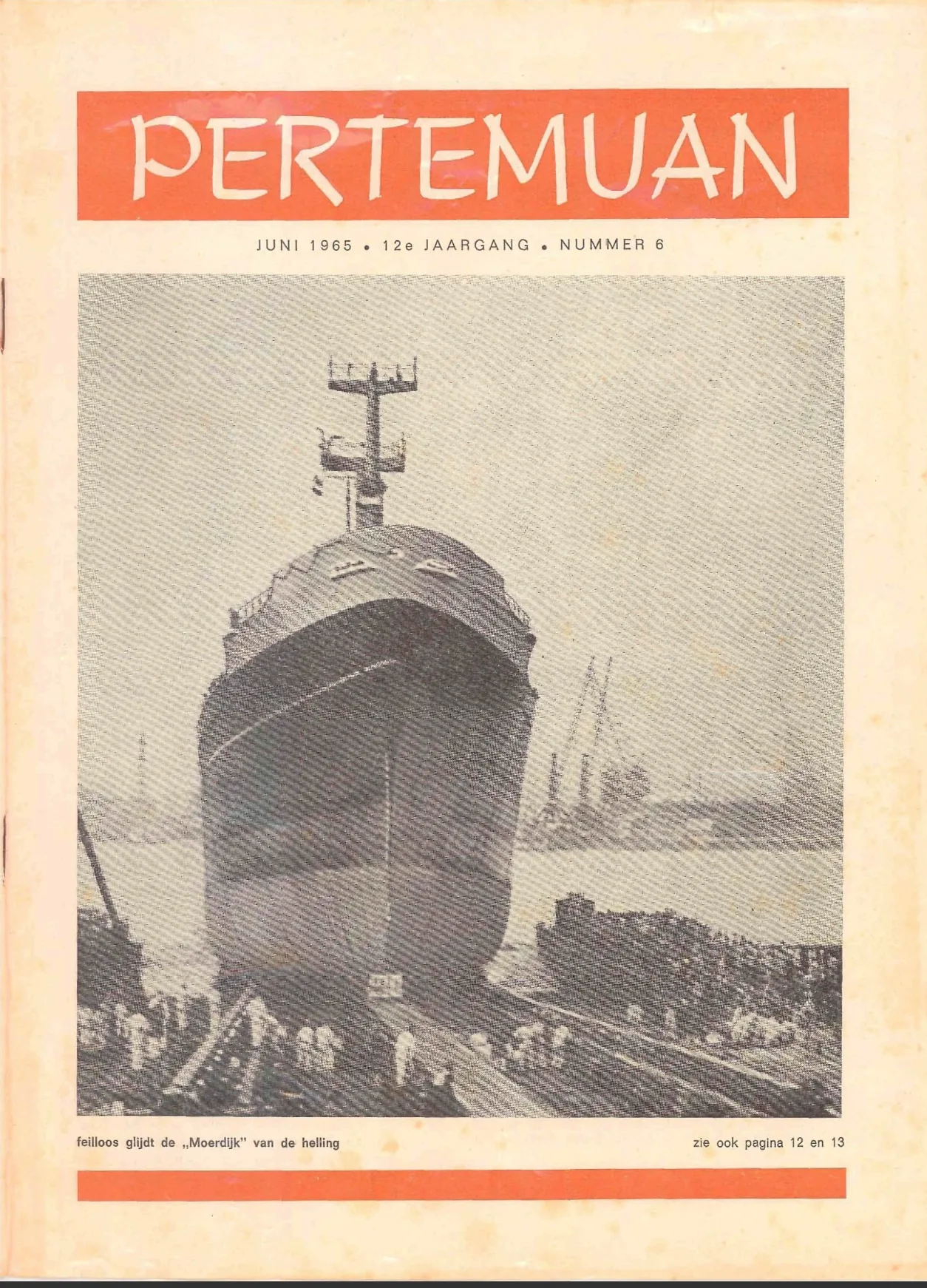
The magazine Pertemuan (1965) shows how attention shifts from politics to daily life. The content is practical: recipes, advice on raising children and news from the neighbourhoods. The name Pertemuan, or 'gathering', suits the magazine's aim: fostering connection within a community that is settling in the Netherlands.
In 1970 the ICCAN-Brief appears, published by the Interchurch Contact Committee Ambon and the Netherlands. This magazine places a strong emphasis on faith, social responsibility and integration. The committee tries to strengthen the bond between Moluccans and Dutch people by fostering mutual understanding. The ICCAN-Brief discusses themes such as unemployment, raising children and religious life, and offers practical information about churches, aid organisations and social initiatives.
"Alongside the Dutch people, another people lives in the Netherlands, the people of the South Moluccans… This situation is not easy for the South Moluccans."— ICCAN-Brief, September 1970
The tone of the issues in this period is more realistic and milder than in the 1950s. The emphasis is on integration, community and faith: signs of a society seeking and keeping its place within a lasting existence in the Netherlands.
1970-1980: De Zuidmolukker and Zelfbeschikking
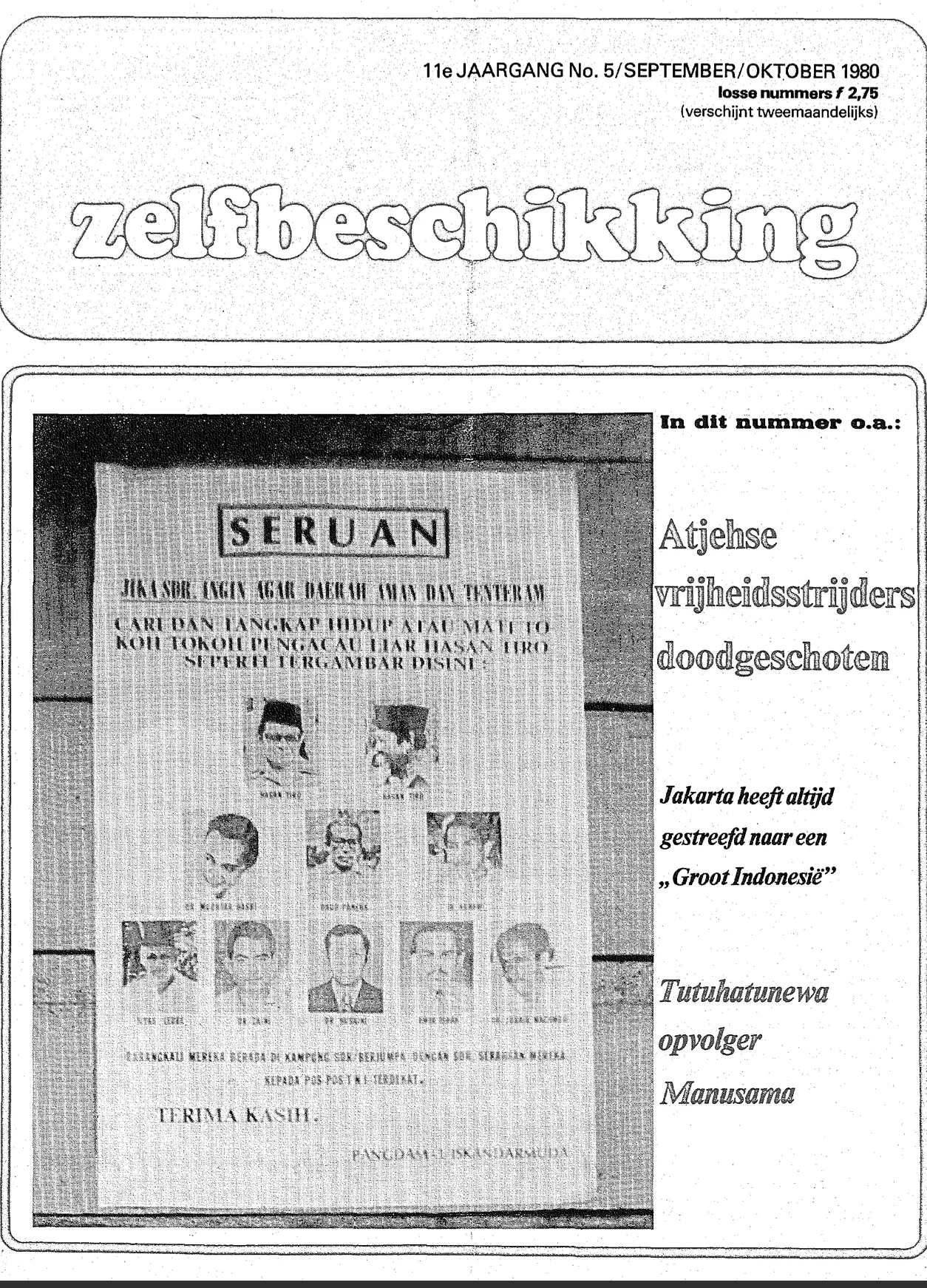
In the 1970s a sharper tone sounds again in the Moluccan community. The second generation grows up in the Netherlands but still feels excluded. The promise of a temporary stay has gone, and dissatisfaction with their position, especially among unemployed young people, grows. Magazines such as De Zuidmolukker (1975) and Zelfbeschikking (1980) show how this generation takes a politically conscious stance.
"The relatively comfortable life in the Netherlands is a temporary favour. We must prepare ourselves for simpler living conditions."— De Zuid-Molukker, October/November 1975
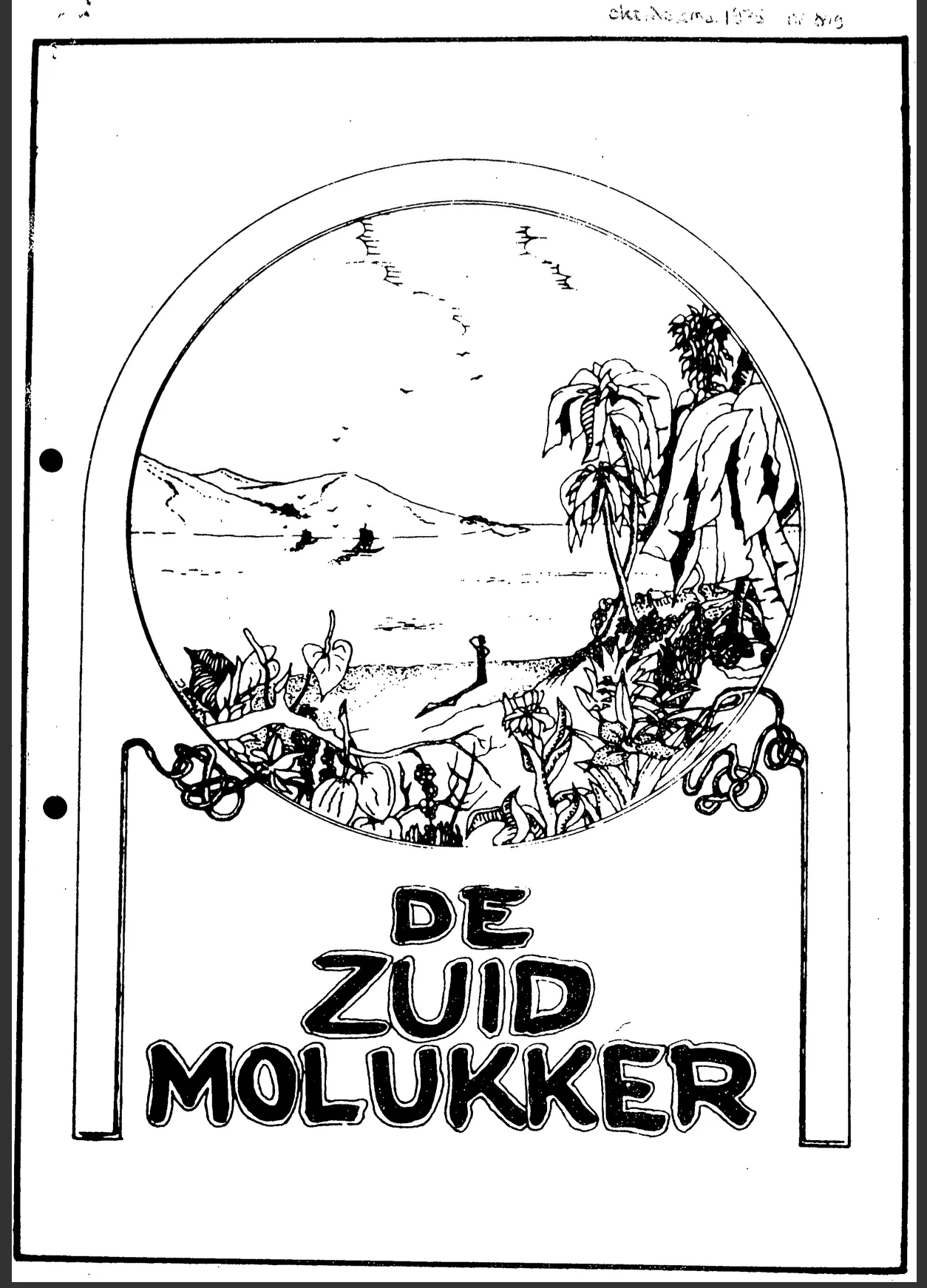
De Zuid-Molukker is outspokenly political and calls for renewed commitment to an independent Moluccan state. The magazine, written by the RMS government in exile, addresses the younger generations and wants to involve them in the struggle for independence.
Around the same time Zelfbeschikking appears, combining political engagement with social involvement. As the successor to De Stem van Ambon, the magazine broadens its view to other freedom movements, such as in Aceh, and deals with themes such as integration, identity and education within the Moluccan community. Through contributions by several Moluccan writers, Zelfbeschikking offered a broader and more representative picture of the community.
The tone of this period is forceful and self-assured. The second generation makes itself heard, determined to find its place in the Netherlands and within its own history. At the same time the echo of the 1950s remains palpable, with the continuity of organisations and their magazines as a binding agent for the community.
1980-2000: Tjengkeh, Cakalele, Berita Rela and Surat Berita
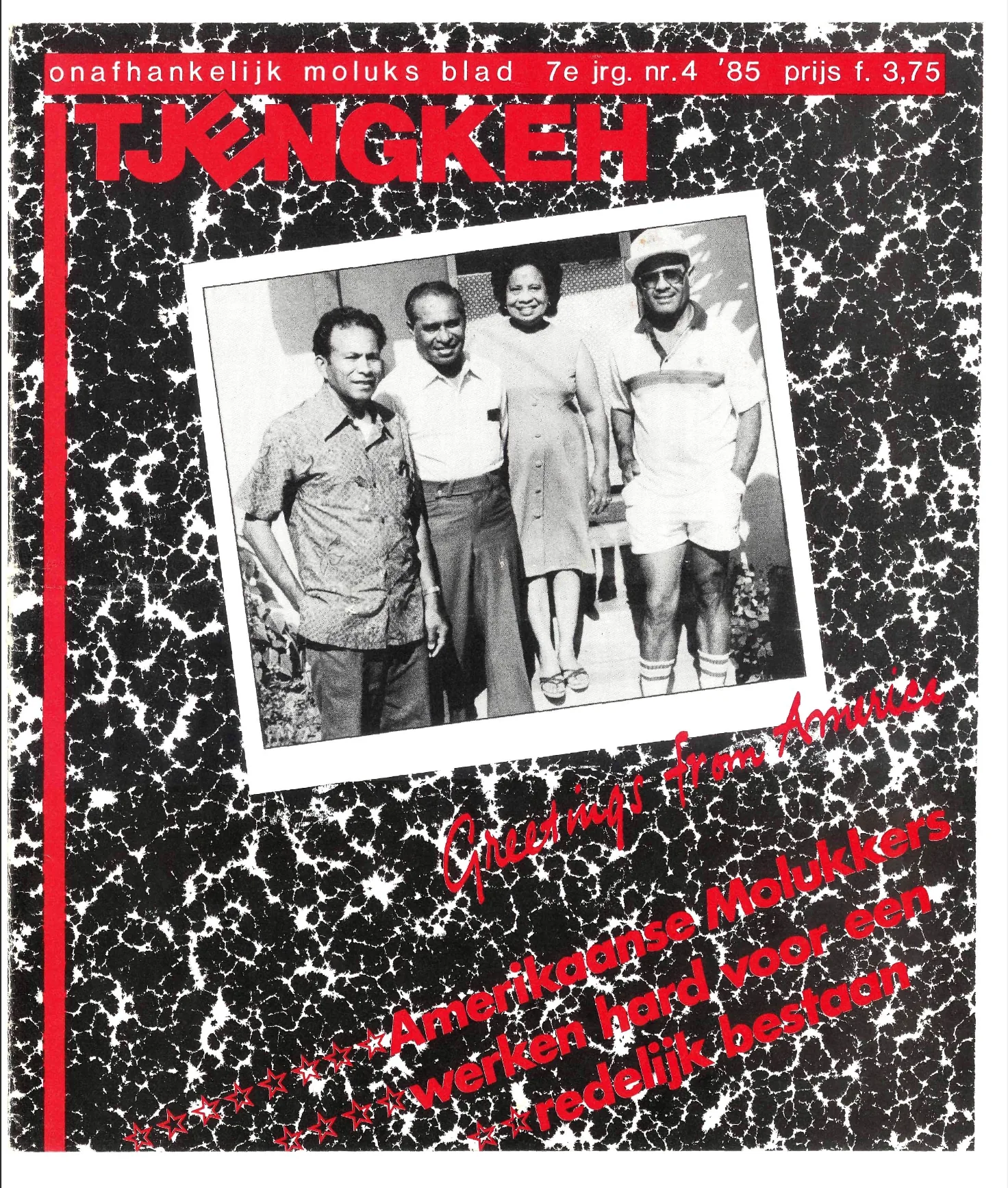
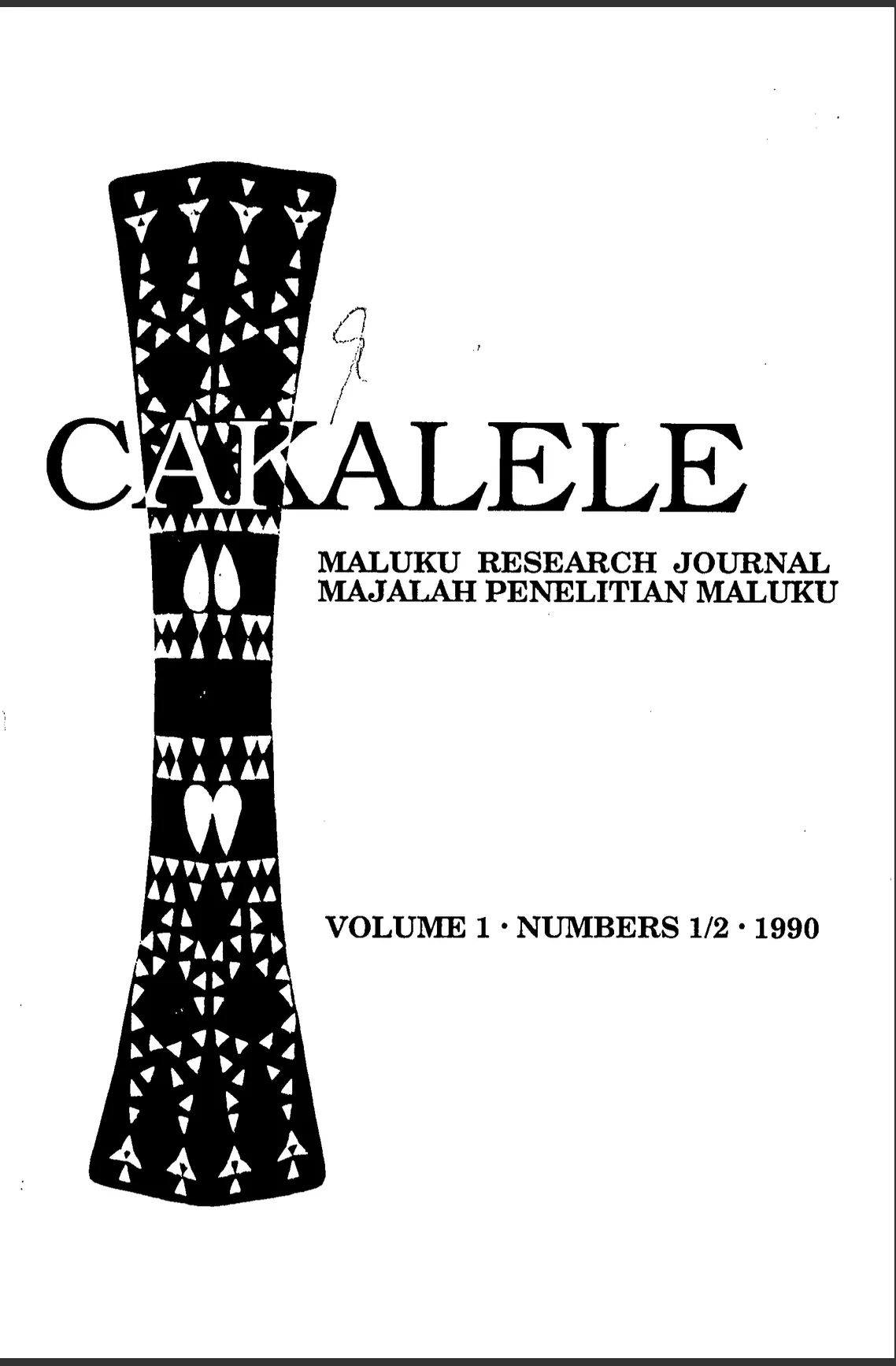
From the 1980s on, attention shifts from political struggle to cultural identity and connection. Magazines such as Tjengkeh (1985), Cakalele (1990), Berita Rela (1995) and Surat Berita (2000) show that the Moluccan community in the Netherlands is no longer looking only at what has been lost, but also at what can be built.
Tjengkeh, put together by a young Moluccan editorial team, focuses on culture, music and the position of Moluccan women, among other things. The magazine speaks above all to the younger generation and reflects their own interests and initiatives. This can be seen in various articles in the magazine, such as:
*Back from Eternity is firmly established in the music market *
*Women in politics; Ketorang musti ampun satu dengan lain. *
*New Moluccan Moods is catching on *
Second-generation parents; children must be aware of their own language.
These titles show that the younger generations are interested in subjects that go beyond politics and also focus on music, education and culture.
Cakalele marks a new development: the interest now reaches beyond the Moluccan community. It is a research journal about Moluccan culture and history. With it, Moluccan stories become part of the wider academic and public conversation.
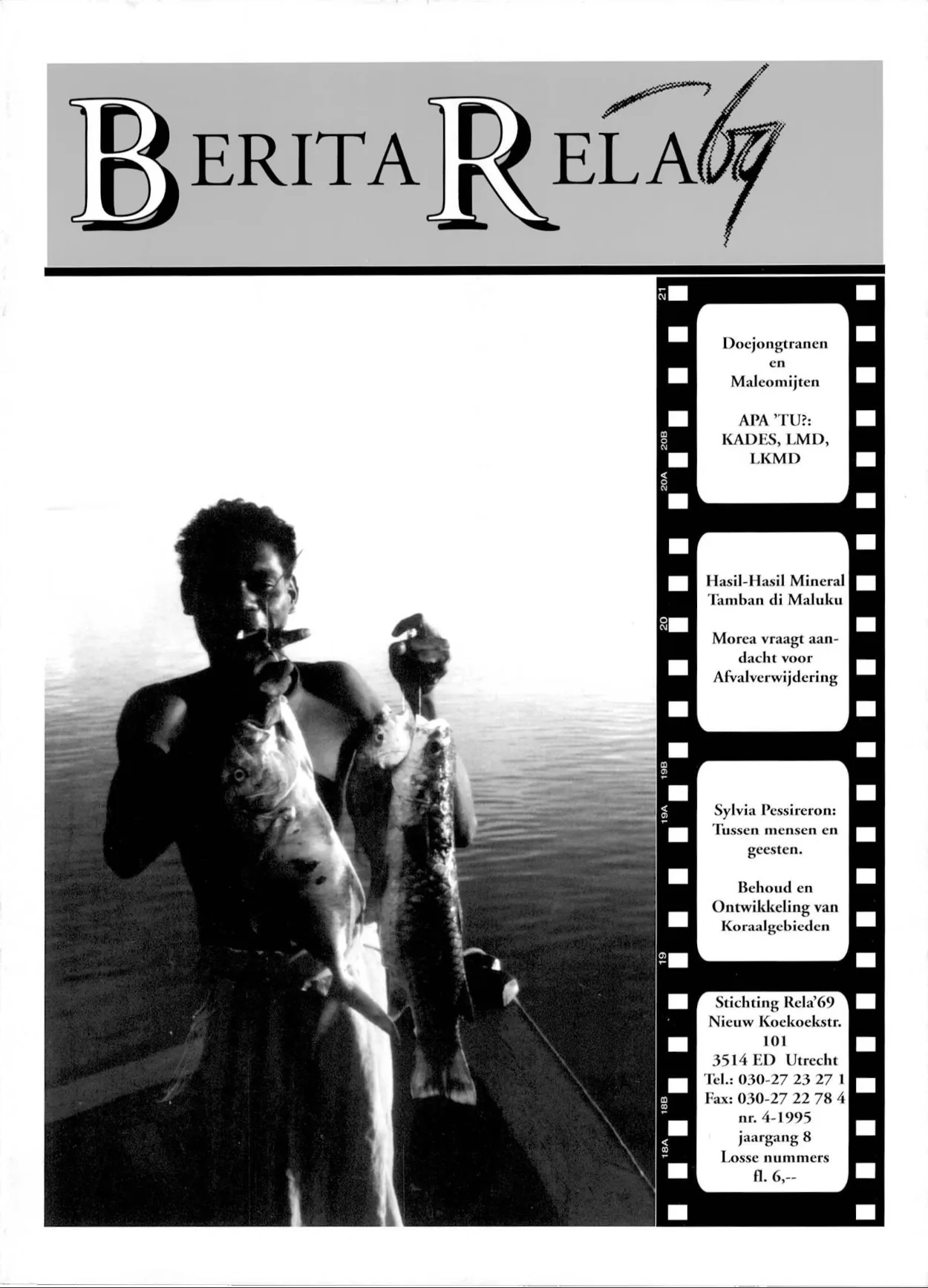
Berita Rela (1995) shows how the community becomes actively involved with the Moluccas themselves. The magazine, connected to the Rela '69 foundation, focuses on development projects and cooperation with villages on the islands. As the foundation puts it:
"We must learn from each other how to set up projects in our own negeri (village) or region." — Berita Rela, 1995
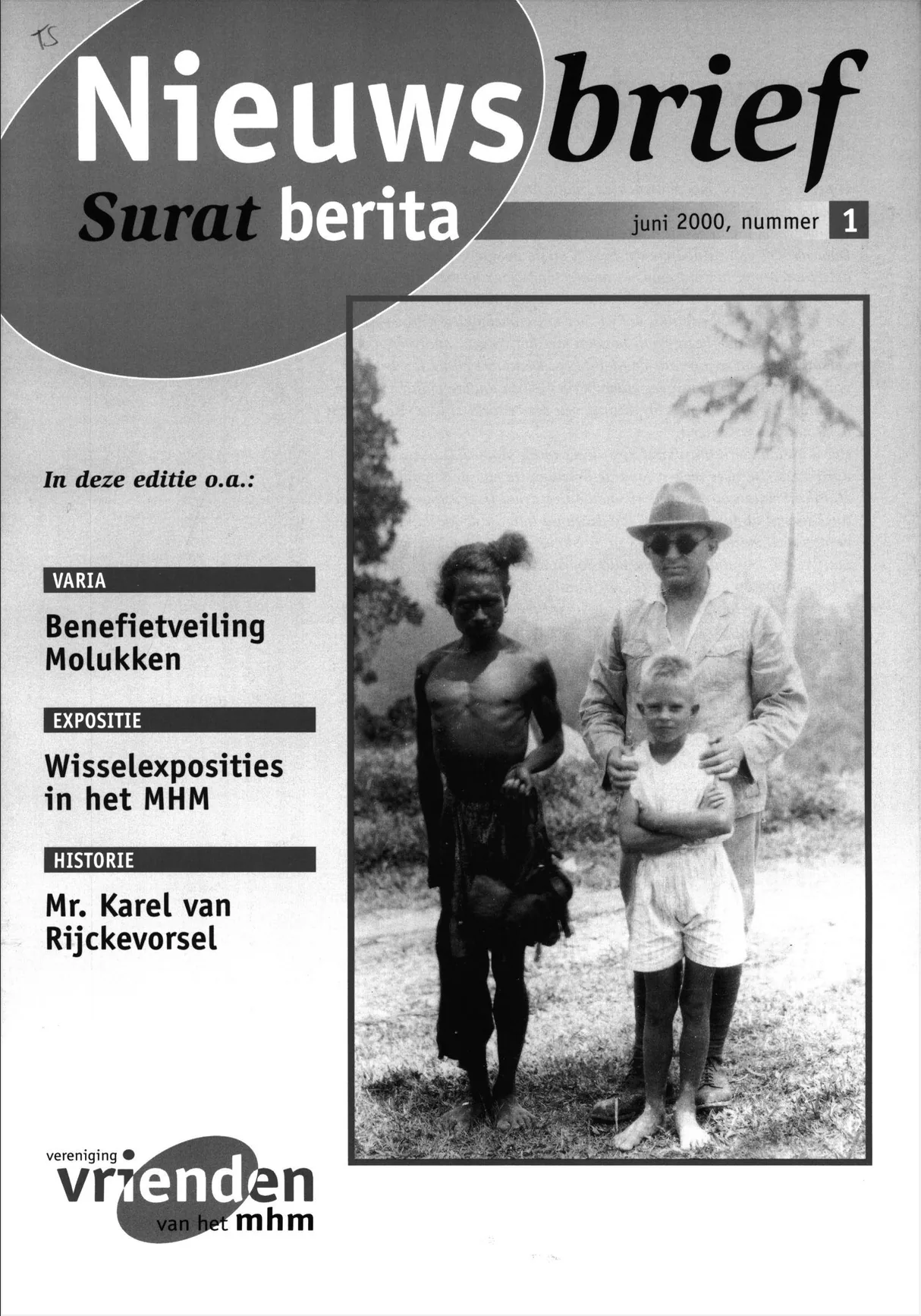
At the end of the century Surat Berita appears, the newsletter of the Moluks Historisch Museum. The magazine documents exhibitions, activities and developments within the community and shows that Moluccan history has by now gained a firm place in the cultural landscape of the Netherlands.
The magazines of this period show a Moluccan community that is better integrated, that shapes its own cultural identity and takes an active part in social and academic conversations. Where political struggle was once central, the emphasis now lies on connection, exchanging knowledge, and preserving and developing Moluccan culture within Dutch society.
2025 – ?
The magazines in the Museum Maluku collection show more than words on paper. They are testimonies of hope, disappointment, struggle, faith, humour and pride. From political pamphlets to culinary columns, together they tell the story of a community that found its voice.
Now that the museum is digitising these archives, more and more of those voices are coming to light again. Every page reminds us that identity is not a fixed given, but something that grows, changes and has to be told anew.
Together, the Moluccan magazines from 1950 to 2000 form a mirror of a community in motion. Each magazine is a piece of a larger story. By preserving and sharing them, we give new generations the chance to keep writing that story, not only in archives but in today's society. Marinjo, with its relaunch, is therefore the newest in a long history.
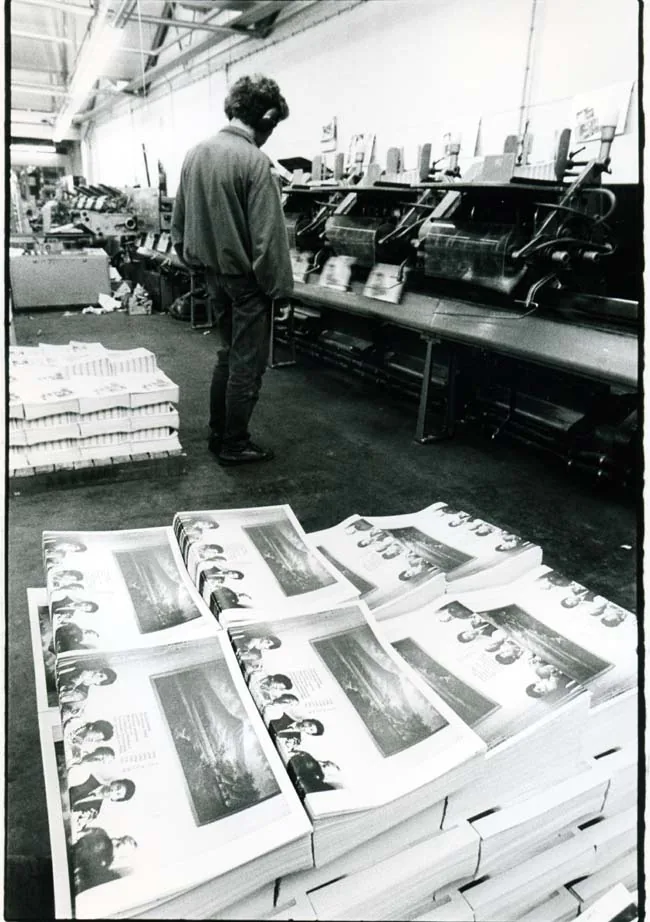
Photo: MME 97.0034
A note for the reader
This article is based on 11 issues of various Moluccan magazines from the period 1950–2000. Although these publications offer valuable insights into the community and its ideals, they form only part of the whole. The magazines used are:
Stem van Ambon, no. 5 (1950)
Mena Muria, no. 10 (25 October 1955)
Tanuar, no. 1 (12 November 1960)
Pertemuan, 12th year, no. 6 (June 1965)
ICCAN-Brief, 8th year, no. 2 (September 1970)
De Zuidmolukker, 5th year, no. 8/9 (October/November 1975)
Zelfschikking, 8th year, no. 5 (September/October 1980)
Tjengkeh, 7th year, no. 4 (1985)
Cakalele, volume 1, no. 1/2 (1990)
Berita Rela, 8th year (1995)
Nieuwsbrief Surat Berita, no. 1 (2000)