Mondays among the archive collection
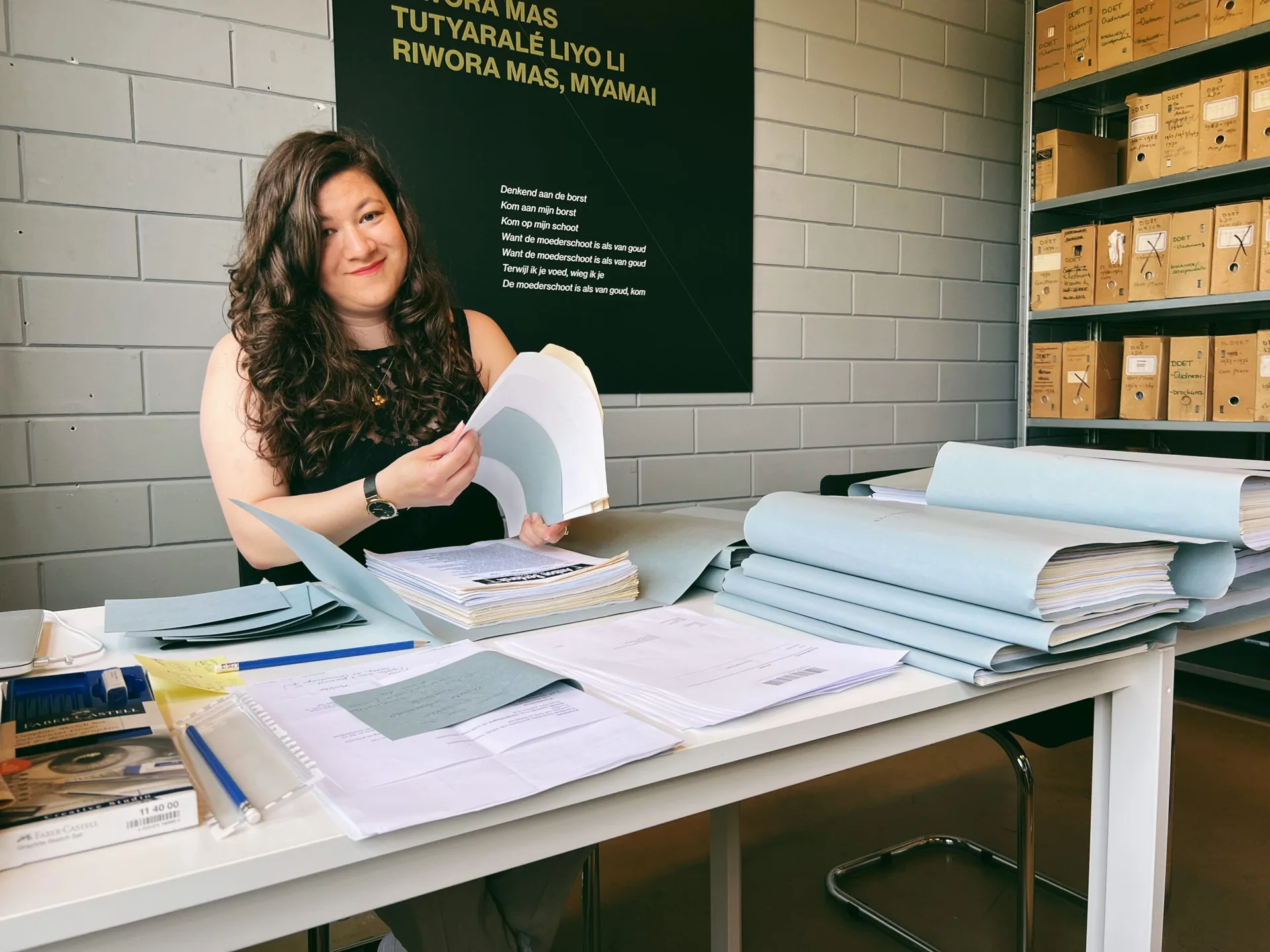
Hello! Let me introduce myself first: my name is Caro Matulessya, I was born and raised near Arnhem but now live south of Utrecht. I have worked for several years as an archivist at the International Institute of Social History (IISG) in Amsterdam, which is also what I studied for, so I officially carry the titles of heritage professional and archivist. In the data and collections department of the IISG I deal with everything to do with archive processing. It may not sound terribly exciting, but it is certainly not boring! Especially when you can put your expertise to work for your own community, which brings me to what I do as a volunteer at Museum Maluku.
Happily among the archive
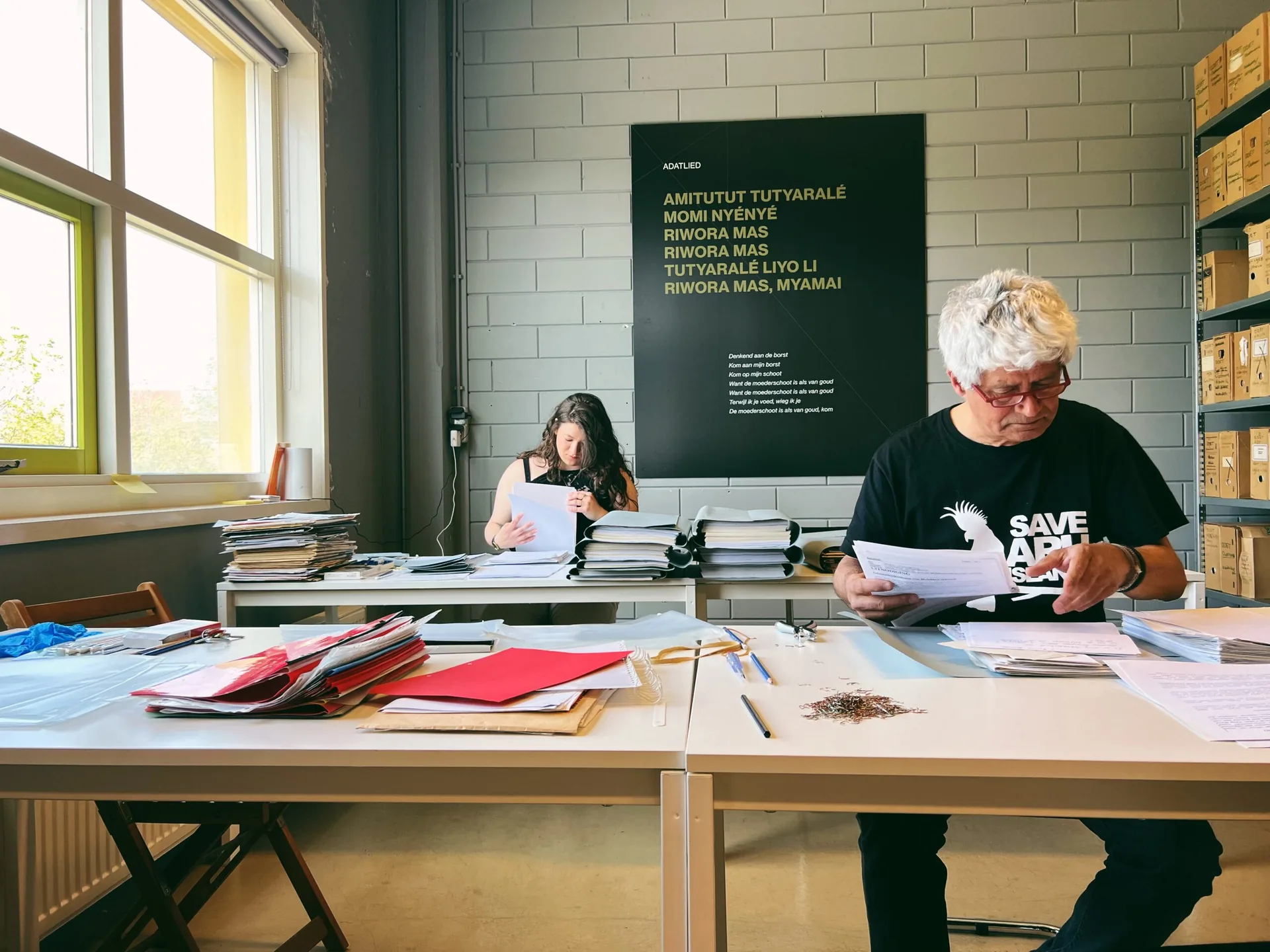
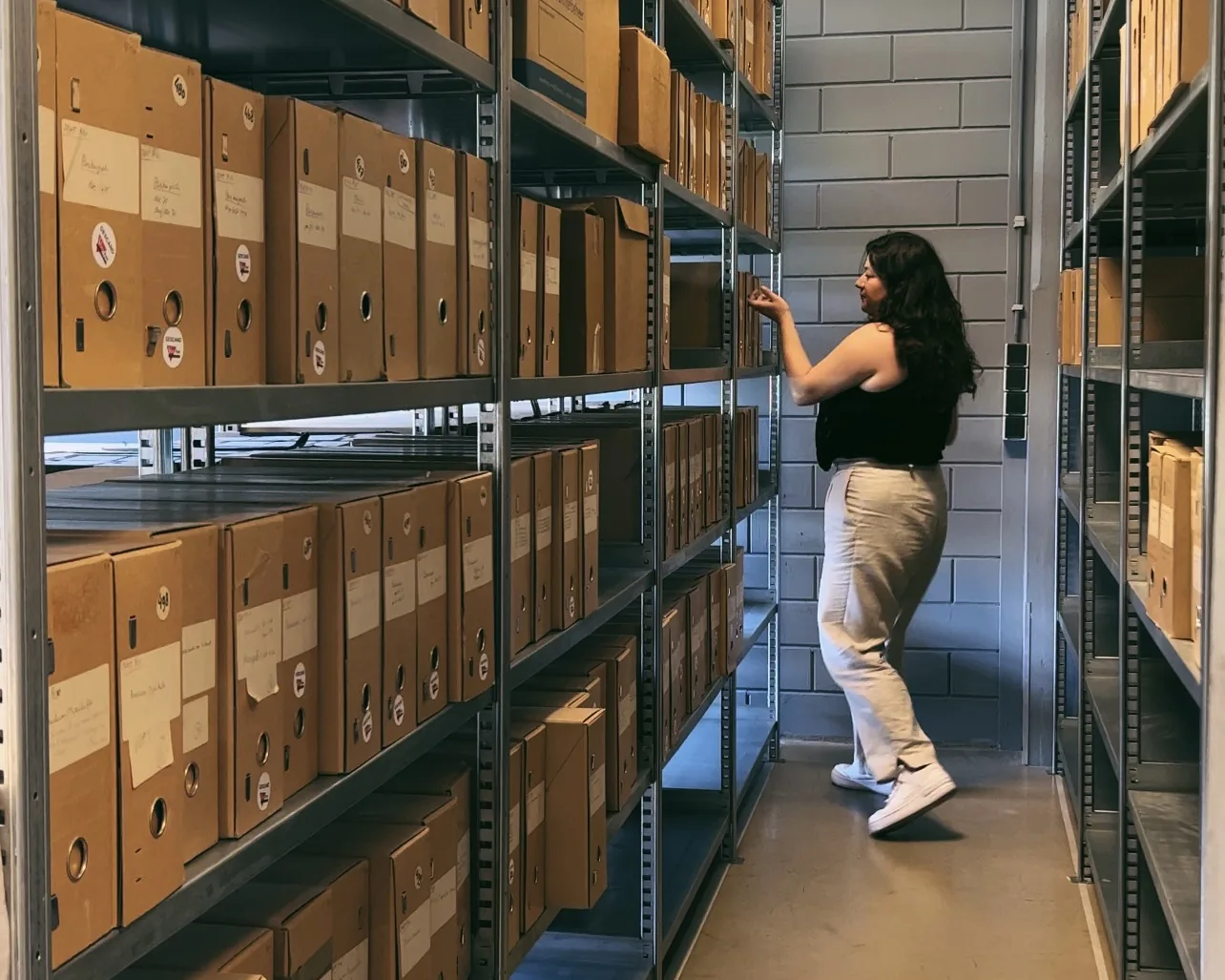
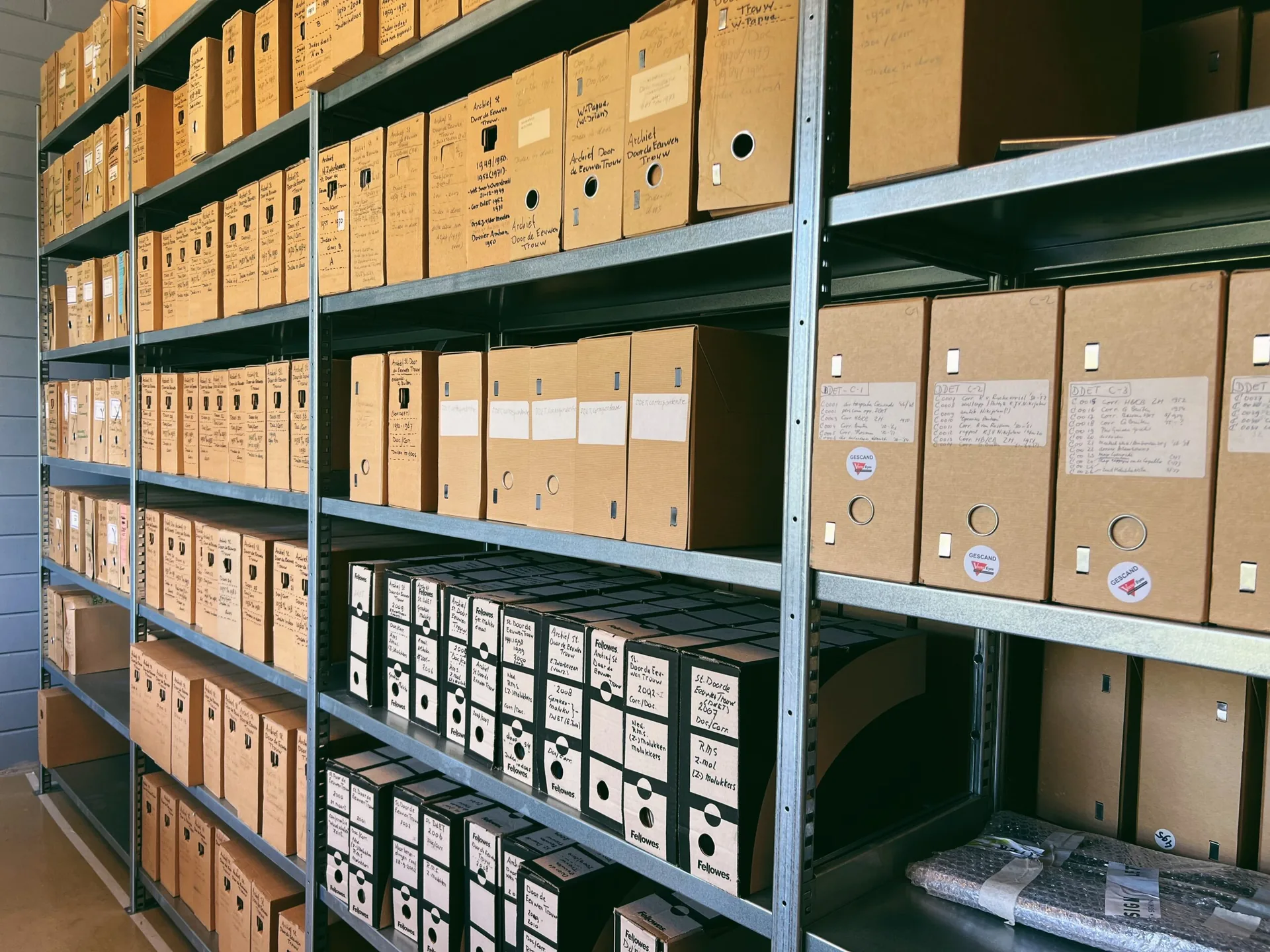
Last year I came into contact with the museum about the collection through the heritage network. In particular about the archive collection, which moved to the Piekstraat in Rotterdam at the end of last year. Because I have (partly) Moluccan roots myself, I was of course itching to offer my help. Provided they needed it. Fortunately they did, and so it happens that (almost) every Monday I can be found happily among the museum's archive collection!
To give you a picture of what exactly I do on such a Monday, I will first have to explain a little about what an archive actually is and why it is so important that it is made accessible to everyone.
What is an 'archive'?
Over the years the archive has had several definitions that can differ entirely or overlap. Within the field, the question 'what is an archive' can spark whole debates on its own, which is of course very interesting for the professional but rather less so for a user. I will therefore spare you the larger debate and limit myself to the definition I find most relevant to the archives of Museum Maluku. To use an archive well, you have to understand what an archive can be and what an archive can do. An archive is documentary material created, received, used and/or preserved by a person, family, organisation, government or other entity in carrying out their daily work and/or life. This material has been preserved because it has value as evidence of, and/or information about, activities and events.
Alongside the value as evidence above, archives have other functions too: an archive can function as a source of knowledge or a historical source, but it can also evoke emotions, bring about recognition and representation, or function as memory. The latter can apply particularly to archives that come from or belong to 'communities' (such as ours). With an archive or a collection of archives, a community can ensure that later generations can draw on what is in effect a 'collective memory', creating feelings of representation and connection. For that you do have to be able to understand the context in which you can, or rather must, place an archive. The context of an archive and its original order are logical and self-evident to the person or body that created it, because they experienced the process themselves. That is less self-evident, however, for a user who knows nothing or little about the creator or the situation in which the archive came about. That is why archives are processed and arranged by archivists and given additional information that can supply as much of that context as possible. That additional information we call metadata. Metadata simply means data about data. Think of the name of the maker of an item, the country or city the item concerns, dates of creation, or the title of a folder in which letters were stored but where the folder itself has not survived. And so on. All this metadata is added so that everyone can look at the content of the archive items through, as it were, 'the same lens', that is, with the same context.
-
-
-
-
In practice
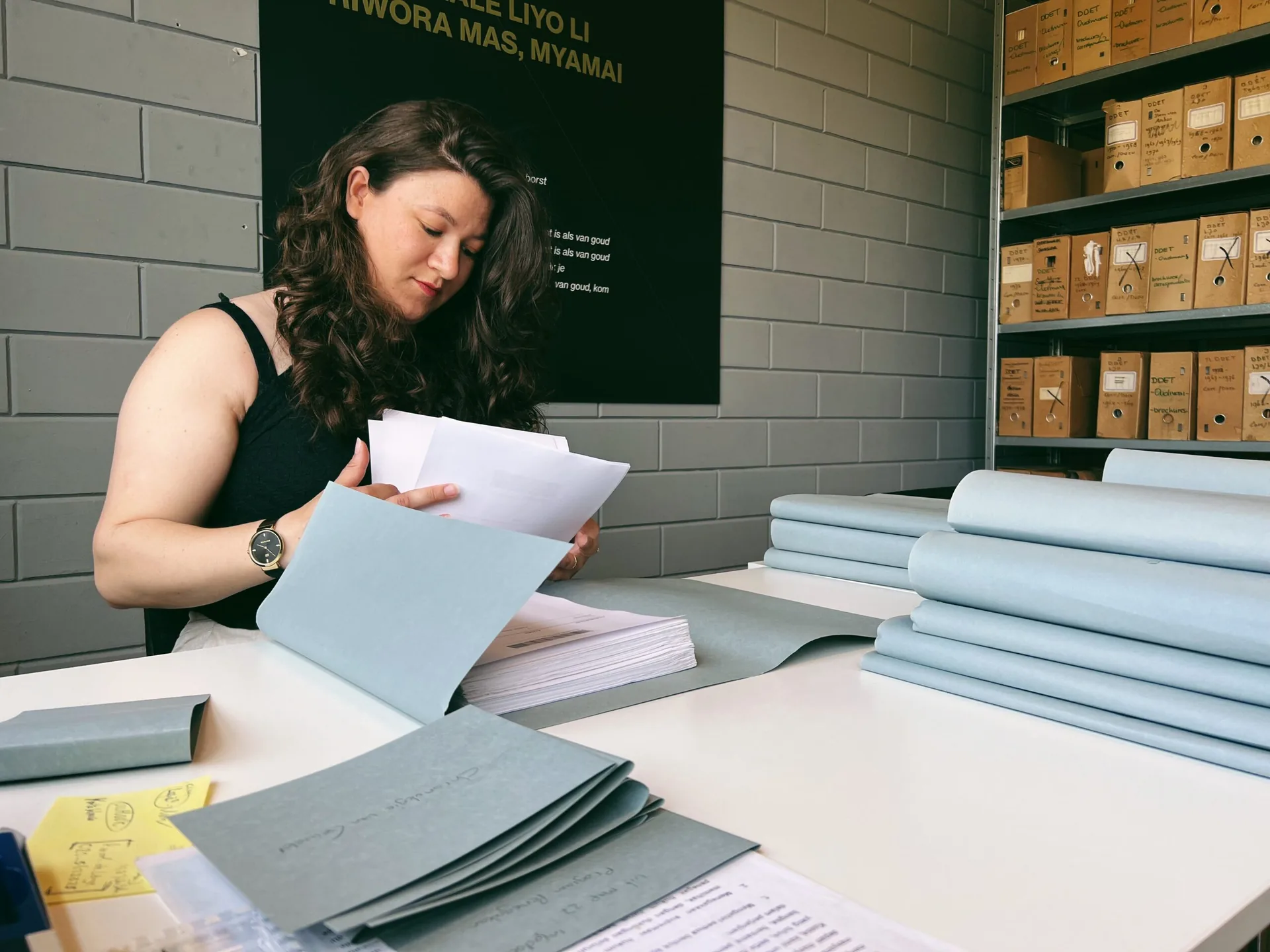
This says nothing, of course, about interpreting the archive. How you interpret the content is entirely up to you, because that is precisely what this processing makes possible. When an archive has been processed we speak of an accessible archive, and that is what in theory I do for the archives of Museum Maluku! In practice it means that I go through a great many documents and constantly try to work out why certain documents lie together, what the purpose of the documents was and when and in what context they were made, used, collected or received by the creator. Because I am also an archivist who is part of the community the archives are about, my work feels extra meaningful, and I hope to make it possible for the coming generations of our community to draw one or more of the functions mentioned above from the archives!
Caro Matulessya Data & Collections Archivist International Institute of Social History