Daylight after years…
**Wooden ancestor figures. Stuffed Moluccan fauna. Hundreds of metres of paper documents… Over the past months, curator Huib Akihary and I have had the privilege of looking through and assessing the entire collection of Museum Maluku. **Since the museum in Utrecht closed in 2012, the sub-collections have been housed at various depots around the country. These sub-collections consist of museum objects, archives, books, photographs and much more. A selection from the complex Moluccan and Moluccan-Dutch history, a history that keeps on growing.
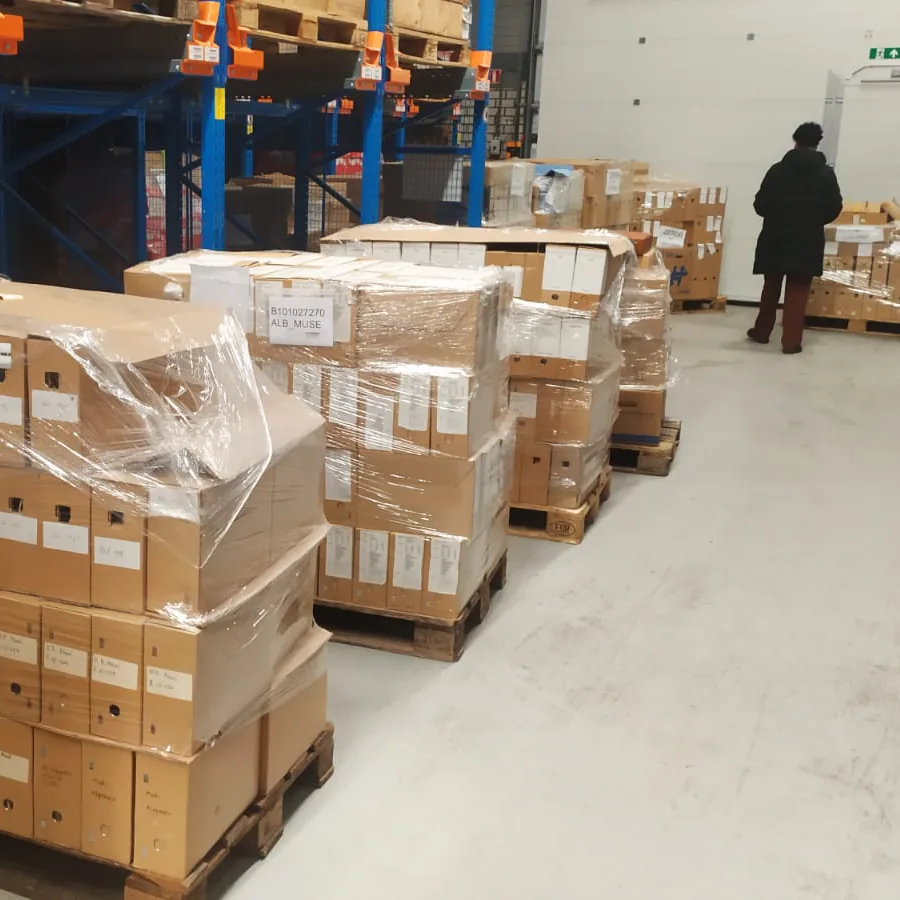
29 pallets full of archive material
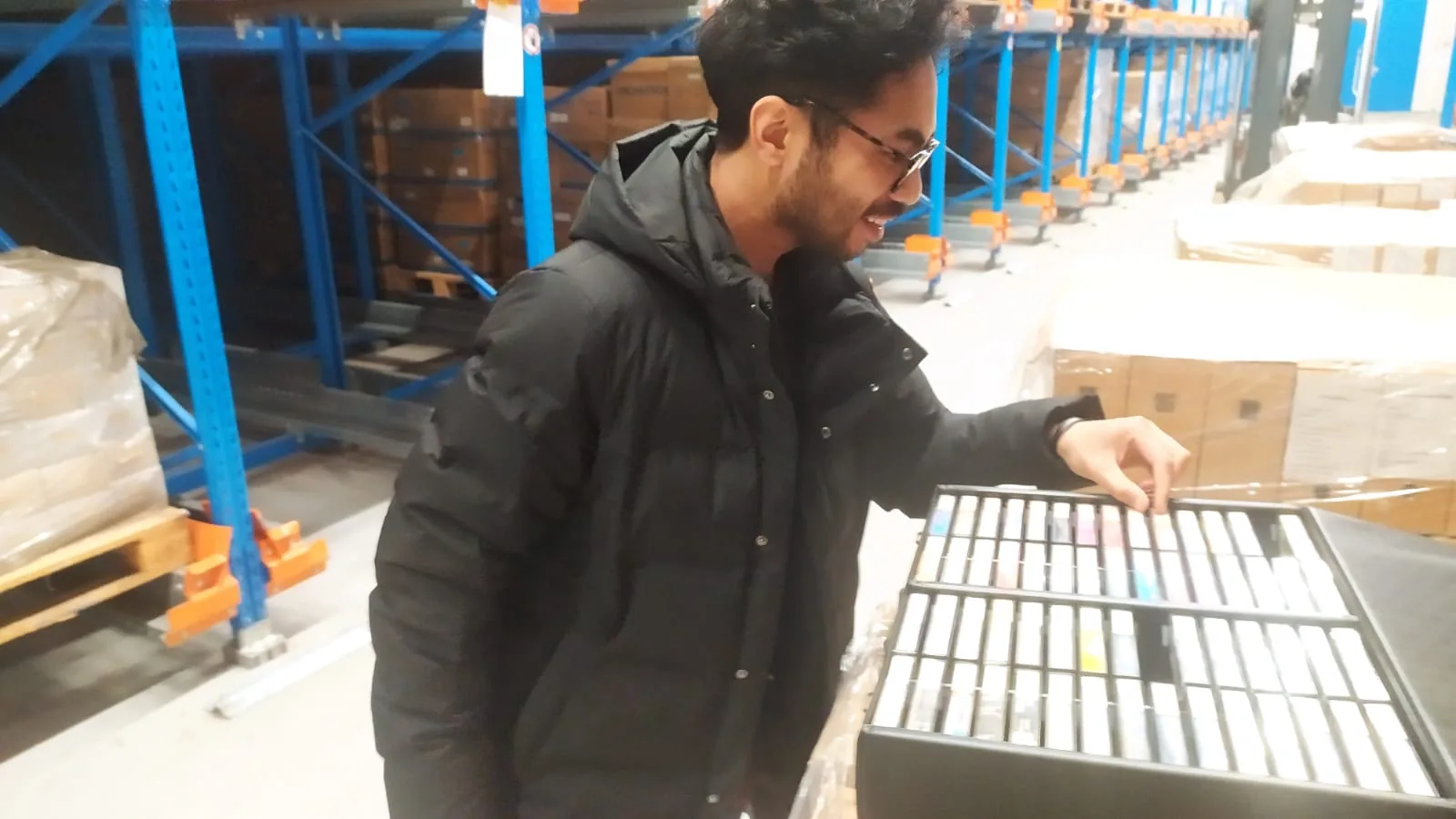
Even from an unexpected direction. After we thought at the end of last year that we had seen everything in our collection, we received word that another 29 (!) pallets of museum objects were stored in one of the depots. Once the arrangements were made, Huib and I set off again last month. Across two visits we went through the 29 pallets filled with archive material. Among these boxes, full of paper documents, we also found cassette tapes, LPs, photographs and various audiovisual carriers. But above all we found archives ranging from personal papers to membership records of old Moluccan organisations.
Read on below the photographs
-
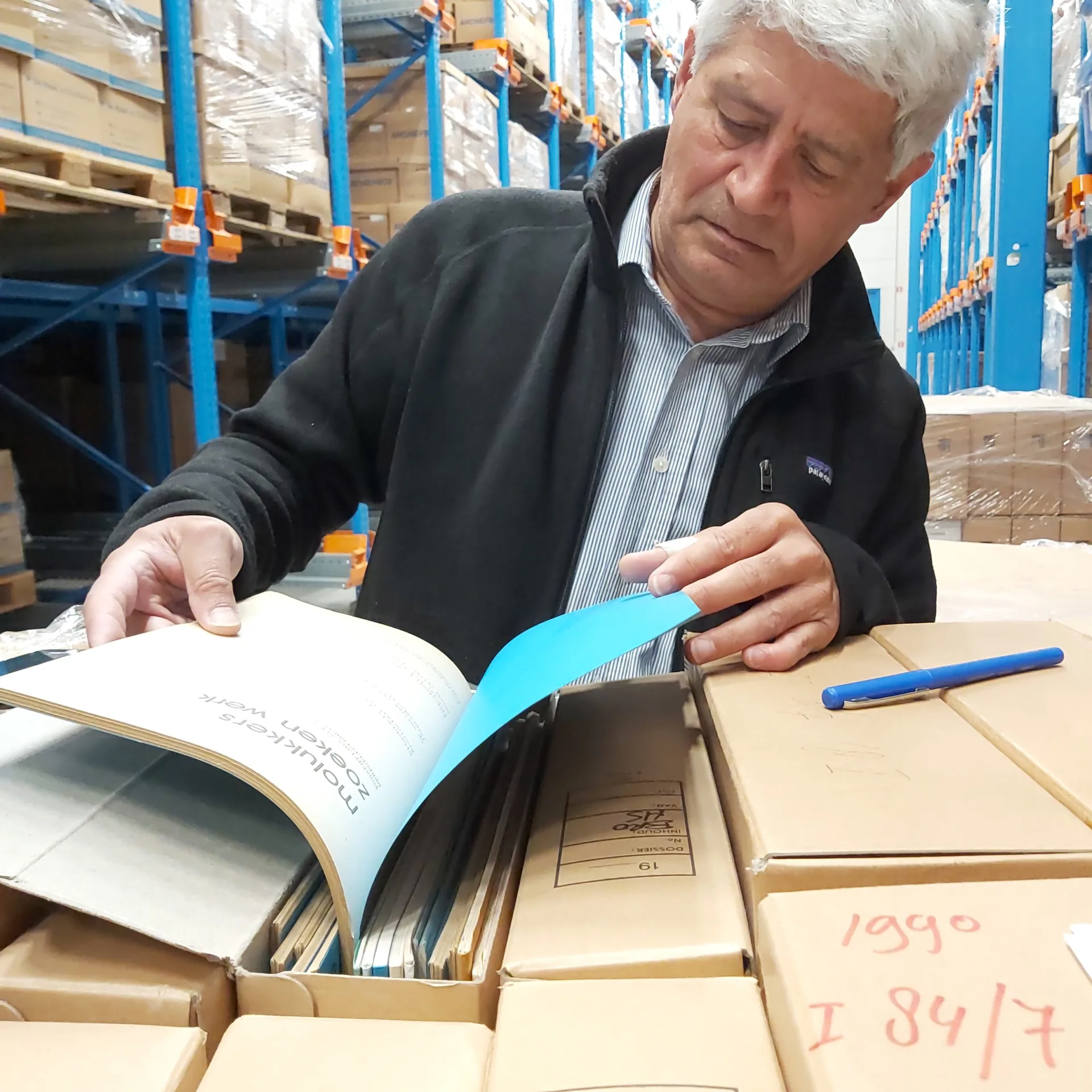
Curator Huib Akihary opens various boxes
-
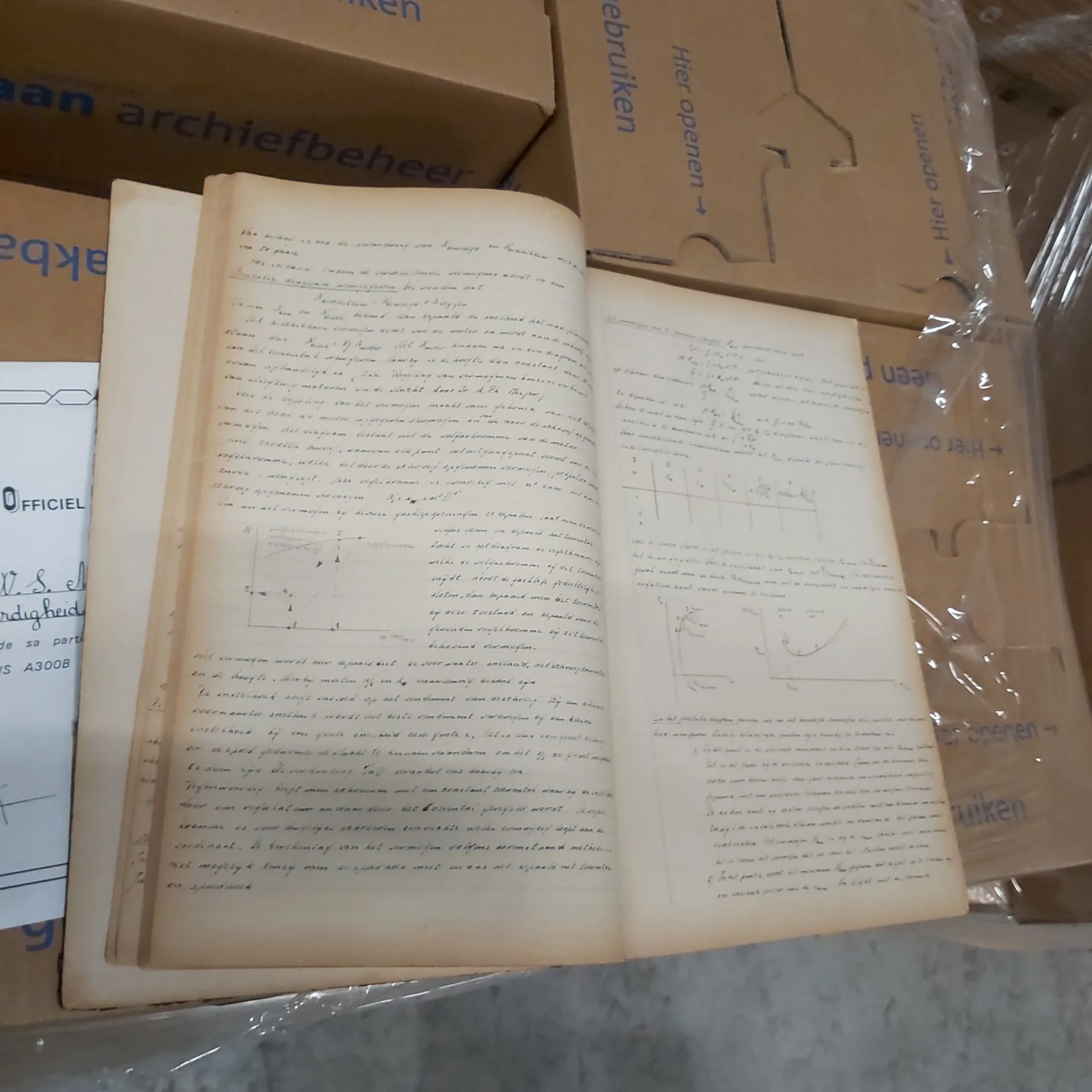
Archive material
-
Junior curator Reïnda examines one of the boxes
The importance of an archive
While Huib opened the various boxes with great enthusiasm and looked through the documents, I tried to zoom out and think about the importance of archives, historiography and the museum as an institution. That brought me to the proposition that it is not a historian's aim to describe the history, but a history. After all, historians have to make important choices about which sources they use and which part of a historical event they describe with them. What is more, those sources will never describe the event exactly and have to be interpreted. A responsible task…
Creating an archive is therefore just as important. Storing documentation of a potentially important historical event. Which documents do you keep? What is in those documents? How is the event described, or how do you describe it? How, in doing so, do you indirectly shape the historiography of a potentially historic event? In short, an important and responsible task as well.
An important and honourable step
As a museum we naturally want to map Moluccan and Moluccan-Dutch history as diversely, inclusively and completely as possible and to exhibit it creatively to interested visitors. To do that we have to take into account both the 'customary' (read: Western) way of writing history and all other forms of non-Western historiography. Visiting, examining and interpreting written and unwritten sources that are seeing daylight again after years is a very important, honourable and, above all, enjoyable step towards that.
Junior Curator Reïnda Hully
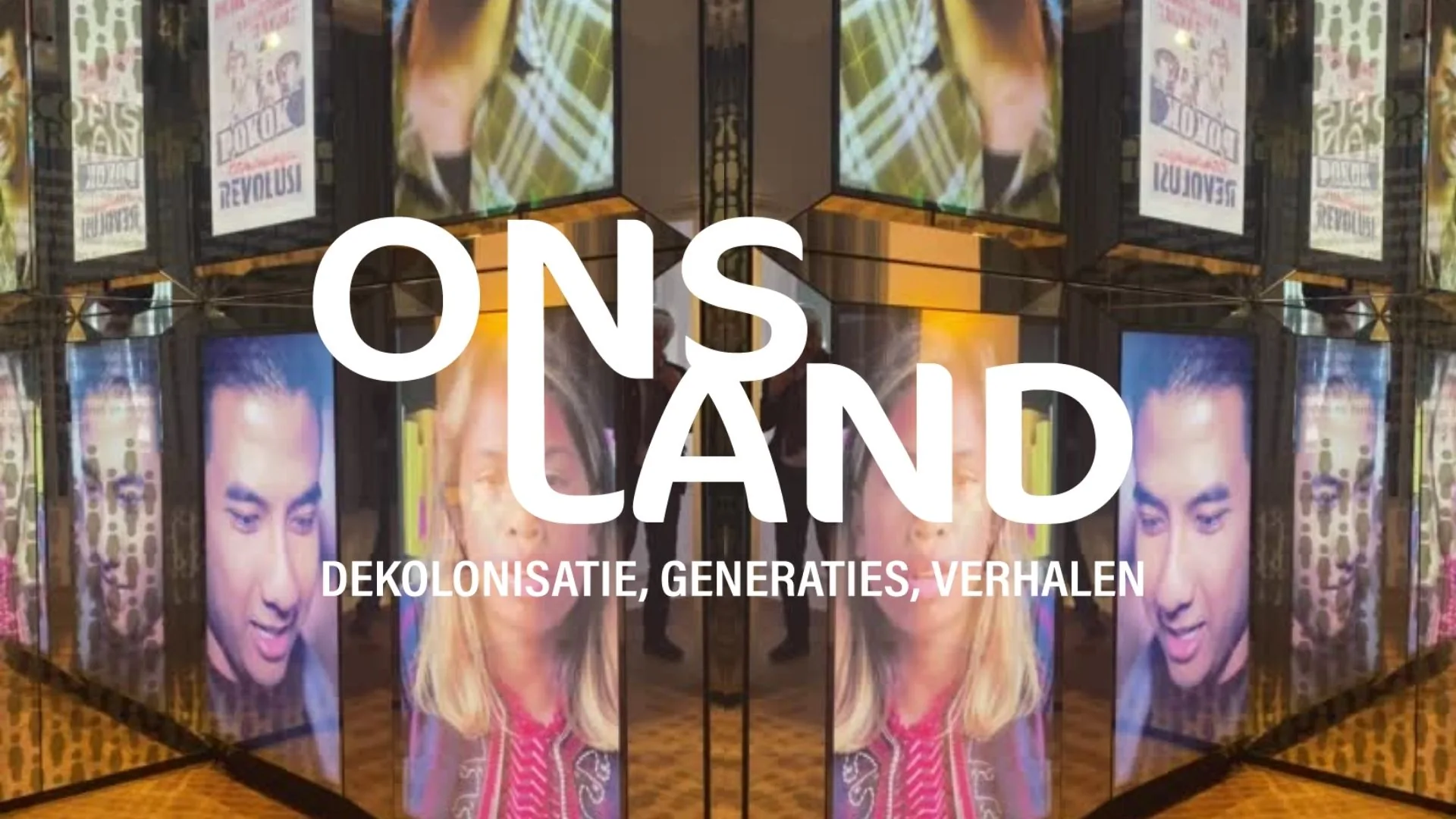
Now on view: Ons Land
An exhibition about Dutch colonial history in the East Indies and how it still works through the present.
Maju Mundur
Have you seen all the episodes of Maju Mundur – Duo interviews yet?