From –20 to one floor up
On 29 April our head of collections Huib Akihary reported, under the title ‘Cold turkey in the depot’, on the freezing at -20 °C of one of the birds of paradise from our museum collection. How that went and what else is happening in the museum depot you can read in this blog.
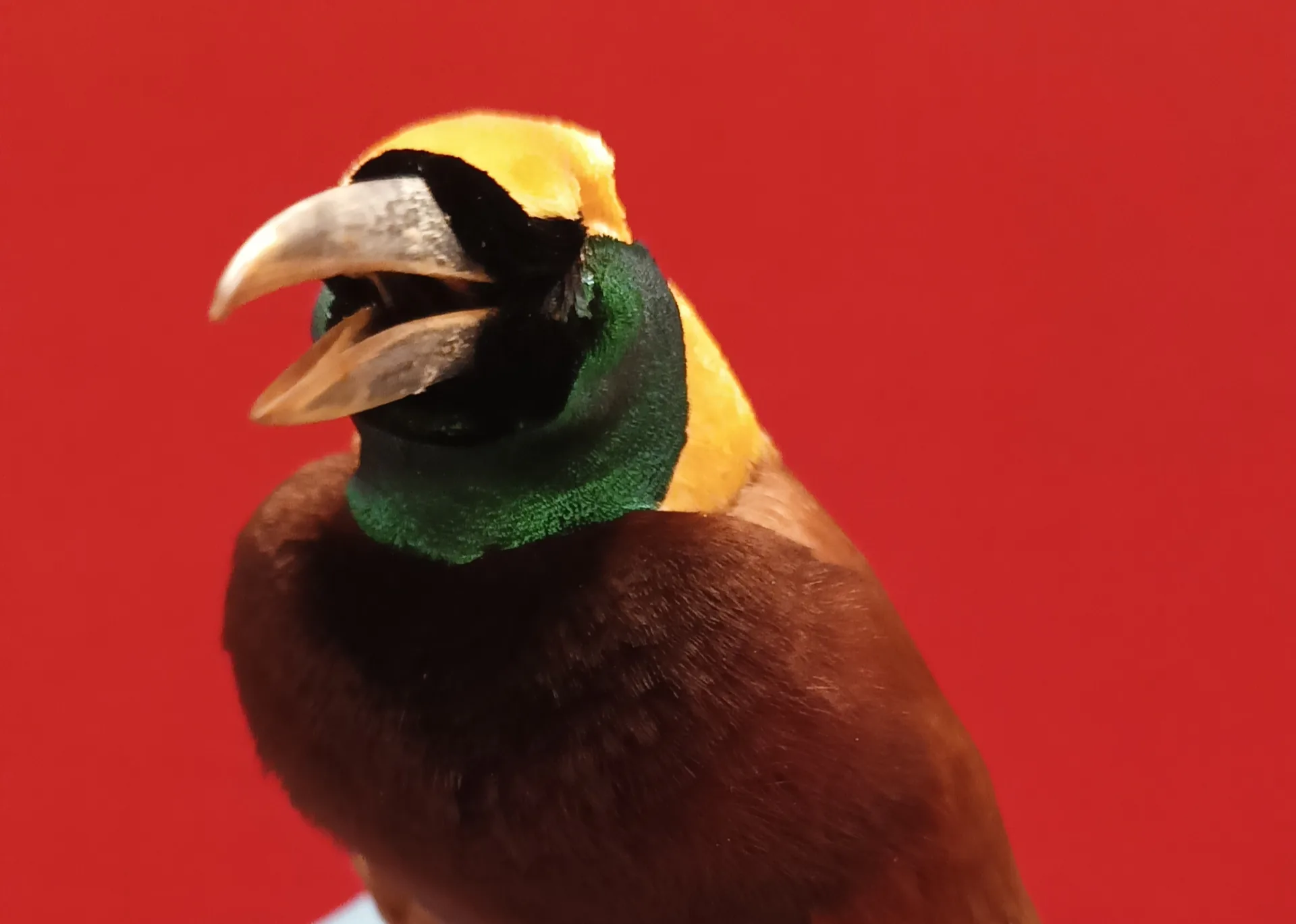
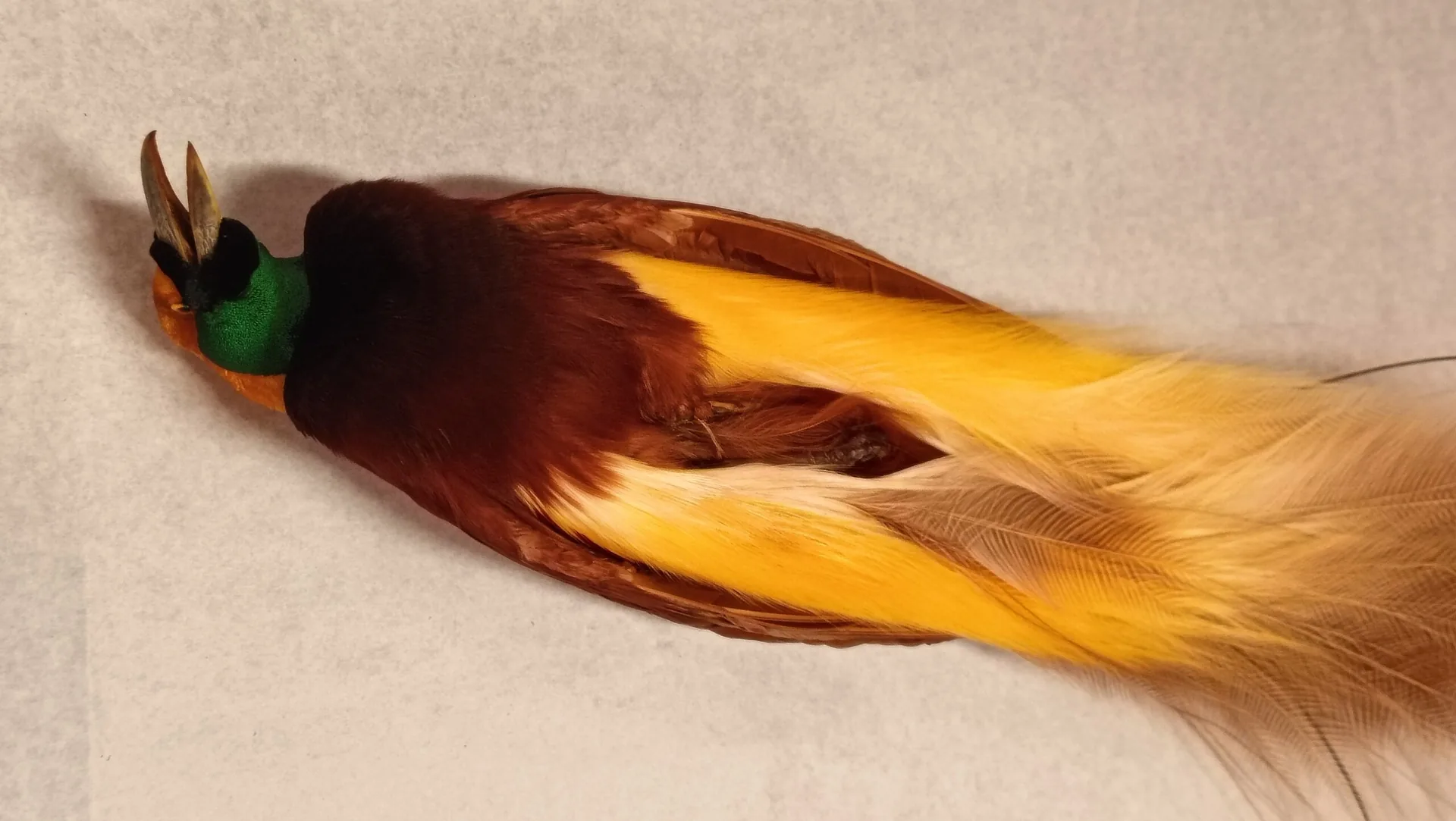
I still owed you the story of how our bird of paradise fared after being placed in the freezer at –20 °C at the end of May. We did that because traces of organisms had been found in its plumage. Freezing kills off any insects or other pests present. The bird was packed airtight in plastic to protect it against dehydration and condensation. After about 2 weeks in the freezing cold, the bird of paradise could slowly thaw while still wrapped.
Inspection and cleaning
After the freezing treatment comes the cleaning. A lot of dirt and traces of organisms could be seen in the plumage. The cleaning is done with a small soft brush, with which the head, feathers and beak are gently wiped. Three dead insects came out of the feathers. Then, using a special museum vacuum cleaner whose suction can be dosed down to a minimum, the bird was carefully freed of dirt, dead organisms and insects.
The bird of paradise is now clean again and labelled with an object number. Fixed on an inert plastic plate, it now lies in its permanent location in the depot. What remains is the administration: location and conservation treatment are recorded in our collection registration system.
-
-
-
-
Registration
As mentioned earlier, Museum Maluku has switched to Atlantis, an up-to-date and widely used collection registration system. Data stored in our old system, Adlib, has now been transferred to this new collection registration system. At the moment the basic data or metadata of the objects is being checked, corrected and, where necessary, supplemented. The museum aims for all objects to have at least an object number, a description, acquisition details and a location. In this it follows the guidelines prescribed in the museum world. Data such as maker, dating, dimensions and material will be added later where necessary.
Right-hand man Reïnda
In July we had to say goodbye to our highly valued junior curator Reïnda Hully. Reïnda has been offered a PhD position (assistant in training) in musicology at Utrecht University. As a graduate and a music lover he could hardly turn that opportunity down. Having started in 2020 as an intern, Reïnda was then trained internally as a junior curator. In that role he had to study hard to master the many facets of conservation and collection management. In addition, over the past 3 years he handled the many requests for images from the collection, but also supervised the move of the collection from storage to the museum depot excellently and recorded it accurately in Atlantis. Thank you for your great commitment and dedication, Reïnda. We wish you every success with your new challenge.
New staff
We have now found 3 new staff members who will take on the many tasks within collection management. Louise Abbas will help with the registration of the museum objects and the research into them. She successfully completed conservator training in Belgium. Esther de Graaf is a visual anthropologist and will mainly work on the photography and film collection. Yanise Zijlstra studied cultural anthropology in Utrecht and graduated in Wageningen. She will focus in particular on the audio and interview collection.
A smaller depot
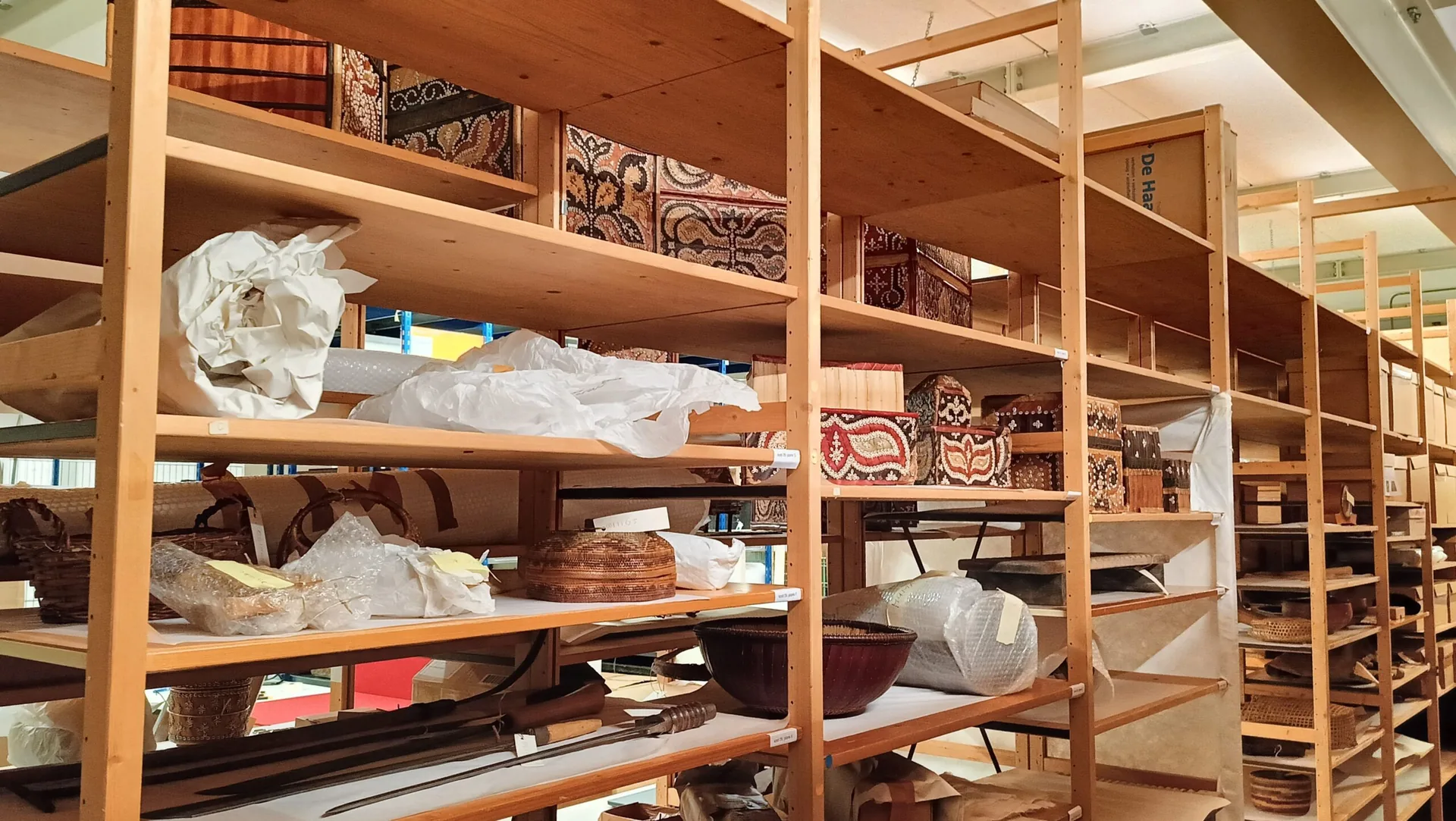
Until 31 December 2023 Museum Maluku rents a large depot space on the 3rd floor of the Municipal Museums Depot in Rotterdam. After that date this depot must be handed back empty, as agreed with the landlord, the Maritime Museum Rotterdam. The collection will move to a smaller depot one floor up, made available to us by the Museum of World Cultures. In September we will fit out this depot with shelving. In the months that follow, the collection will move in phases. In doing so, choices will have to be made about what does and does not go to this depot, what must be stored in conditioned circumstances and what need not be, what Museum Maluku wants to keep and what we will deaccession, that is, dispose of.
But more about that next month.
Huib Akihary Head of collections