Moluccan heritage in sound and vision
Last year Museum Maluku came aboard the Programma Indisch Erfgoed Digitaal (PIED), an initiative focused on digitising the heritage of the Indo and Moluccan communities in the Netherlands and making it available online. Yanise Zijlstra and Manouk Kipuw, our collection management volunteers, have been busy over the past months with the application for the programme. They take you through the process around PIED and the decision to give the unique audiovisual collections of Museum Maluku an essential role in it.
Programma Indisch Erfgoed Digitaal "Last year we signed up for the Programma Indisch Erfgoed Digitaal, also known as PIED," Yanise says. "PIED was initiated in 2022 as part of the collective recognition of the Indo and Moluccan communities in the Netherlands. The project focuses specifically on heritage from the period 1930 to 1968, gathering the stories of people with roots in the former Dutch East Indies. By that they mean both those who came to the Netherlands themselves and those whose forebears came to the Netherlands between 1930 and 1968 as a result of the violence of war and post-war developments. A large part of the Museum Maluku collection covers this period, so we were eligible to take part. Museum Maluku holds a large collection with sub-collections such as museum objects, books, archive material, photographs and audiovisual material. The people at PIED told us they had not yet received many audiovisual applications. Our audiovisual collection is very remarkable, so the choice was obvious."
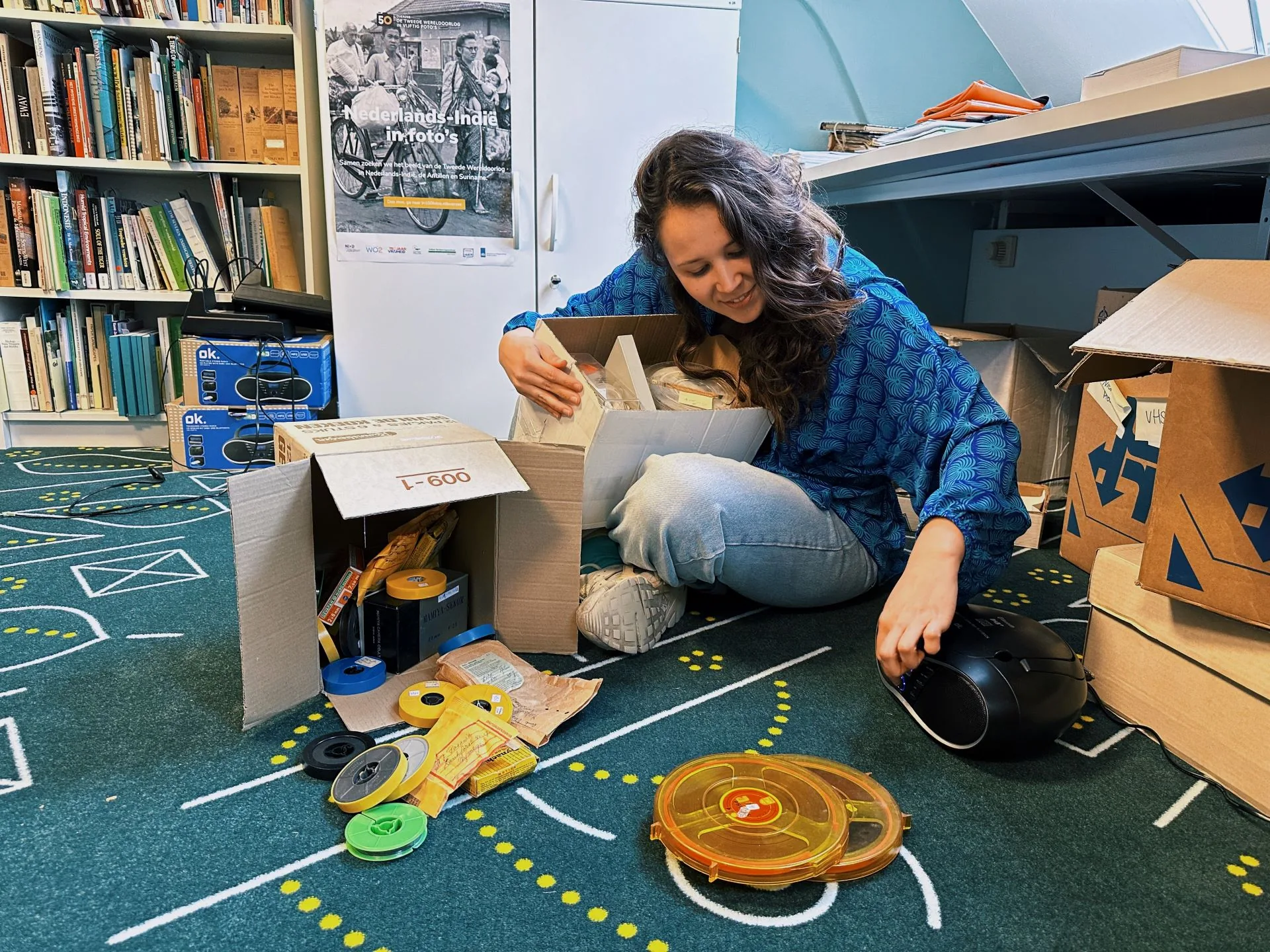
Unique, notable and specifically Moluccan "The material we are taking into PIED consists of archive material and images that are unique, notable and specifically Moluccan and that fall within the period 1930 to 1968," Yanise says. "We are also bringing remarkable audiovisual materials, such as Single8 films and old sound tapes." "Sometimes something is written on the sleeves," Manouk adds, "or on accompanying sheets about the content of the material, but often we have no idea yet what exactly was recorded. Personally I am above all curious about the daily life of Moluccans in the camps, because it is so hard these days to imagine what that was like." "One interesting collection we are having digitised is that of prof. Jos Platenkamp," Yanise says. "Platenkamp carried out research in the North Moluccas for many years and recorded and described the local adat rituals on film."
Unpacking "Together with the PIED project staff we inventoried large parts of the collection. We looked at how many metres of material there are, where it comes from and whether it fits within the programme's time period," Manouk continues. "It involves a great deal of unpacking. What is being taken into PIED is nowhere near all of our audiovisual material. We still have so many items, including from after 1968." "Although we are enormously curious about the content and would love to play the material ourselves already, we were advised against it because the tapes are sometimes so old that there is a risk of damaging them," Yanise adds. "We naturally want to avoid that. A professional company is digitising the material for us, so that afterwards we can finally discover what is on it."
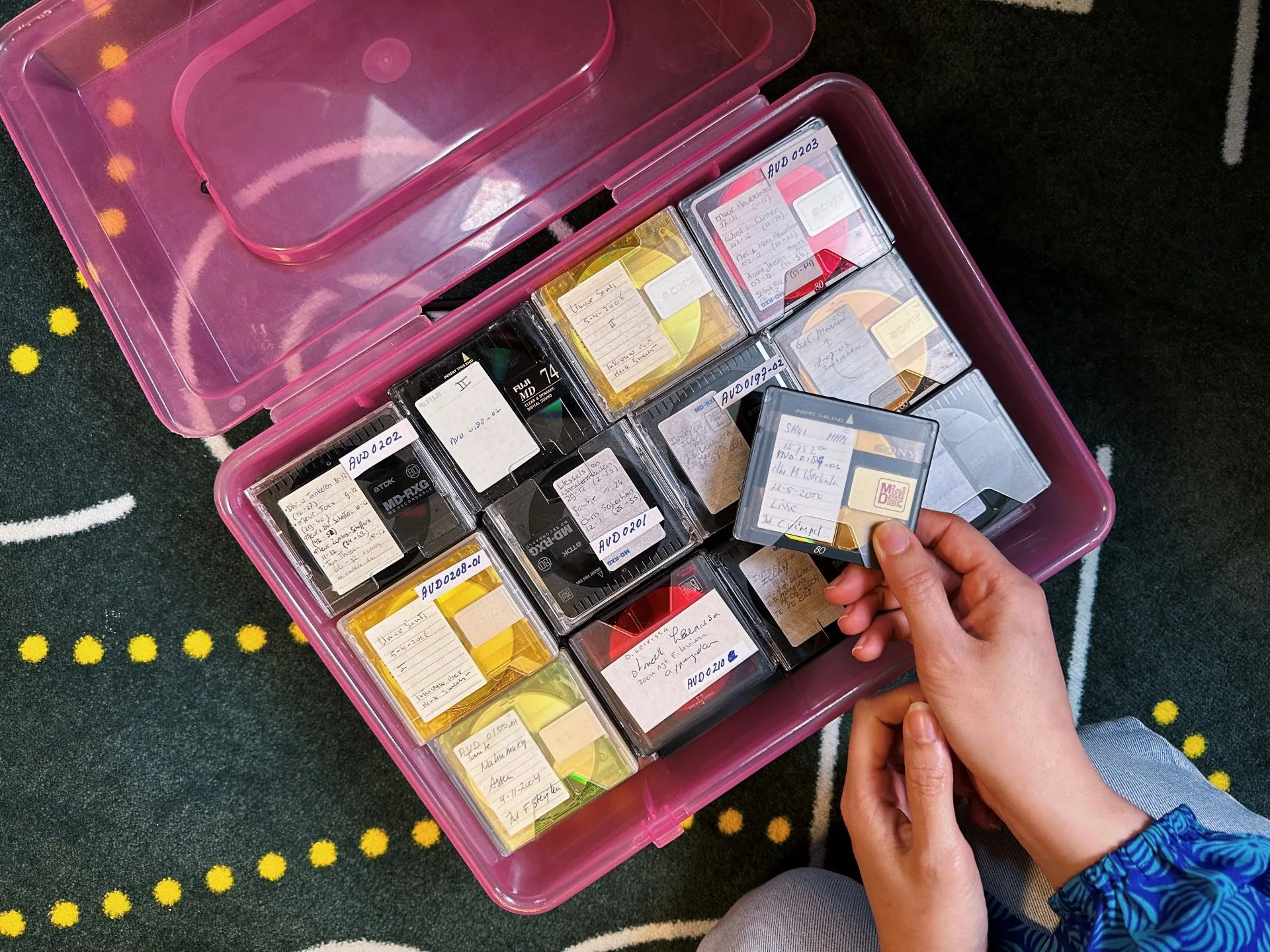
Remarkable finds "Some of Museum Maluku's audiovisual files had already been digitised earlier, including a series of interviews with Moluccan former marines and former KNIL soldiers," Yanise says. "My grandfather was one of those Moluccan marines, and while browsing through the archive I suddenly came across his interview. I saw the name 'M. Workala' and thought: 'Hey, that's my grandfather!' I knew about the interviews, but seeing his name among them I found very special. My own family history suddenly became very tangible. The intention is that after digitisation we will make our collections accessible to the public. That they may then be able to find pieces of themselves or their families in these collections too is, I think, very important."
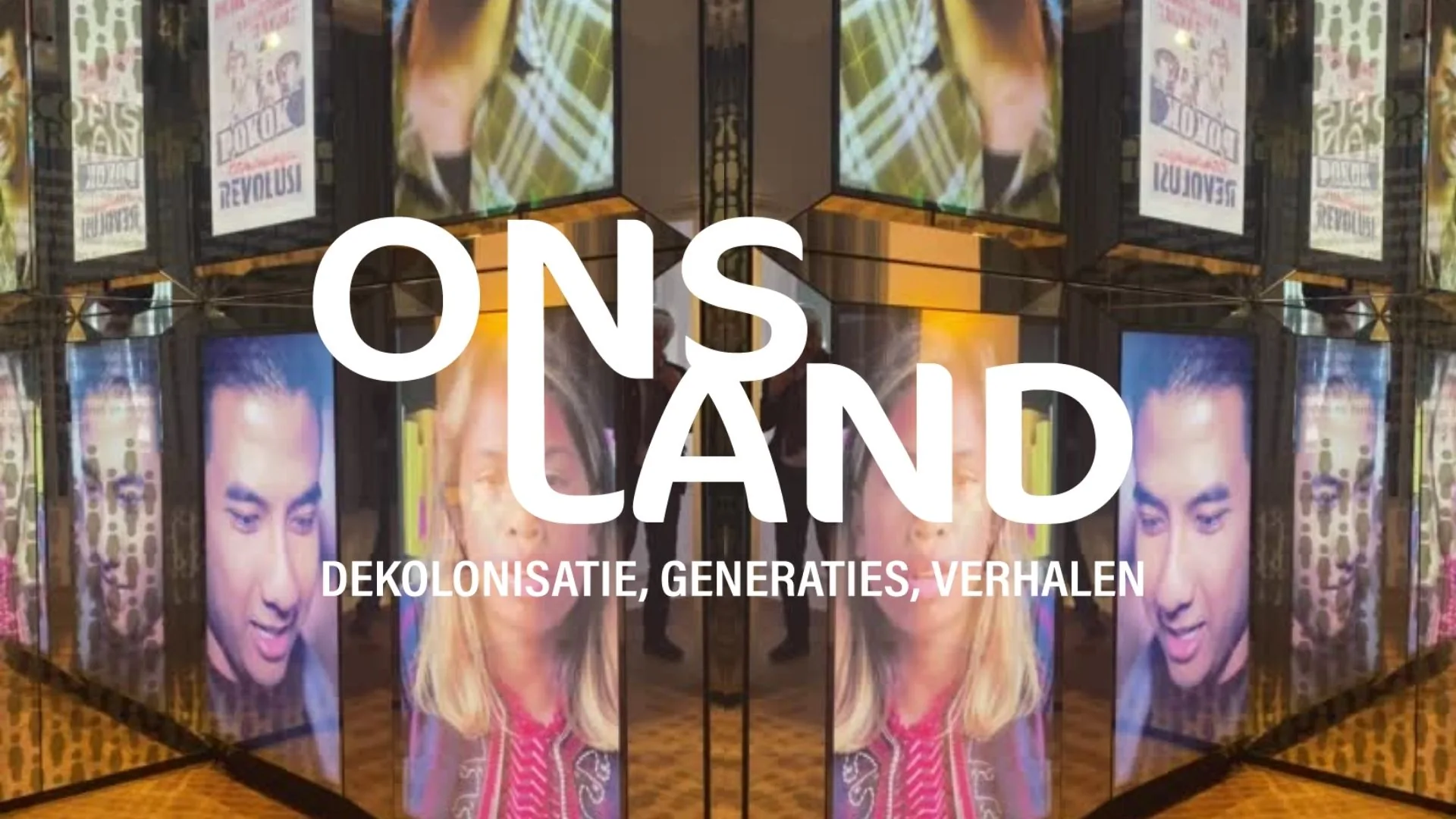
Now on view: ONS LAND
An exhibition about Dutch colonial history in the East Indies and how it still works through the present.