#
Collection update: from relocation to prospects
2023 was a year of extremely hard work on the preservation and management of the collections of Museum Maluku. Through our columns we have kept you regularly informed of our efforts and progress. Head of Collections Huib Akihary sums up the past year once more and looks ahead at what awaits us in 2024.
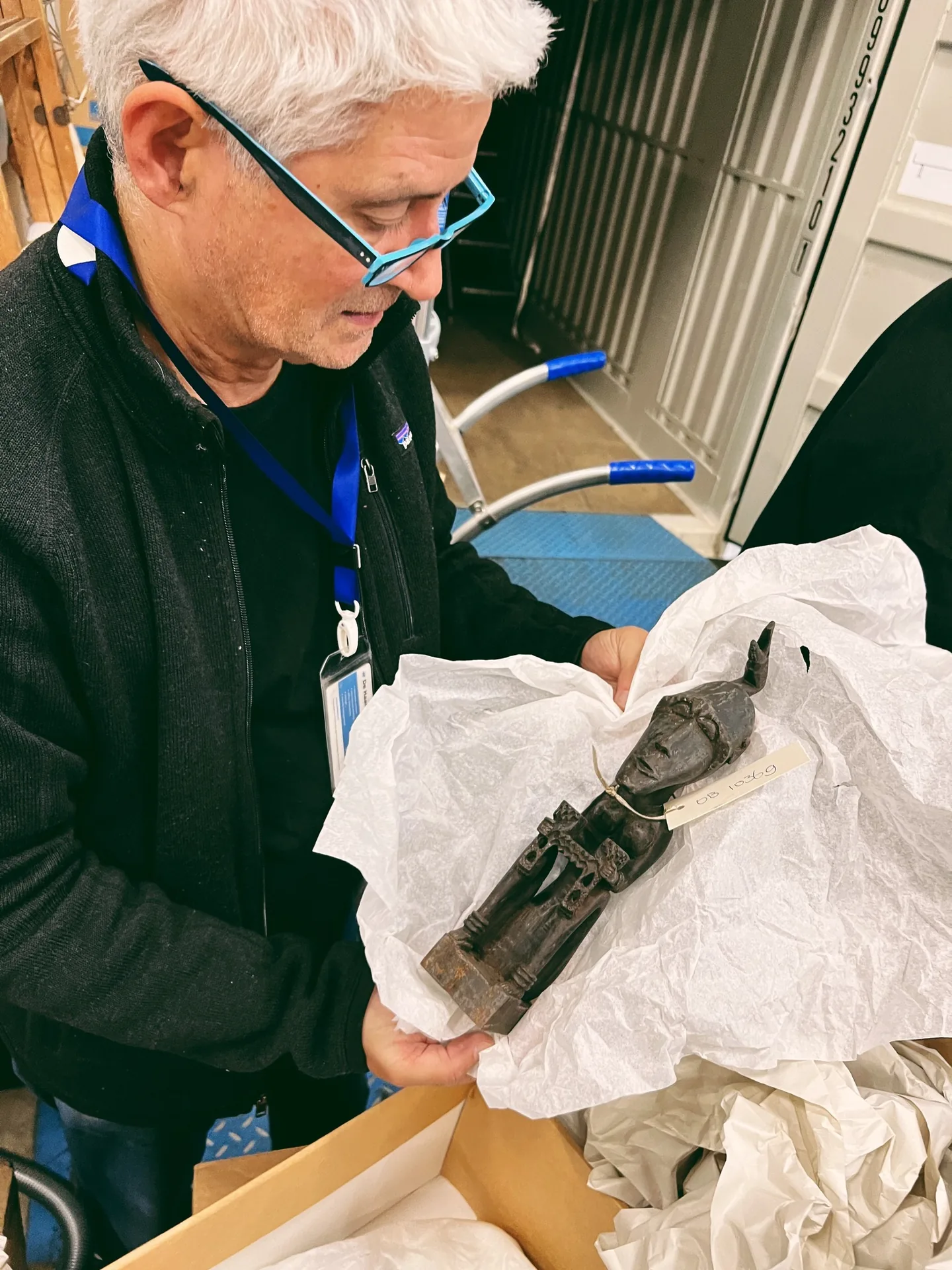
At the end of 2022 and the beginning of 2023, all the museum objects and part of the archive of Museum Maluku were transported from storage in Alblasserdam to Rotterdam. Five pallets of archive material went to the archive space on the Piekstraat in Rotterdam-Zuid. The museum objects moved to the depot space in Rotterdam’s museum depot in the Alexanderpolder, which Museum Maluku was able to rent from the Maritime Museum until the end of December. The entire collection was unpacked, checked and cleaned. That meant inspecting all objects for state and condition and then removing dust, labelling them and, where necessary, repacking them in acid-free paper and acid-free boxes. A number of objects made of organic material had to undergo an oxygen-free treatment to kill micro-organisms and pests. That treatment could take place in the depot of the Drents Museum in Assen. Many thanks for this to director Harry Tupan and the preservation and management staff.
Collection reappraisal
After placement in the depot we started describing and registering the objects in Atlantis, our new collection registration system. It also meant the start of the collection reappraisal. How is the collection composed? What do we want to do with our collection? How do we make the collection accessible to the public? Which objects require further research? The principles for a responsible and balanced collection are set out in our collection plan, which will be drawn up in the spring of 2024.
Internal relocation
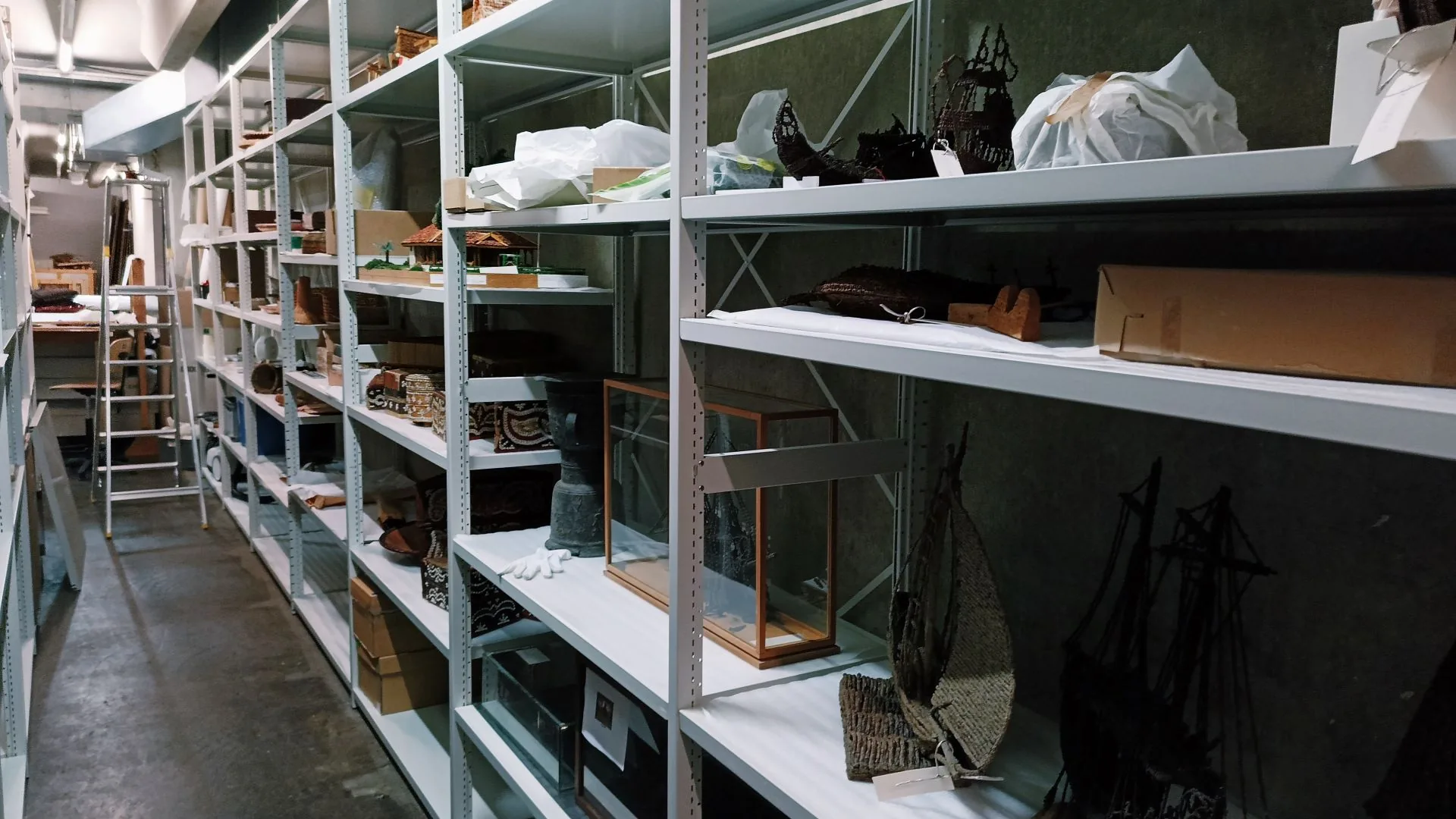
The large depot rented from the Maritime Museum had to be handed back empty before the end of 2023. The collection stored there moved to a smaller depot one floor up, made available to us by the Museum of World Cultures. Work on setting up this depot began in November. Large, space-consuming pieces such as transport crates, trunks, cabinets and furniture moved temporarily to Sophiahof to be shown in the new exhibition Unpacked – From crate to cabinet. The internal move has now been completed. On 28 December 2023 the large depot was handed back empty. The various museum objects placed in the new depot will be assigned their definitive locations in the coming months and processed administratively in Atlantis.
Digitising the collection and the PIED application
As part of the collective recognition of the Indisch and Moluccan communities in the Netherlands, the Programma Indisch Erfgoed Digitaal (PIED) started in 2022, financed by the Ministry of Health, Welfare and Sport. The programme focuses on digitising the heritage of the broad Indisch community. By that, as the programme describes it, is meant everyone with roots in the former Dutch East Indies who themselves, or whose ancestors, came to the Netherlands up to 1968 because of war violence and post-war developments. PIED focuses on heritage from the period 1930-1968. The collection of Museum Maluku largely covers this period.
Last year Museum Maluku therefore applied for project funding to digitise the parts of its collections that fall within PIED. In the course of 2023 various conversations were held with PIED project staff in order to arrive at a well-considered and specified application. The choice fell on archival material and images that are special, unique, specifically Moluccan and within the period 1930-1968. Special audiovisual material such as Single8 films and old sound tapes will also be included in the application.
Material analysis
In December a material analysis was carried out on the heritage to be digitised. This means we worked out exactly how many metres of archive we have, how many photographs, how many metres of film and how many hours of sound tape. We also looked at paper format, whether items are single- or double-sided, printed or handwritten, bound or loose, folded or flat. Special formats such as construction and specification drawings of Moluccan camps and barracks were also mapped. Here are some figures to give you an idea: 5,400 photographs and almost 800 slides from 24 collections, 268 construction and specification drawings, 42 metres of archive or more than 320,000 pages, 78 hours of audio and 88 hours of film from 230 AV items.
On the basis of the data from this material analysis, specified quotations can be requested from companies specialised in digitising heritage. The material analysis was carried out by a number of volunteers. Thanks to Manouk Kipuw, Caro Matulessya, Ronny Vromen and in particular Yanise Zijlstra, who supervises and monitors the application on behalf of Museum Maluku.
Preparing for scanning
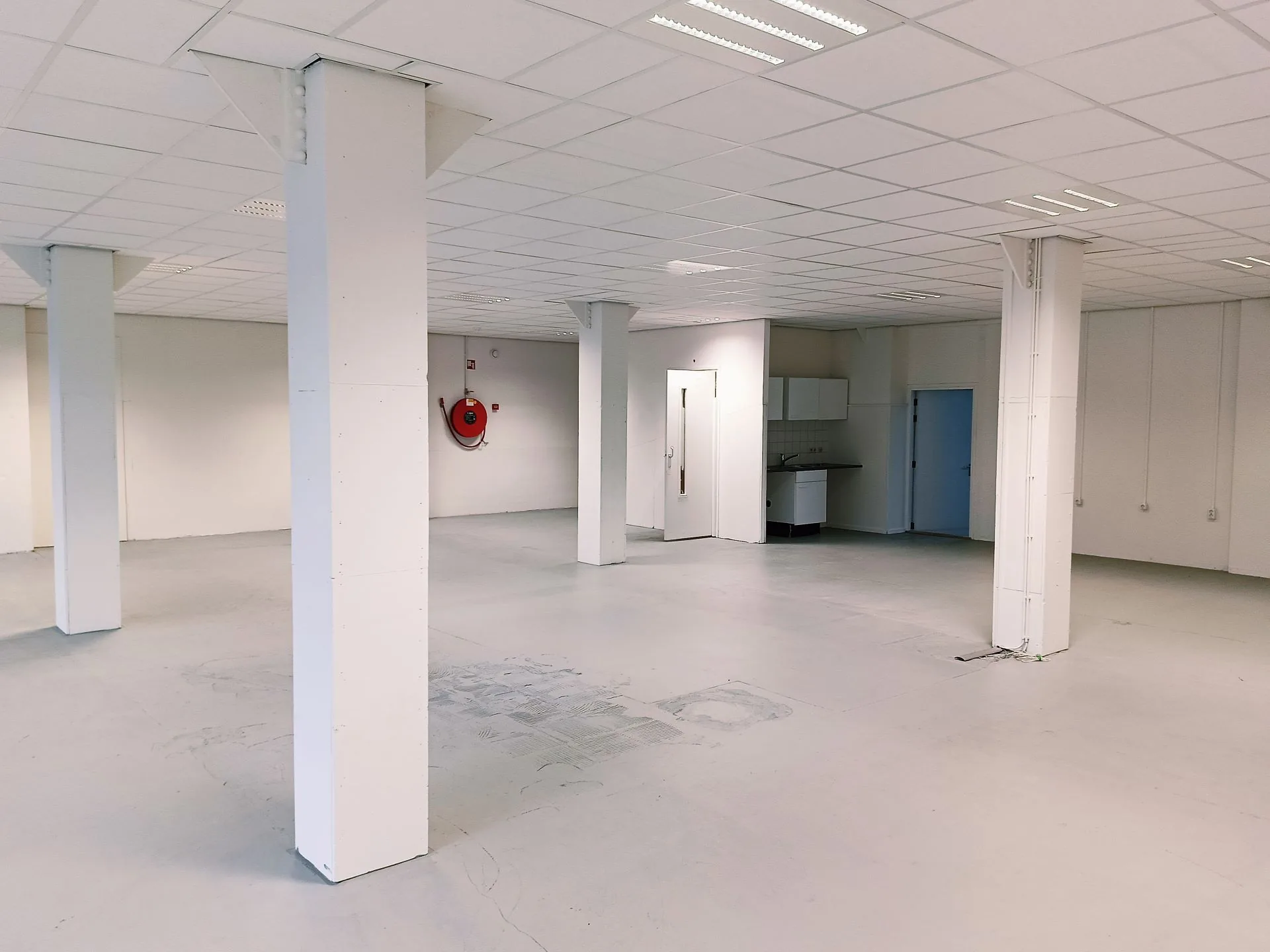
Before the material can be digitised, it will have to be delivered ready for scanning. Archival material is delivered clean: free of staples, paper clips, rubber bands and plastic covers. Images and audiovisual material are sorted by format and carrier. Museum Maluku will outsource the scan preparation of the heritage to be digitised to companies specialised in that work. Those costs will also have to fall within the budget of the amount reserved by PIED. Some companies will only do the scan preparation in the client’s own archive or depot. That is now possible at Museum Maluku too, with the new additional space of more than 200 m2 on the Piekstraat in Rotterdam.
The collection in one place
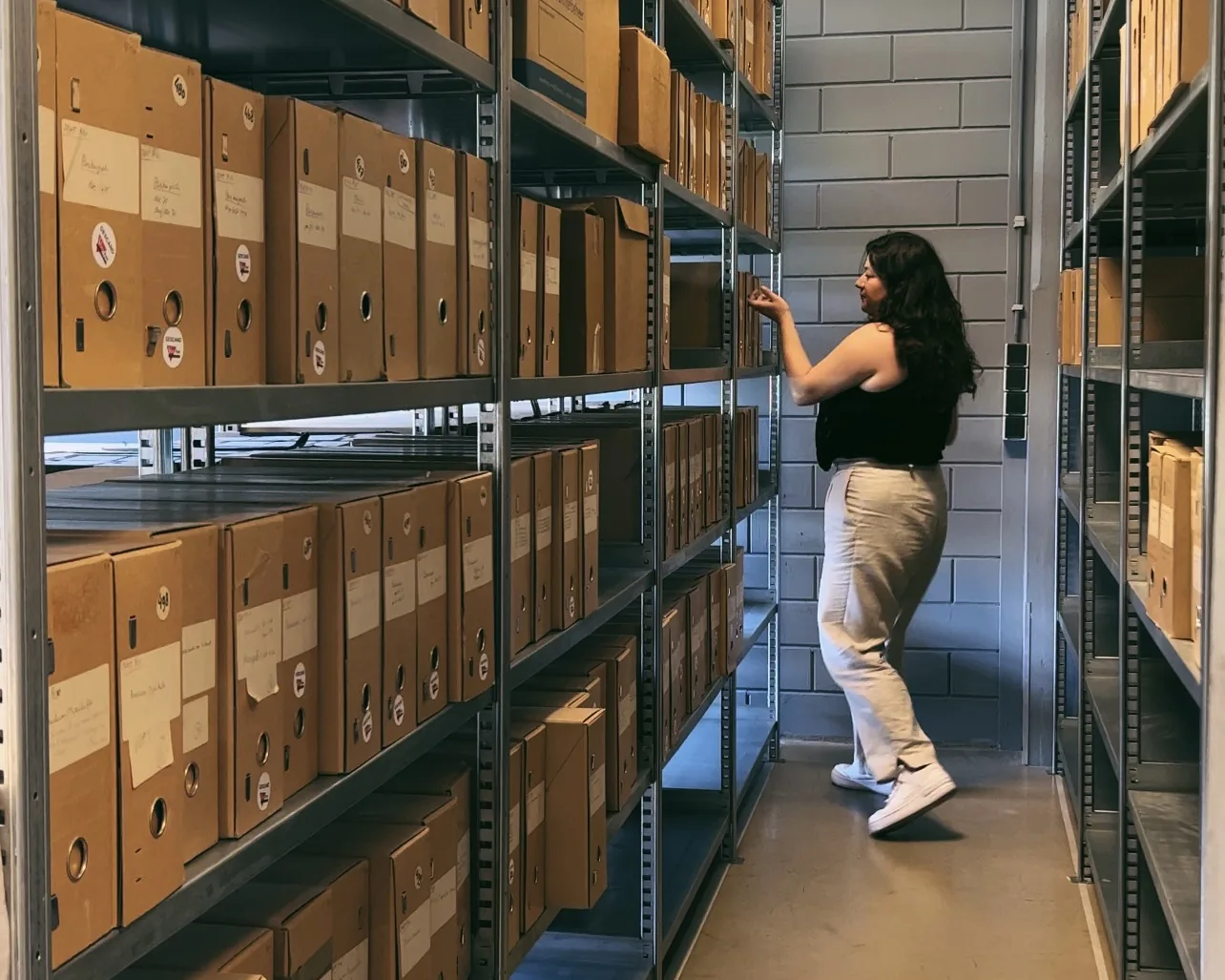
Shortly the last 24 pallets of archive boxes will be brought from the storage in Alblasserdam to the Piekstraat. With this move, the entire collection of Museum Maluku will have been taken out of storage and brought together in Rotterdam: the museum objects in Rotterdam’s municipal museum depot and the archival material together on the Piekstraat. Work on the collection can then continue properly: ordering, conserving, registering and making visible.
Huib Akihary
Curator Huib Akihary also previously wrote Now on show: new exhibition Uitgepakt, From -20 to one floor up, Cold turkey in the depot, Bongso at the Four Days Marches, Tobelo North Moluccas in images and Three special donations