Collections Connect brings artists from the Moluccas to the Netherlands
What happens when artists from the Moluccas travel to the Netherlands to immerse themselves in the lives of the Moluccan community here? Within the Collections Connect project – a collaboration between Museum Maluku in the Netherlands and Museum Siwa Lima in Ambon – everything revolves around connecting collections, knowledge, and creativity. Earlier this year, artists Joao Loupatty and Aca Siwabessy Stoffels travelled from the Netherlands to Ambon. Now it's Moluccan artists Alvin Talabessy and Theodora Melsasail's turn to explore and gather impressions in the Netherlands. During their visit, they find inspiration, meet fellow Moluccan artists, and deepen their understanding of Moluccan life in the Netherlands.
The power of the body
Theodora Melsasail is a choreographer, dancer, and spoken word artist. She grew up in Tanimbar and now lives on the island of Seram, where she is committed to making Indigenous perspectives more visible. "I believe the body carries meaning," she says. "It tells us something about our culture, about who we are as Moluccans." In her work, she connects movement with identity and conducts active research on Seram to preserve and pass on local values to the youth in her community.
Alvin Talabessy, originally trained as an interior designer, now works as a visual artist and professional sketcher. His drawings focus on the Moluccas, driven by a growing sense of urgency. "We're in danger of losing our identity, especially among the younger generation," he says. "I do a lot of research in museums and libraries in Ambon and Seram to understand our roots and translate them visually in my work."
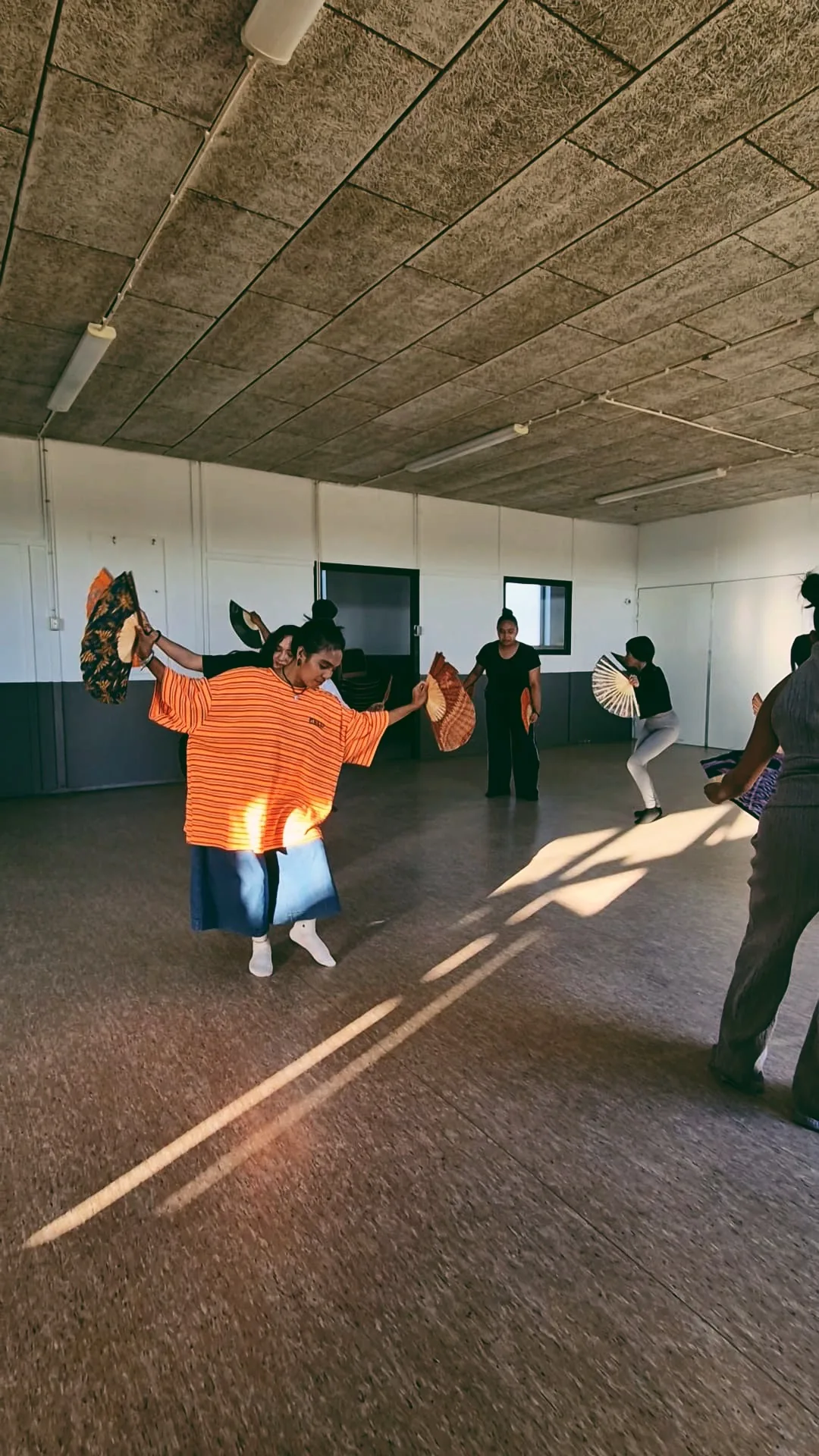
Theodora with the tifa and dance group Polowano
Meeting the Moluccan diaspora
Both artists are currently in the Netherlands as part of Collections Connect, which focuses on the exchange between Moluccan artists. Theodora is curious about how the Moluccan community here relates to the body: "I want to know if young Moluccans in the Netherlands are still proud of their Moluccan identity. How they express it. In Moordrecht, while we visited the dance and tifa group Polowano, I felt it in every dance step, in every breath. Something resonated with who they are. I see dance as a new way home. Many young Moluccan people in the Netherlands were born on foreign soil, but their bodies carry the trembling of Maluku's land in their movements. When I dance with them, we open a space where they don't have to choose between being Dutch or Moluccan. They can be both. We teach that identity is not a wound, but a journey of becoming."
Alvin adds, "We are the same, yet different. What stands out to me is that Moluccan people in the Netherlands are always on time." He laughs. "But beyond that, I see so many similarities. We share stories, rhythms, memories. During the visit to Polowano, I played the tifa and Theodora joined in dancing."
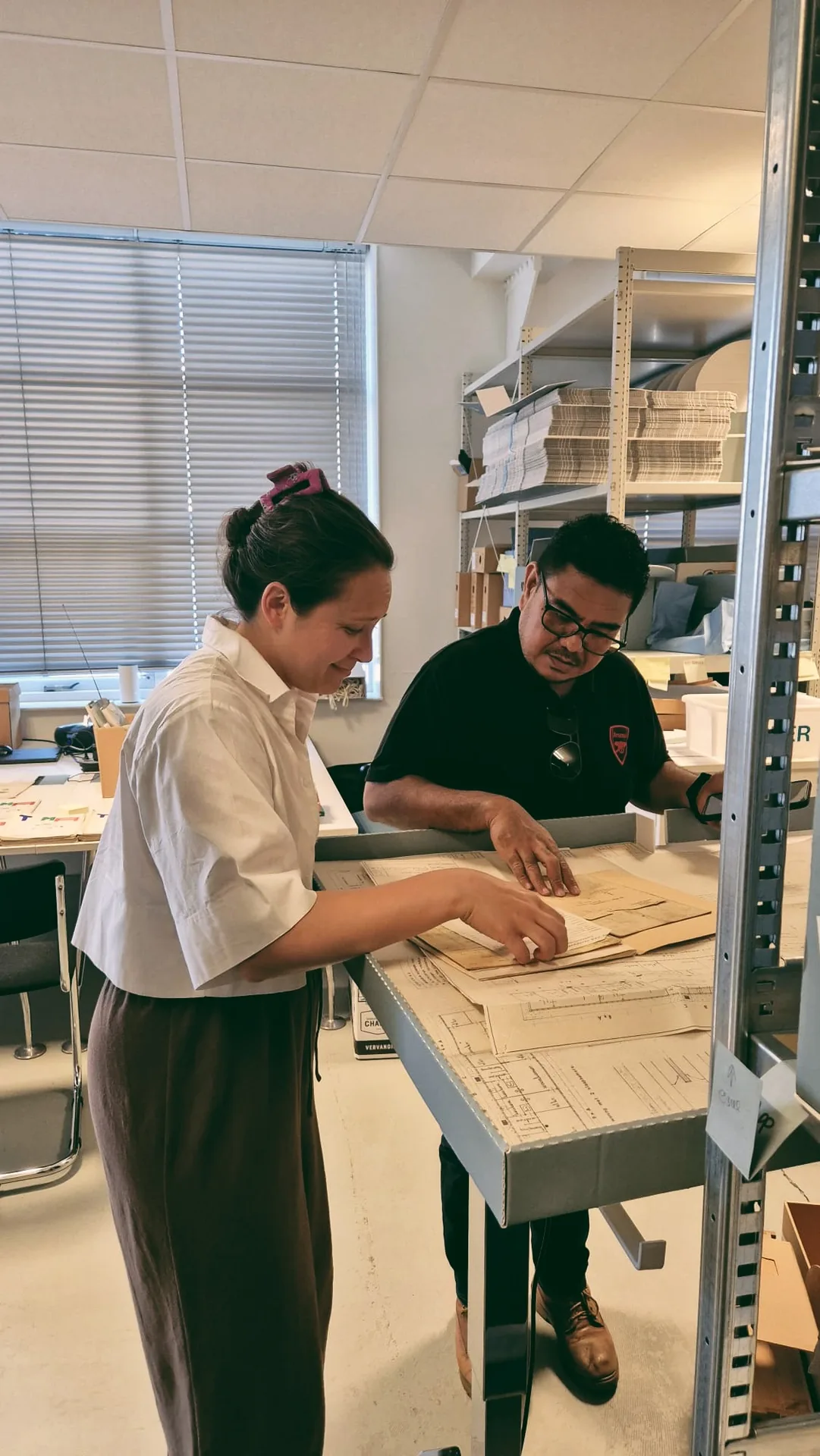
Alvin with digitisation project leader Yanise in the Museum Maluku archive
Art as a bridge between generations
What they take home from this experience is something they want to share. "In my community on Seram, there are 27 children. I want to tell them about what I've seen, felt, and heard here, in a way that is fun and playful," says Theodora. Together with Alvin, she plans to start a small art project upon returning home to make their experiences tangible for their communities. "For me, art becomes the way home. In Maluku, art grows from the land and tradition. In the Netherlands, art is born from longing and the search for identity. Generations here and there meet through song, dance, and story. Art is not just entertainment, it is a bridge. It is home. It is the way home."
Alvin also sees this trip as a deep source of inspiration. "When I create art later, I'll return to these memories. This is all material I carry with me. We are Moluccans. We are part of a community, even if that community lives in exile. And that's something to be proud of."
Giving and receiving
The encounters with Moluccans in the Netherlands move them deeply. "Today we visited Kamp Westerbork, or Schattenberg," Theodora says. "We spoke with families, listened, and shared. Soon we'll be collaborating with Bahasa Basadara to give something back as well. Our spirit from Ambon, from Piru, from the Moluccas – we bring that with us. It's wonderful to receive, but even more beautiful to give."