Farewell lecture by Prof. Dr Fridus Steijlen
"But now, first of all, retirement." With these words Prof. Dr Fridus Steijlen ended his farewell lecture last Thursday 7 July 2022. The lecture, entitled Speaking of barricades: activists, academics and bystanders, closed a well-filled programme consisting of three panel discussions.
Panel discussions
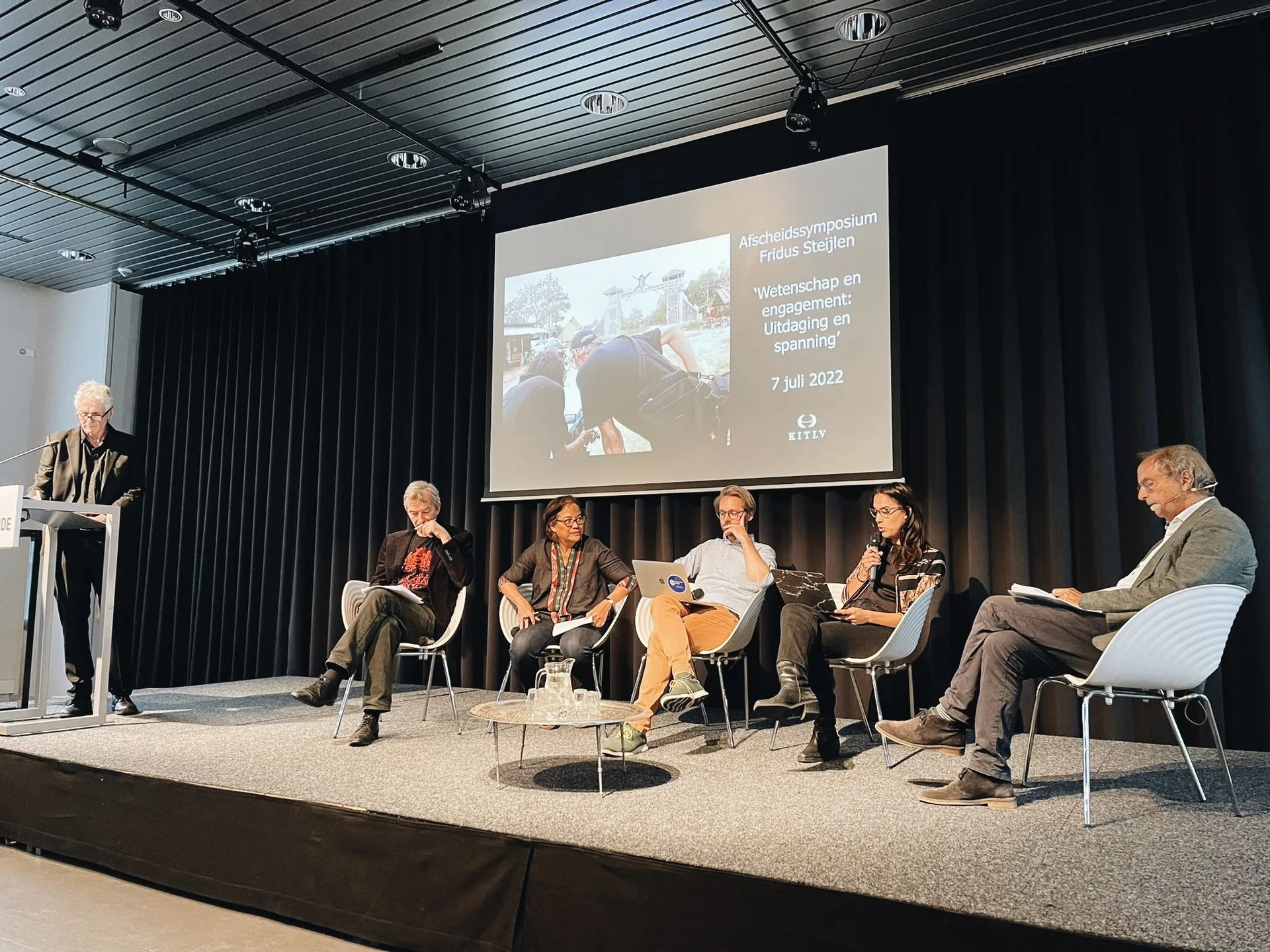
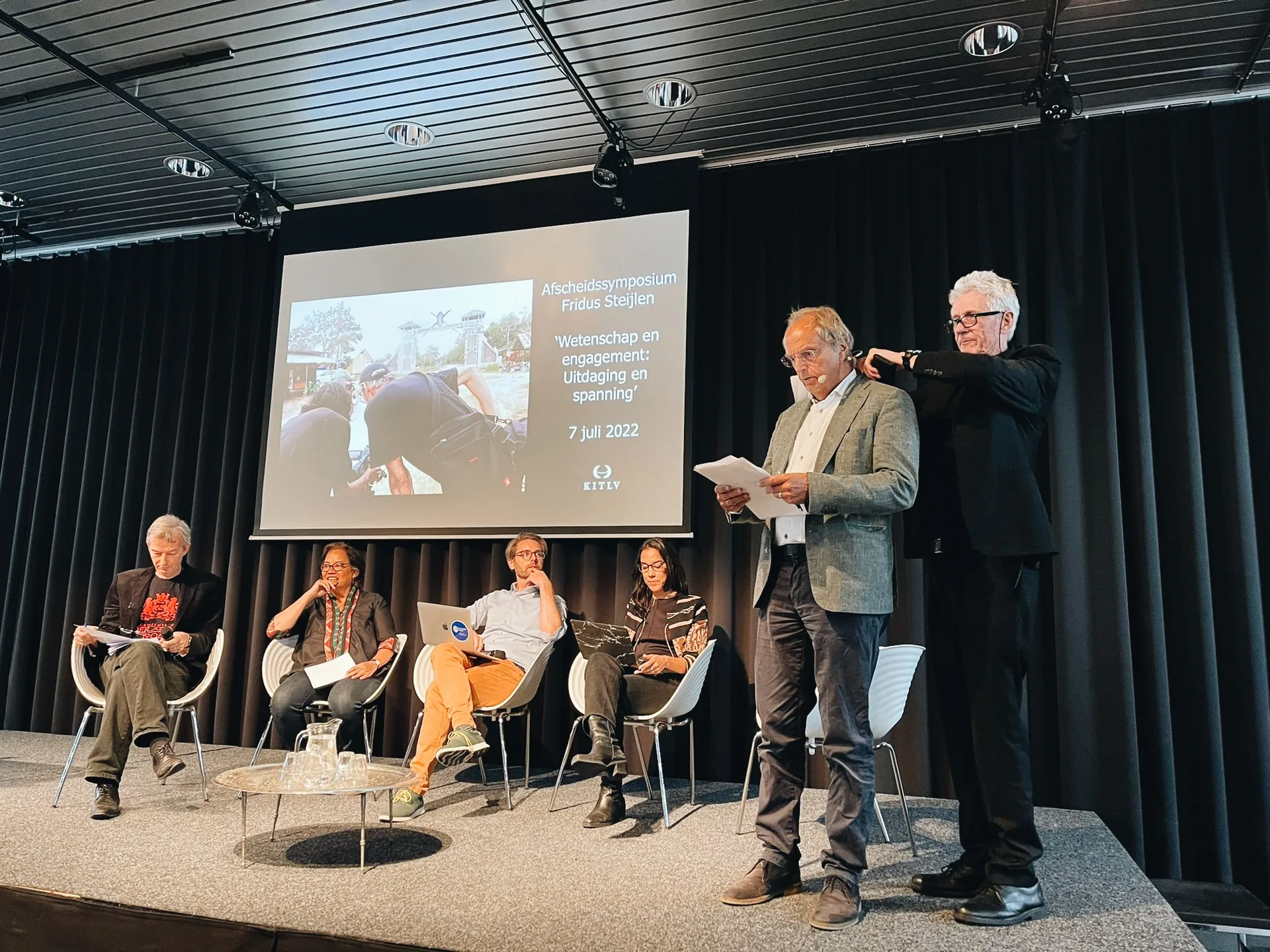
Each panel discussion focused on a different angle of the theme: scholarship and engagement, challenge and tension. A theme that in itself describes Steijlen's rich career, expressed in his appointment as the first professor of Moluccan Migration and Culture at the Vrije Universiteit Amsterdam, a 25-year association with the KITLV and his chair at Museum Maluku. The sub-themes of the panel discussions traced Steijlen's personal and professional characteristics and showed, moreover, how often these ran into one another.
-
-
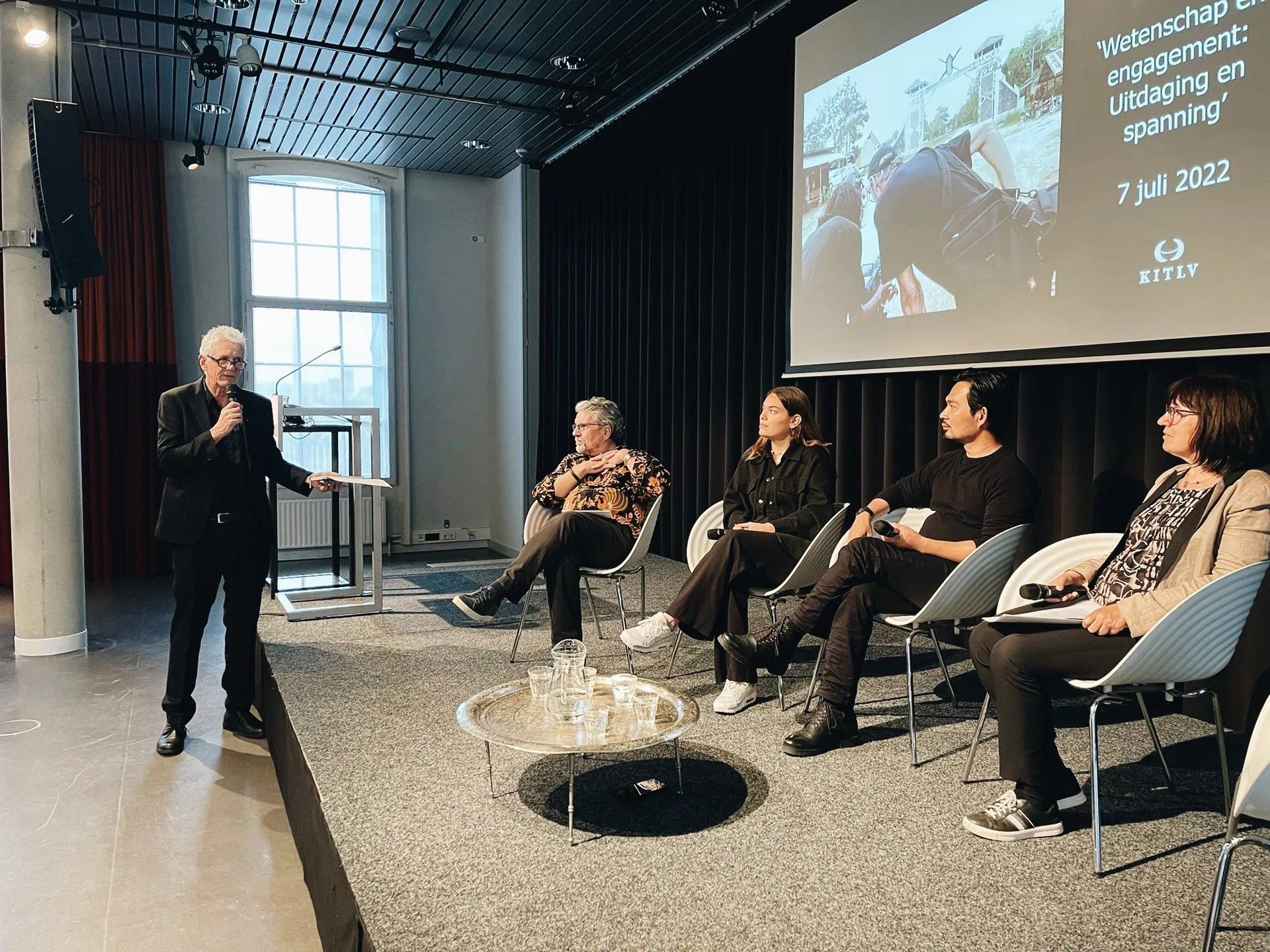
Recurring terms in the conversations and the discussions that followed were therefore engagement, self-reflection and agency. Steijlen's academic career began as a result of, and was fed by, his involvement with the Moluccan community in the Netherlands and his growing awareness of the shared history of Moluccans and Dutch people. Although such involvement can potentially undermine your critical eye as a researcher, Steijlen argued that it can equally open doors thanks to an open attitude and a willingness to work together. Insightful remarks such as "stepping back from judgement", "listening to and being open to stories" and "continuing to do research from within yourself" were therefore important lessons to draw from the farewell lecture of the newly retired researcher. That same engagement was reflected in the various members of the panels, who according to Steijlen "are a representation of my habitat."
Self-reflection
Self-reflection came up in the discussions, among other things, in the question of how a researcher's engagement must and can nonetheless be safeguarded. There remains an unequal distribution of power when it comes to what may be researched. Even though activism is often the initiator here, the gap between activism and scholarship persists because the former is regarded as too emotional. There was also the question of how far neutrality is desirable for a researcher in relation to the object of research. In Steijlen's view, self-reflection is an absolute precondition for doing research. Questioning your own personal bias is part of that. By asking yourself as a researcher where your personal bias lies, you learn something about colonial relations and about how your own mindset may be colonised. An essential step in everyone's individual process of decolonisation.
-
-
Creating agency
The process of decolonisation is also linked to the term agency: the community's own strength, which Steijlen regularly seeks out in his research. For Moluccan society in the Netherlands, the emeritus professor argues "that by naming the strength of the community you can show what they have had to fight against, and at the same time show the negative side of Dutch policy." In the panel discussions, agency also came up in the different ways activism takes shape and can be put to use. The Moluccan community creates its agency by standing in its own strength in its activism over the years, and certainly today as well.
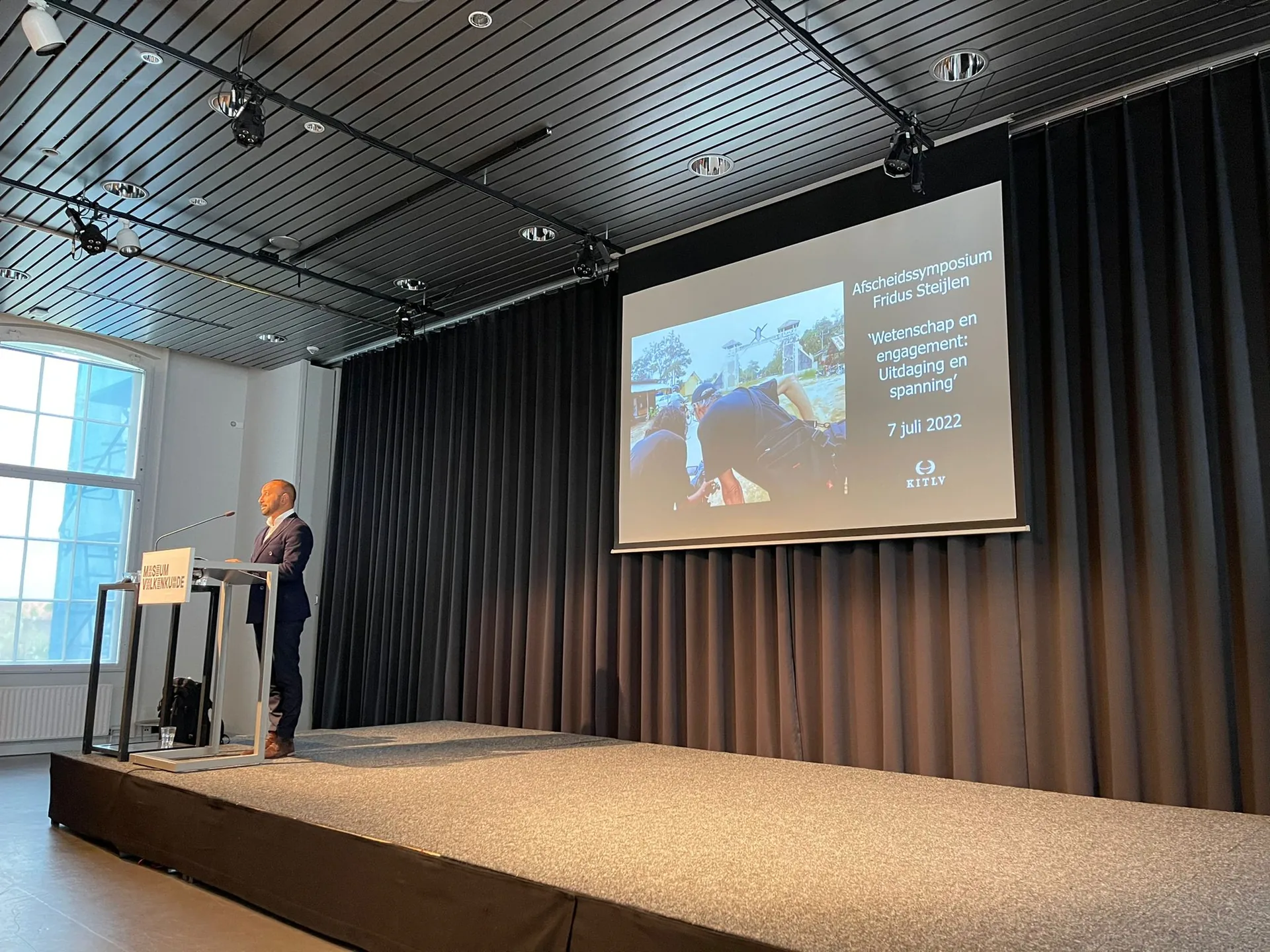
Bapak Fridus, as director Henry Timisela called Prof. Dr Steijlen in his speech, described how, as a result of his engagement and his struggle for agency, many Moluccans regarded him as a white Moluccan, and how uncomfortable this made him because of the privileges that helped him in his work for the Moluccan community. Precisely this self-reflection and awareness of one's own privilege and prejudice, but also of one's strength, are elements that we at Museum Maluku consider enormously important to our view of the process of decolonisation. These terms, which surfaced throughout the farewell programme, are ones we can only take with us as valuable lessons in our future plans. Prof. Dr / Bapak Fridus Steijlen, thank you for your engagement and your knowledge on behalf of the Moluccan community. Your important voice in the decolonisation debate will inspire many young researchers to build on your work.