In conversation with: chair of the board Sharon Sourbag
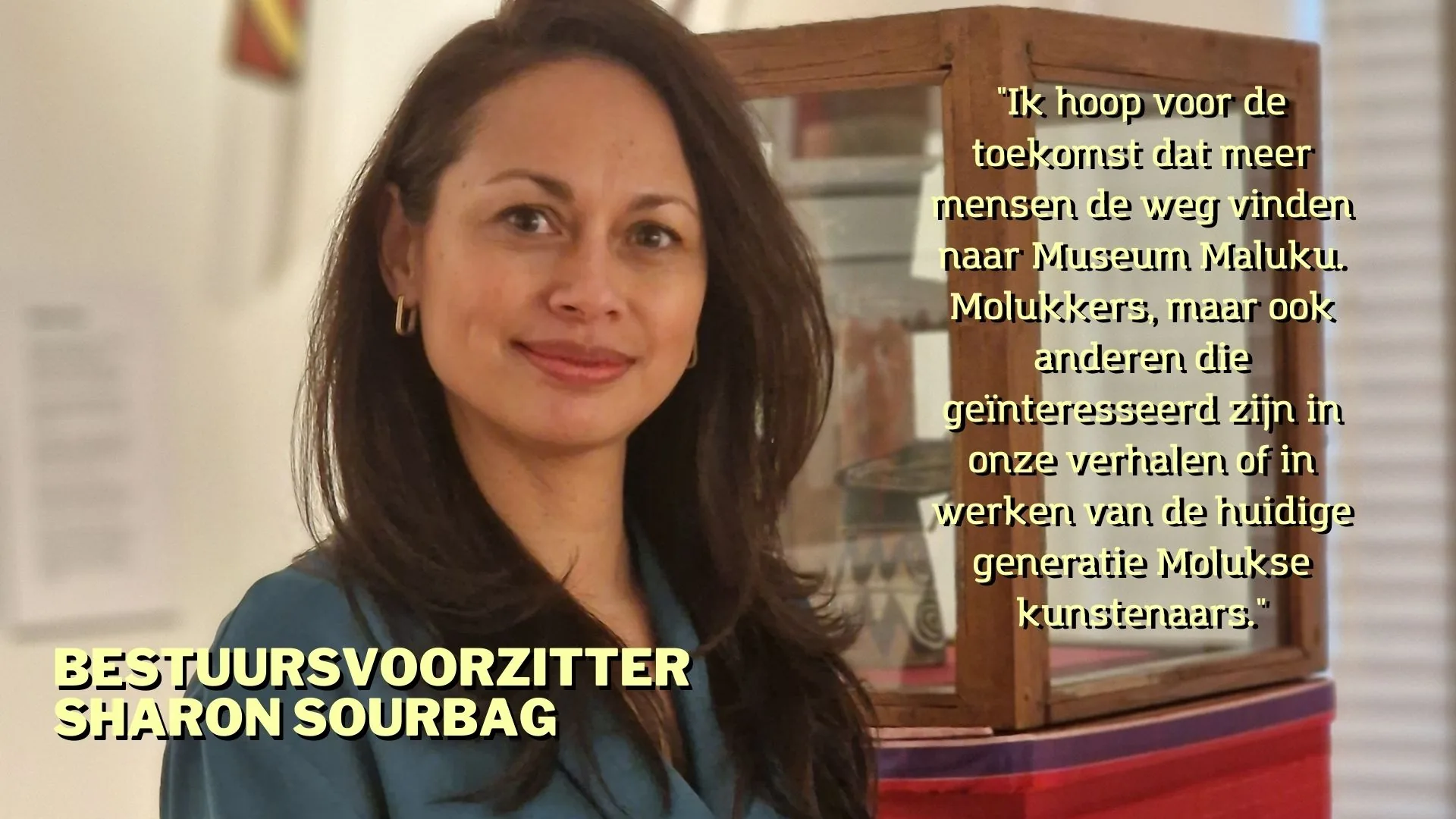
Sharon Sourbag (1975, Nijverdal) has been chair of the board of the Moluks Historisch Museum foundation since September 2022. Sharon graduated in art and cultural education at Utrecht University of Applied Sciences and in communication science at the University of Amsterdam, and has had a career as a communications adviser and spokesperson in the public sector and in higher education. As a volunteer she organised the Pelita dining table in Amersfoort for Indo and Moluccan seniors for many years. During her studies she was an intern at Stichting Tong Tong, Museum Maluku and the events office of the Jakarta Tourism and Culture Office in Indonesia. Sharon currently works for the municipality of Amersfoort alongside her voluntary role as chair at Museum Maluku. Sharon lives with her family in Amersfoort.**
What motivated you to take on a role on the board of Museum Maluku?
An important driving force is that I fully recognise the importance of using art, culture, education, encounters and dialogue to tell history from different stories and perspectives. Because my father is Moluccan, my mother has Javanese-European forebears and my husband comes from Kalimantan, I have those different perspectives at home every day. The museum's livestream Beta Disini, marking 70 years of Moluccans in the Netherlands in 2021, was therefore a moment of recognition for me.
That also made me look differently at what I was passing on to my teenage sons. They had many questions about the history, but also about my father's personal experiences as a child in camp Schattenberg or as one of the Wassenaar activists. In the 1970s he occupied the Indonesian embassy in Wassenaar together with 34 young Moluccans, in order to draw international attention to the situation of Moluccans in the Netherlands and the need to change it. Or questions about my mother's Indo family coming to the Netherlands. Questions they could no longer put to my parents themselves, because they died in 2017 and 2020. And that made me next in line. I felt it was important to make them think about the different sides of history and to be critical of what they heard about it at school. Not only to look at facts, but to feel what it did and does to people. At the same time I want to try not to pass on generational pain any further, or the feeling that they have to prove themselves everywhere and break out of something. How wonderful it would be if it became lighter for them and their generation. So that they can live with a lighter heart.
So when Henry asked me to apply as chair of the board, something fell into place. Also because as a young adult in the 1990s I had already worked for the museum as an intern. That, with all the baggage and experience I have gained in the intervening years, I can help build the museum again completed the circle for me.
In its rich history Museum Maluku has always tried to be a hub in creating awareness around the diverse Moluccan narratives. How do you think the traditional role of a museum, with exhibitions, strengthens the voice of that diversity?
I recently attended a book launch about Moluccan monuments in the Netherlands. Museum Maluku was mentioned as a living monument too. That was the aim when the museum started in 1990. At the time it told the story of the Moluccan KNIL families in the Netherlands. The difference now is that there is attention for more stories about and by groups within the Moluccan community. For example by Moluccan Dutch people whose grandfathers were not in the KNIL. Or who did not live in a camp. There is room for personal stories, family anecdotes, stories never told about life in the Netherlands from the arrival in 1951 until now, but also before that in Maluku. Stories that belonged to our grandparents or the generations before them, and stories of my generation and of the generations after us. That is also who we are.
The fact that we are now unpacking the museum collection, which has been in containers since 2012, contributes to that. Soon we will be able to exhibit parts of that collection again. Every Moluccan family will have its own story about an object or photograph from that collection. But we also have shared stories, stories every Moluccan recognises or feels. And stories that leave traces in the Netherlands of today. And knowing that is important for other groups in society too.
So you can reflect on a living monument such as a museum, in order to commemorate or remember. But as far as I am concerned it is more important to understand. Every monument, our own and other people's, is there for a reason. Discovering the stories that go with it, immersing yourself in them. That creates a forward movement and progress. And I think that matters.
Are there specific future goals you hope to achieve with the museum?
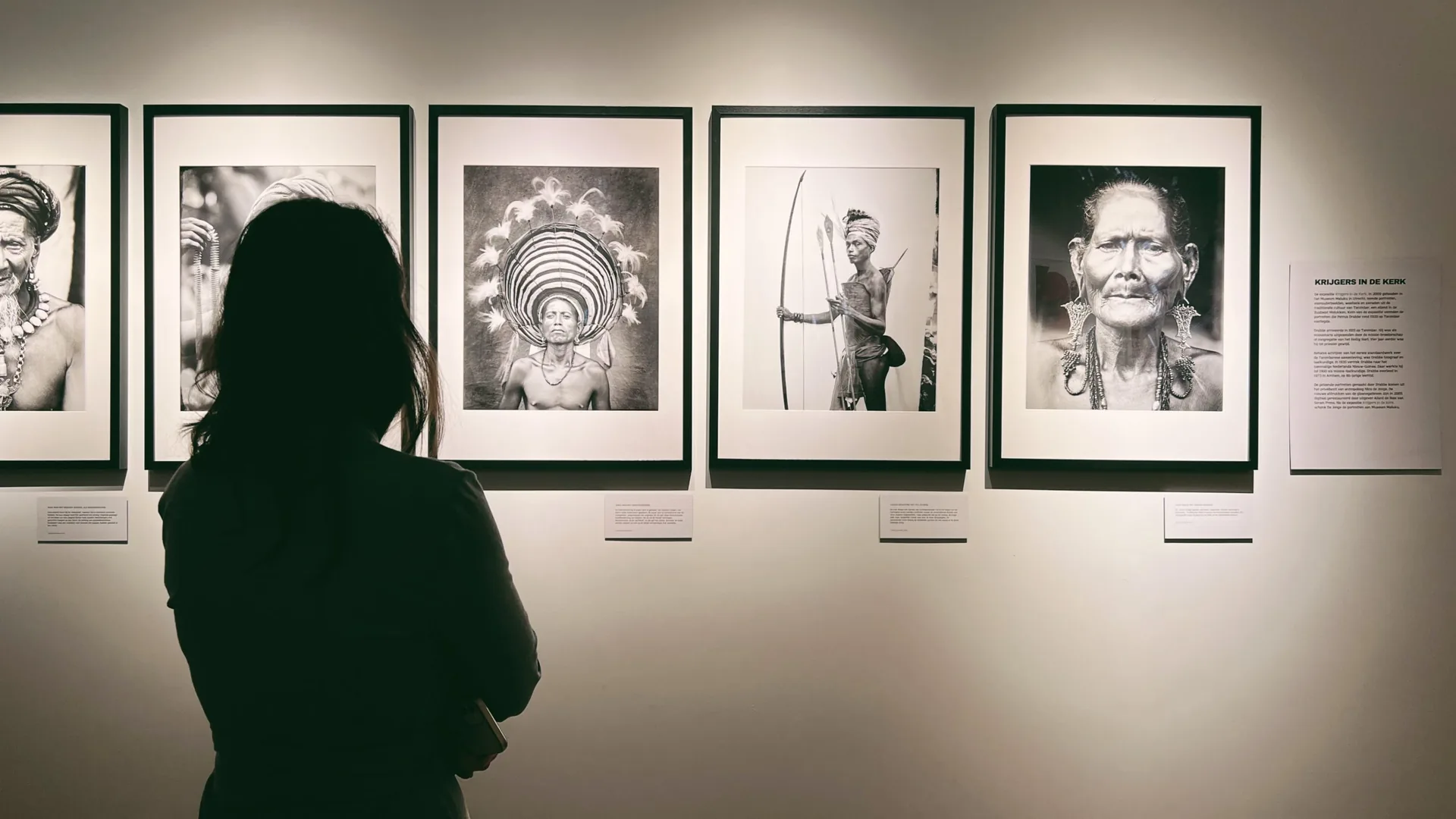
I am coming in at a moment when Museum Maluku is building again. The museum many people know from Utrecht no longer exists. Thanks to the Ministry of Health, Welfare and Sport the museum was given a restart and a place in Museum Sophiahof in The Hague. A new wind is blowing: a young team with new energy, many online activities and collaborations with other cultural organisations and initiatives. That is a different way of working for us and a different experience for visitors than in Utrecht. People sometimes still have to get used to that. And that takes time.
For the future I hope more people will find their way to Museum Maluku. Moluccans, but also others interested in our stories or in the work of the current generation of Moluccan artists. Through our exhibitions, special events and online channels. But also through collaborations with other museums and educational initiatives in the Netherlands and Indonesia. And that in this way we can contribute to a more widely shared picture of our cultural heritage and history. But above all that our activities become a flywheel for encounter and dialogue between diverse groups of people in society.
Are there social themes and trends it is important for Museum Maluku to keep an eye on?
We have turned our gaze both inward and outward. And we should try to hold on to that. That is also how, in my view, we will manage in the longer term to seize opportunities to secure the museum's survival. These times demand that of us. Think of the public debates about the colonial past, slavery and their cultural and humanitarian consequences and afterlives. The call for more knowledge, insight and understanding of these in society is growing louder. People are looking at ways to give this shape through education and art and cultural education. And that touches on our work and opens doors to a larger platform for Moluccan cultural heritage and the stories that go with it.
We also see changes in the museum field. There are museums that look to us as a front-runner in digital museum work. That is good and a great compliment. But precisely because developments move quickly, continuous innovation is needed. Looking for new ways to give visitors the best experience online and in the museum.
Finally, is there anything else you would like to say?
After we marked 70 years of Moluccans in the Netherlands as a community, you saw a movement emerge. A new generation of Moluccans making themselves heard and seen through art, culture, books and music. I am proud of that. They are given the stage across the country and through it they reach Moluccans and others alike. It therefore feels as if all those movements are going to bring about a turning point. How and what exactly, the future will have to show. But that we manage to inspire, carry and help one another forward is something I notice. That also keeps Moluccan culture, language, shared past and our collective future alive and binds us together. I think that is a fine thing. And that is another reason why I want to help, in my own way and with the best I have to give, to keep the Moluccan story alive and make it visible. For the previous generations as well as the generations after me.