Now on view: the new exhibition Uitgepakt
Museum Maluku opened this year with the exhibition Afgestoft: Membuka tambo lama. Ten objects from our own collection were on view then. A great deal of work has gone into unpacking our own collection this year and we now want to show it. Until the end of January 2024, Museum Maluku is showing more than 200 objects in the new exhibition Uitgepakt: Van kist naar kast (Unpacked: from chest to cupboard). Curator Huib Akihary brings you up to date on the process and on what you can expect.
THE MUSEUM COLLECTION
This year Museum Maluku has focused entirely on opening up its own museum collection, which lay in storage for years. That became possible because we found and were able to rent a depot space temporarily in the Museum Depot of the municipality of Rotterdam. Many objects have been unpacked, cleaned, checked for physical condition and registered. Work has also begun on reassessing the collection. What are the collection's focal areas and themes? Which objects belong, according to those guidelines, to the core collection and which do not? What are our highlights? What do we want to keep and what should we deaccession? It is quite a job, one that will keep the curators and volunteers busy for the next two years.
AN INTERNAL MOVE
Unpacking the collection is a great deal of work in itself, but before 31 December 2023 the collection also has to move internally to a different and smaller space in the municipal Museum Depot. Large objects such as cupboards, tables and chairs from the camp period and the many army chests and suitcases of the Moluccan ex-KNIL soldiers cannot come along to the smaller depot. A solution for where to put these space-eaters was quickly found. Temporary dispatch (!) to Sophiahof to exhibit them. And with that the concept was born and the basis laid for the new temporary exhibition.
UITGEPAKT: VAN KIST NAAR KAST
This exhibition highlights a remarkable piece of the history of the arrival of large groups of Moluccans in the Netherlands in 1951 and their first years in barrack camps. With 'Uitgepakt', Museum Maluku shows more than 200 objects from its core collection related to the arrival and the first years in the Moluccan camps. From chest to cupboard, from a clove boat to a bible, from a bakelite light switch to a flute, from army underpants to a radio. All the objects are gifts from the Moluccan community.
ARMY CHESTS AND NAMES
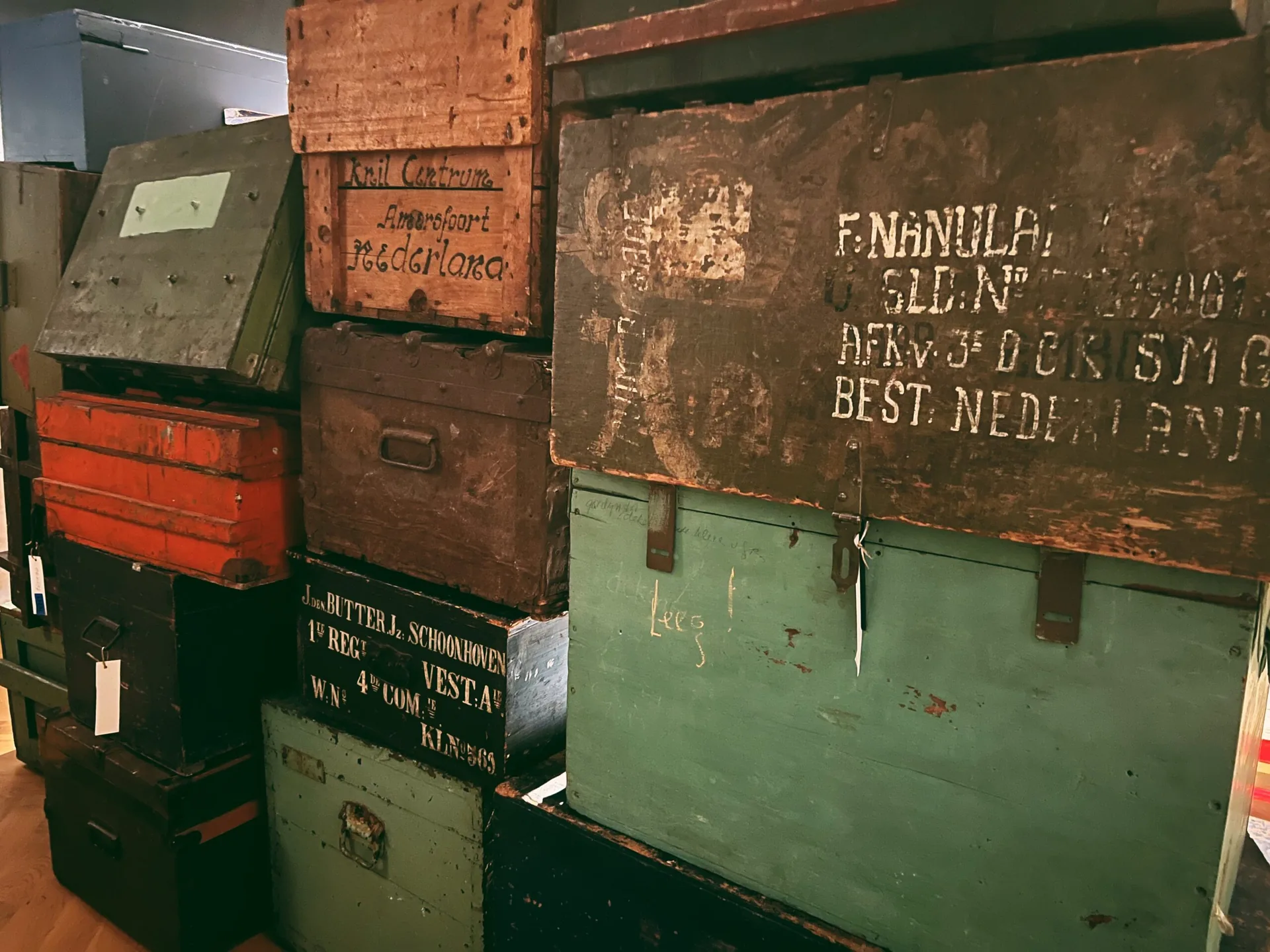
Fifty army chests and suitcases that the Moluccan ex-KNIL soldiers and their families brought to the Netherlands in 1951 form the first part of the exhibition. Names and army numbers are emblazoned on these chests and cases. They belonged to real people, to families, fathers, mothers and children. 3,500 family names, 12,500 people in total.
The names on the cases are supported by the audio installation Currents by the young Moluccan artist and researcher Finn Maätita. He invites everyone with Moluccan roots to speak their family name and share it with him. The names collected and spoken so far can now be heard and form a beautiful addition to the display of suitcases and army chests.
-
-
Imagine army chests and trunks that keep silent about unfinished journeys and a longing for a home that was lost. Here is the story in a nutshell: being Moluccan and a KNIL soldier in the colony of the Dutch East Indies. Only in 1949 does the Netherlands recognise the independence of Indonesia. In July 1950 the Royal Netherlands East Indies Army is disbanded and demobilisation follows. Moluccan KNIL soldiers end up in army camps on Java, prevented from returning to their Moluccan home for fear that they would fight for a Free Republic of the South Moluccas. An impasse arises and they are transported to the Netherlands, only temporarily, pending a definitive return to the Moluccas.
THE BARRACK ROOM
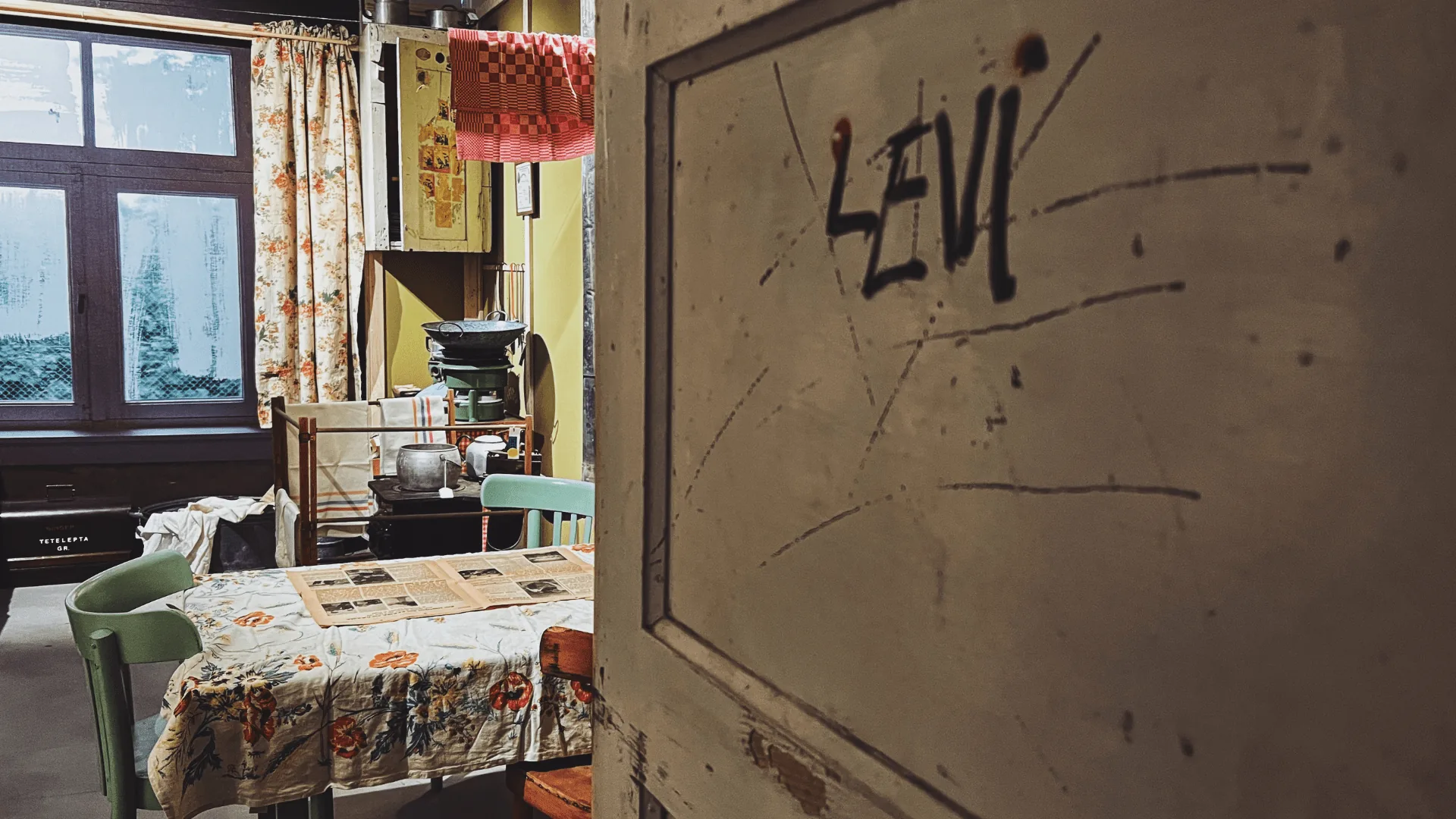
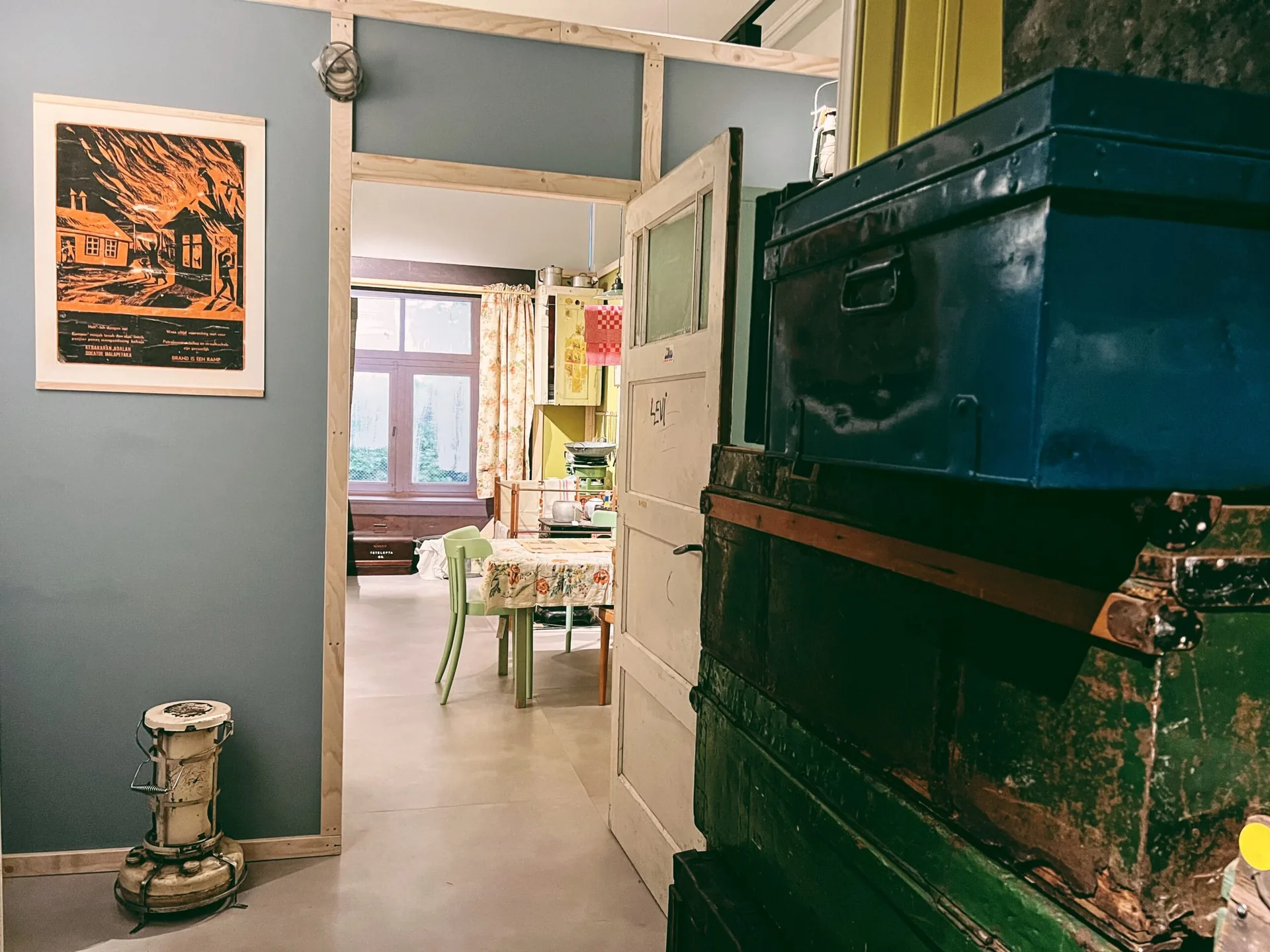
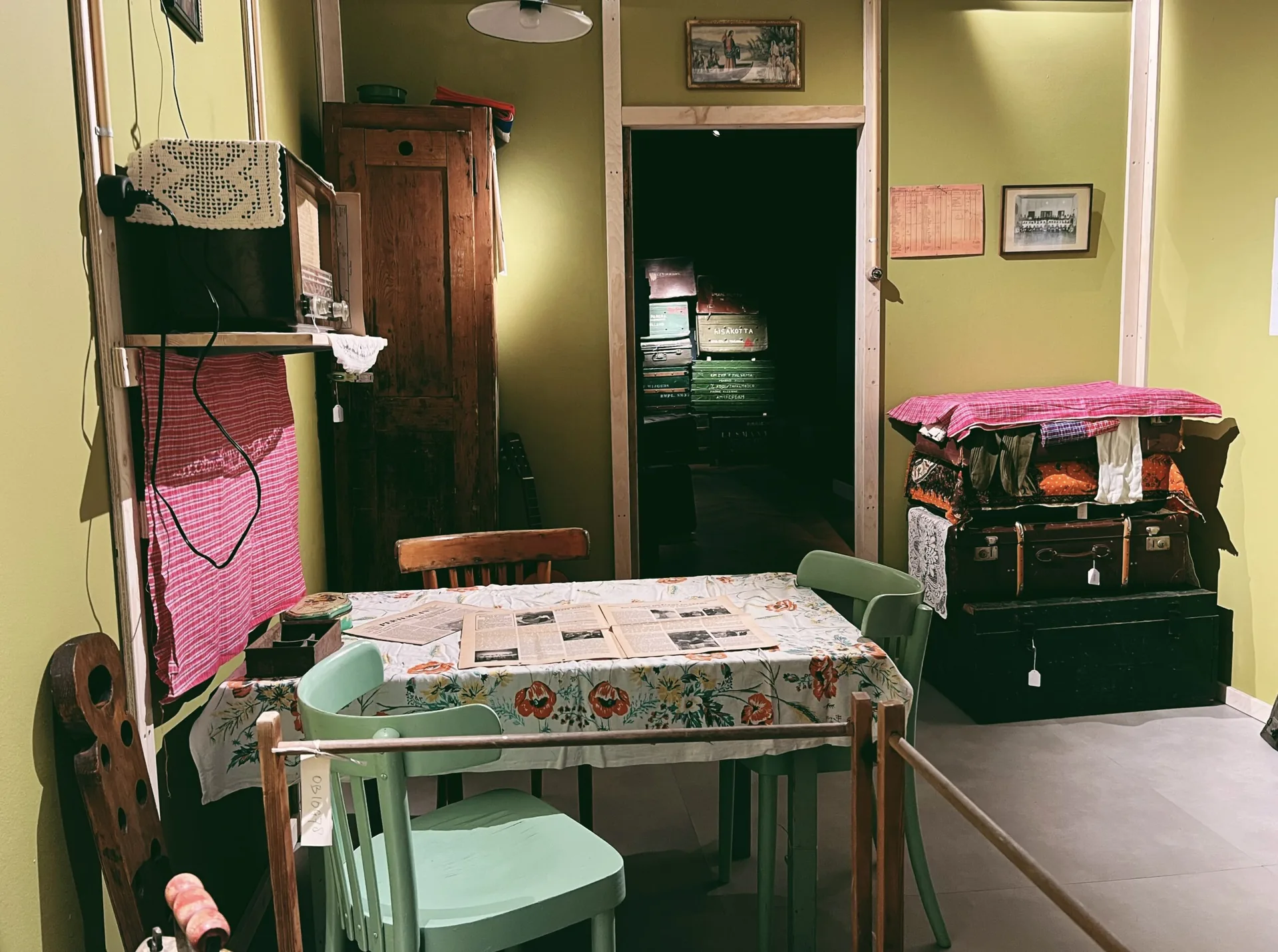
After arriving in the Netherlands in 1951, Moluccans were housed in barrack camps. In the second hall, a barrack room and corridor have been reconstructed and furnished with authentic furniture, household goods, clothing and personal belongings from the first years of occupation.
This barrack room is therefore a window onto the years 1951-1956. The curtain, for instance, symbolises the division of living space in a barrack room. It is a reminder that at first every family was allocated only one room. That is where people lived, slept and ate. The government provided a complete inventory and food from a central kitchen. This reconstructed barrack corridor and living room tell the story of solidarity, of perseverance, community spirit, resilience and resistance.
MOLUCCAN HERITAGE
Every object in the exhibition has a personal history and was given to Museum Maluku. Together the objects and stories form Moluccan heritage. They are a shared memory that illustrates the strength of sharing and preserving together.
Curator Huib Akihary
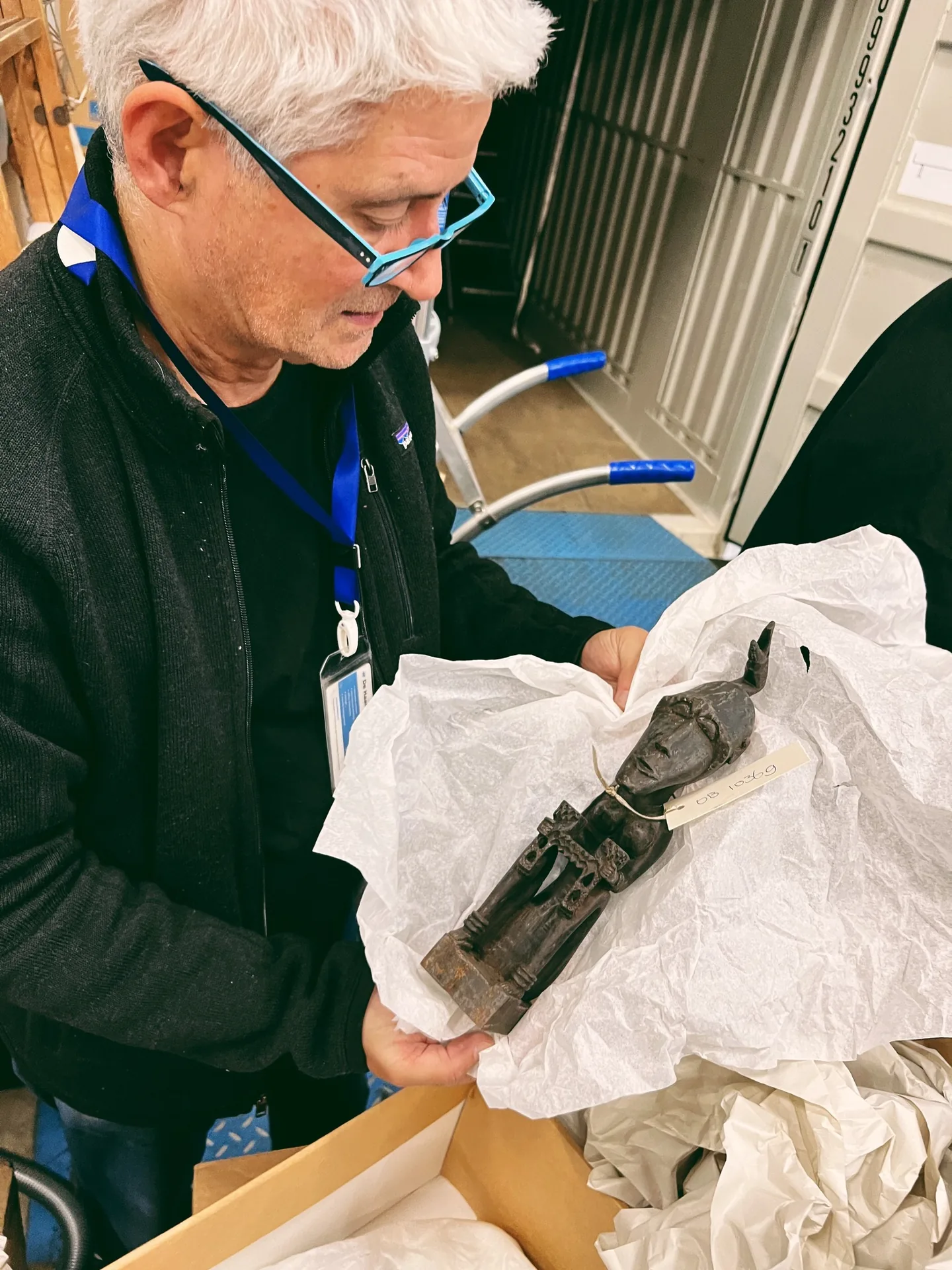
Curator Huib Akihary has also written From -20 to one floor up, Cold turkey in the depot, Bongso at the Four Days Marches, Tobelo North Moluccas in images, and Three remarkable donations