#
Greetings from Leiden: TNS – three islands, one family
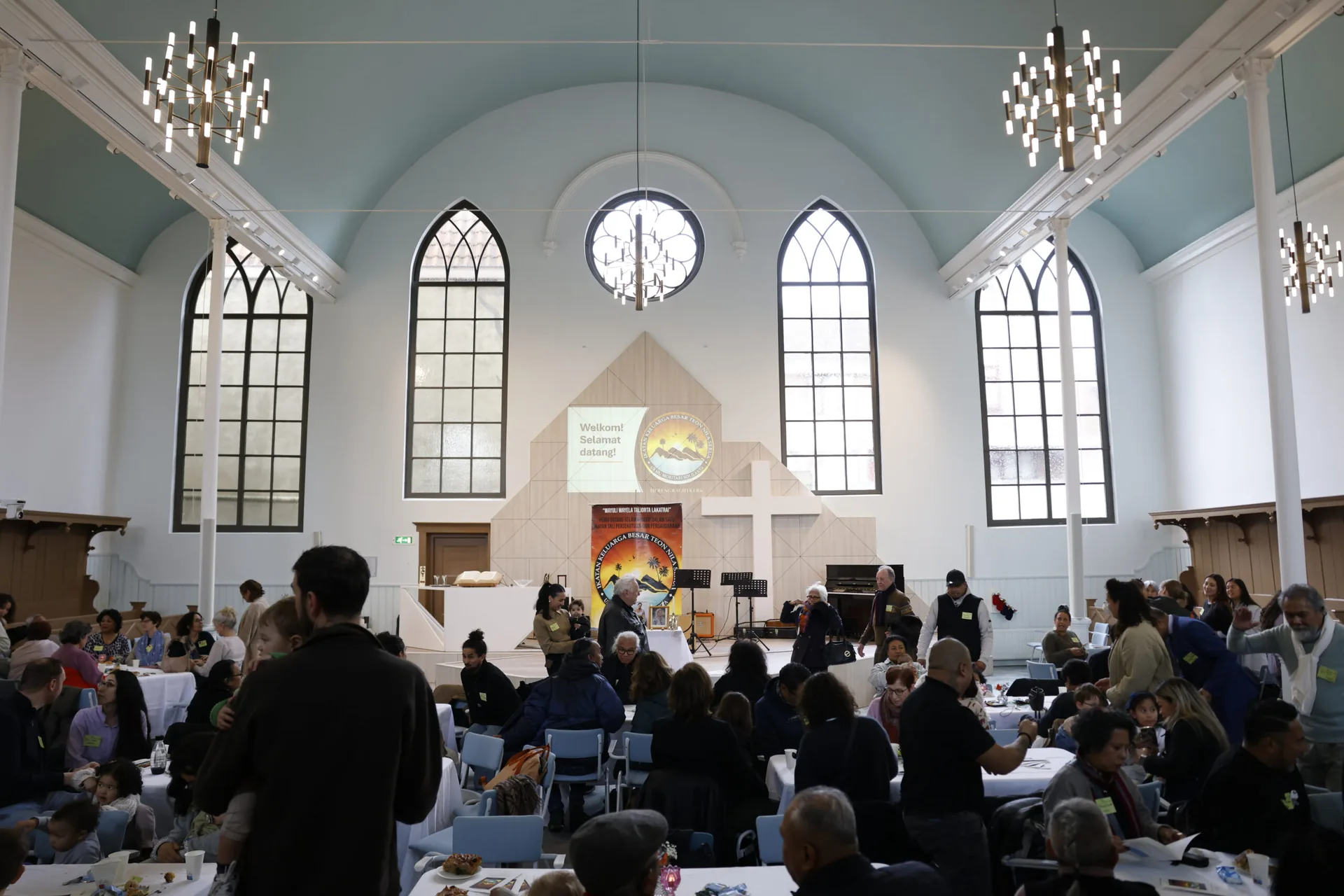
On 8 February the annual Ibadah TNS took place in Leiden, a special church service for and by Moluccans with roots on the islands of Teun, Nila and Serua (TNS). This time the service was organised by the family of Yanise Zijlstra, digitisation project leader at Museum Maluku, who has Seruanese roots. We spoke with Yanise about the history of the TNS community, the meaning of the Ibadah and how the TNS identity lives on in the Netherlands.
A history that connects
"The TNS islands are three small volcanic islands in the South-West Moluccas," Yanise says. "They lie fairly isolated; Serua, for instance, is about a day's sailing from Ambon! In 1978 the TNS islanders were evacuated because of the threat of volcanic eruptions. They were first taken to Makariki and later allocated land at Waipia on Seram. Since then, officially, no one lives on Teun, Nila and Serua any more. Fortunately people still travel to the islands to harvest, fish or live there temporarily." Despite these forced relocations, the bond between TNS people has always remained strong. "Everyone with roots on the TNS islands is connected to one another," Yanise stresses. "On the islands there were already unique alliances and clans, and here in the Netherlands too we feel like one family, even if you do not know each other personally."
A strong community in the Netherlands
The TNS community in the Netherlands can be recognised by various family names. "Teunese people bear names such as Kurmasela and Nuniary. Nilanese people have names including Marantika, Letwory or Tanate, and you recognise Seruanese people by names such as Resley, Wonmaly or Pormes."
Although the islands have officially been uninhabited since 1978, the TNS community works to keep the culture and identity alive. "Our grandparents and great-grandparents spoke the language, but it was not always passed on well. That is why there are now initiatives to preserve our intangible heritage, such as tifa and dance workshops. We want future generations to know where they come from."
Besides the Ibadah TNS there are several events where TNS people can meet. Last year, for instance, a TNS weekend was organised for the first time near Arnhem, where families came together to learn dance, music and cooking and to strengthen the sense of community. "Our culture is in our language, music, dance, stories and special alliances," Yanise says. "The Seka Tena, for instance, a traditional dance, has a rhythm reminiscent of the volcanic activity of our islands. That is something I learned at uncle Victor Lekranty's TNS weekend."
Ibadah TNS
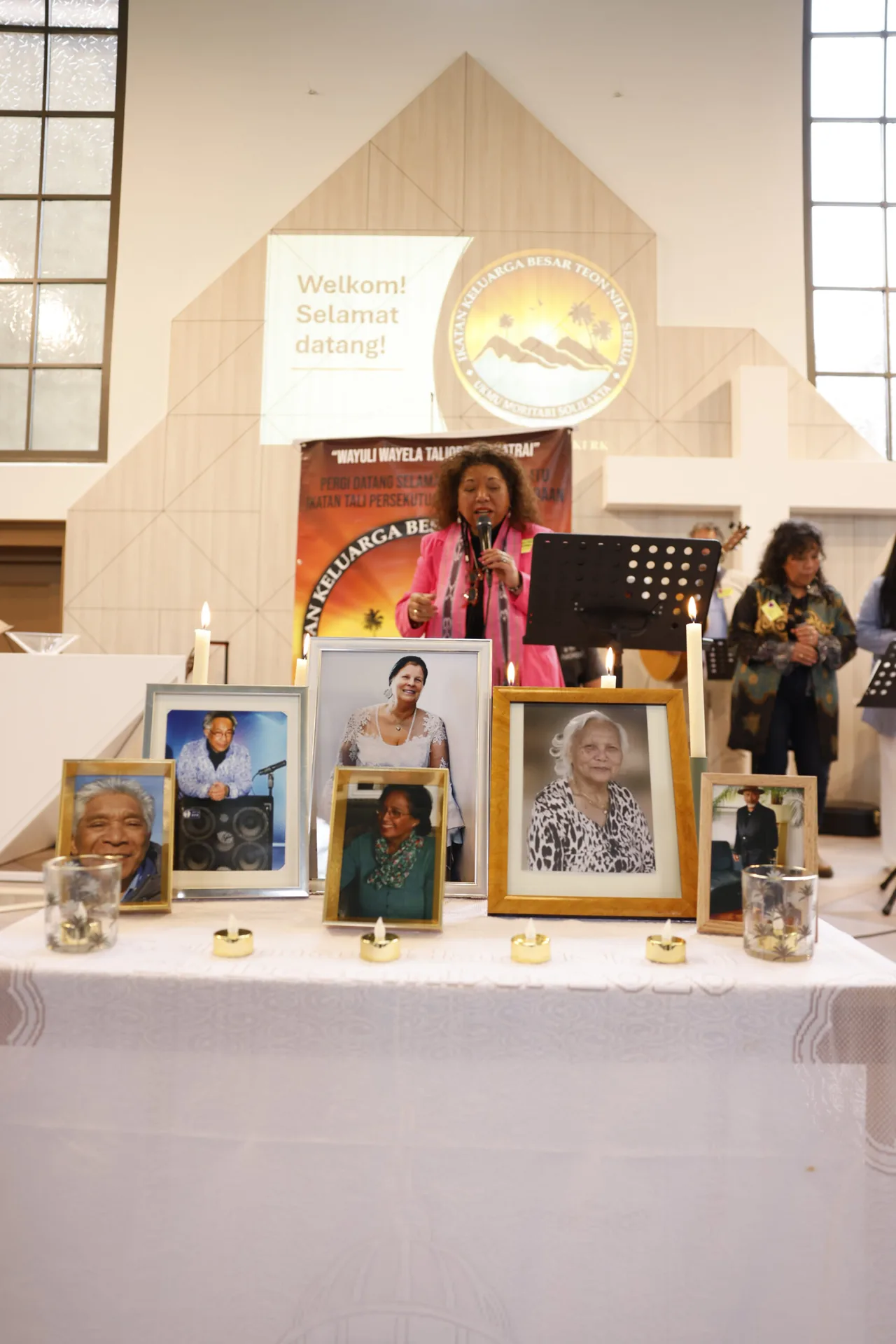
The Ibadah TNS is a church service to usher in the new year and a moment to reflect on the past and the future. "We light candles for those we lost in the past year, sing together and share stories," Yanise says. "This year we had a raffle to raise money, and people who have recently been to the TNS islands talked about their experiences. With events such as the Ibadah TNS, which is organised not only in the Netherlands but in the Moluccas as well, we want to keep meeting one another and stay connected."
Thanks to better ferry connections, more and more people can return to the TNS islands, but the future is uncertain. "Young people are moving to the city, so whether life will really return there I do not know. But as long as we keep seeking one another out and passing on our history, the TNS identity will endure."
Photos by Jesse Koelstra