Community Crowdsourcing Kamp Vught
Museum Maluku is working on digitising and enriching its archive with one central question: how can the Moluccan community give meaning to its own heritage? In March the museum presents an extensive photographic collection by a photographer who recorded Moluccan social and cultural events in the Netherlands from the 1960s until 2000. The photographs, made in close connection with the community, are being made publicly accessible for the first time.
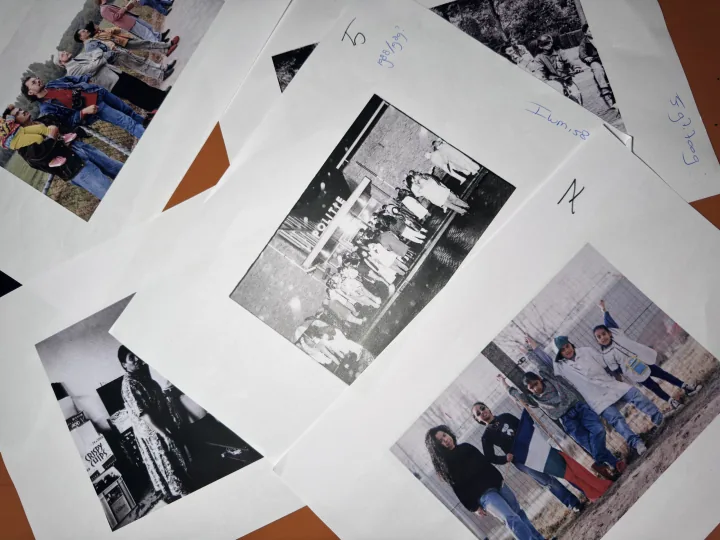
From archive to community
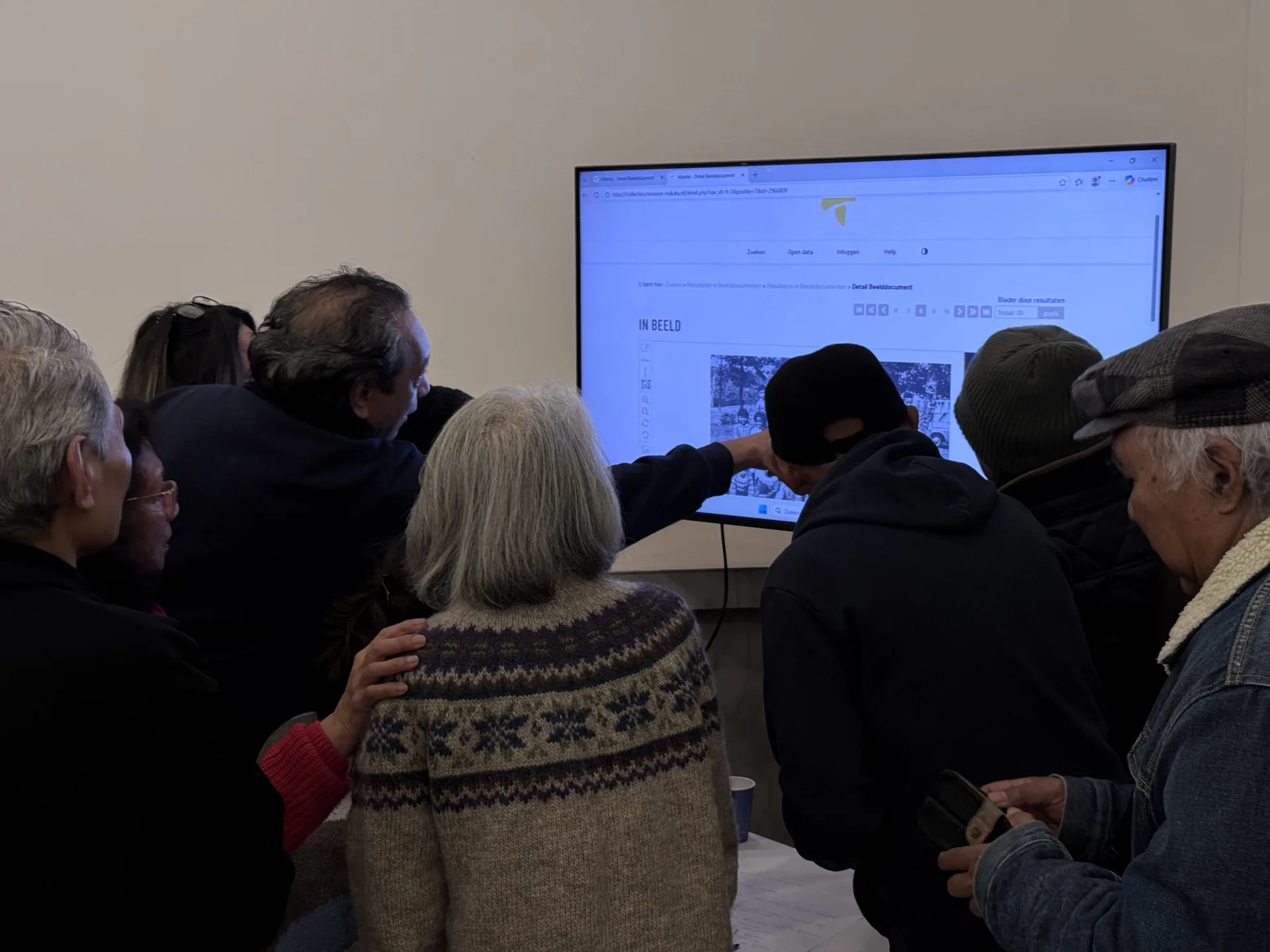
Together with students of the Reinwardt Academie, Museum Maluku is exploring how these images can be not only opened up but also enriched collectively. In small groups the students develop plans in which digital participation via Atlantis is combined with physical community events. During public gatherings and sessions, photographs take centre stage as carriers of memory: visitors are invited to recognise people, share stories, name emotions and add cultural context. In this way the archive grows from a collection of images into a living body of shared knowledge and experience.
The groups are working towards concrete presentations in which they share their plans, formats and pilot gathering with the museum. These presentations show how co-creation and community engagement can take shape in practice, with attention to cultural sensitivity, ownership and ethics. The outcome is not only a workable plan for the coming exhibition in March, but also a joint process in which the museum and the Moluccan community decide together how their history is told and preserved.
Within this trajectory, work built towards a pilot community evening at Kamp Vught. During the preparations and archive selection sessions it became palpable once again how extensive and meaningful the Museum Maluku archive is. Among boxes, albums and stacks of photographs it became clear that this heritage is more than documentation: these are faces, moments and lives that call for care, protection and transmission.
Digitising the archive is a long and intensive process. At the same time the images and their accompanying descriptions confront us with the complexity of archive formation. Some historical descriptions reflect a language and a gaze from outside that grate today. That is precisely why joint reinterpretation is essential: no longer speaking about the community, but speaking together with the community.
cc-kamp-vught
cc-kamp-vught
cc-kamp-vught
Where images unlock memories
For the community evening, the photographs chosen by the students took centre stage. These photographs contain images deeply anchored in personal and collective memory and form a direct bridge between archive and lived world. Maps of Kamp Vught were also studied, showing who lived where and how the camp was laid out. These documents make it possible to feel that this is not abstract history, but the lived reality of Moluccan families.
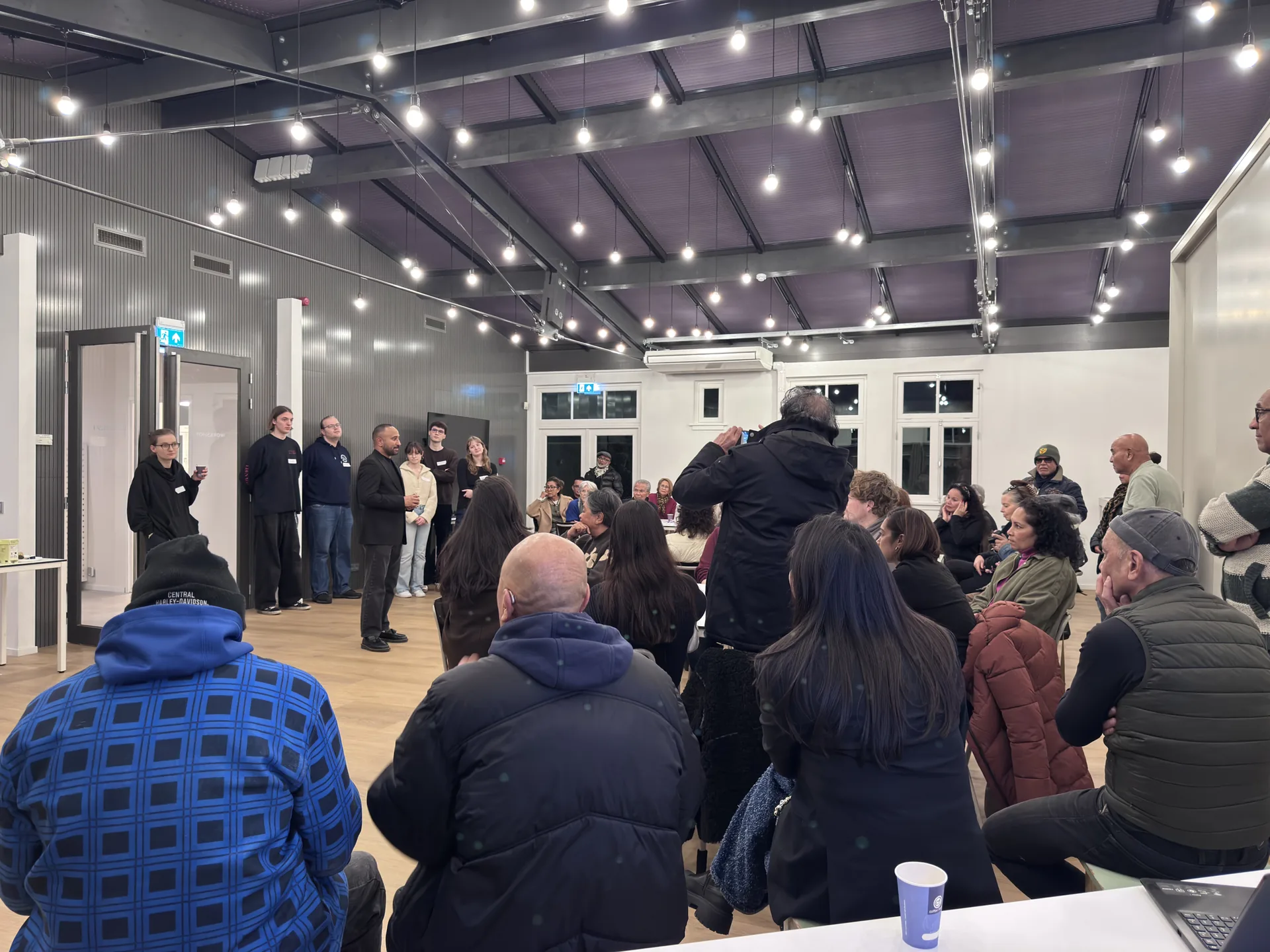
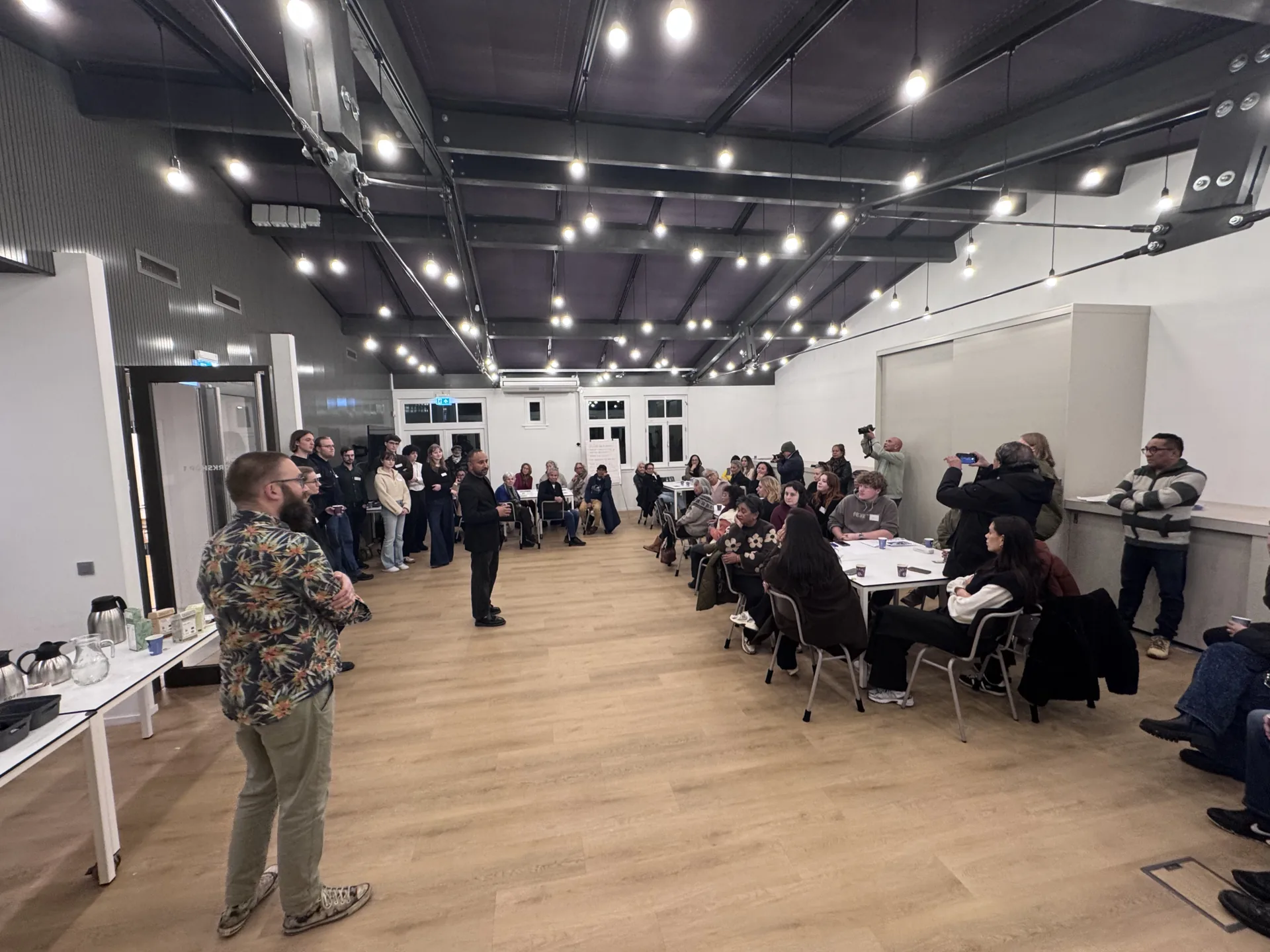
During the community evening itself, these layers came together. As soon as the photographs were laid out on the table, a dynamic arose that could not be fully steered. Conversations flowed of their own accord, people joined in, memories leapt from one image to the next. Names, places, traditions and personal stories gave the images new meaning. What is so often missing from archive descriptions was shared here: context, emotion and connection.
And that is precisely where the heart of this pilot, and of the collaboration with the Reinwardt Academie, lies. The aim was not to "transfer" knowledge in a one-way story, but to create an encounter. A setting in which students not only learn about heritage, but experience what heritage is: relationship, responsibility, sensitivity and above all community.
Not about, but with the community
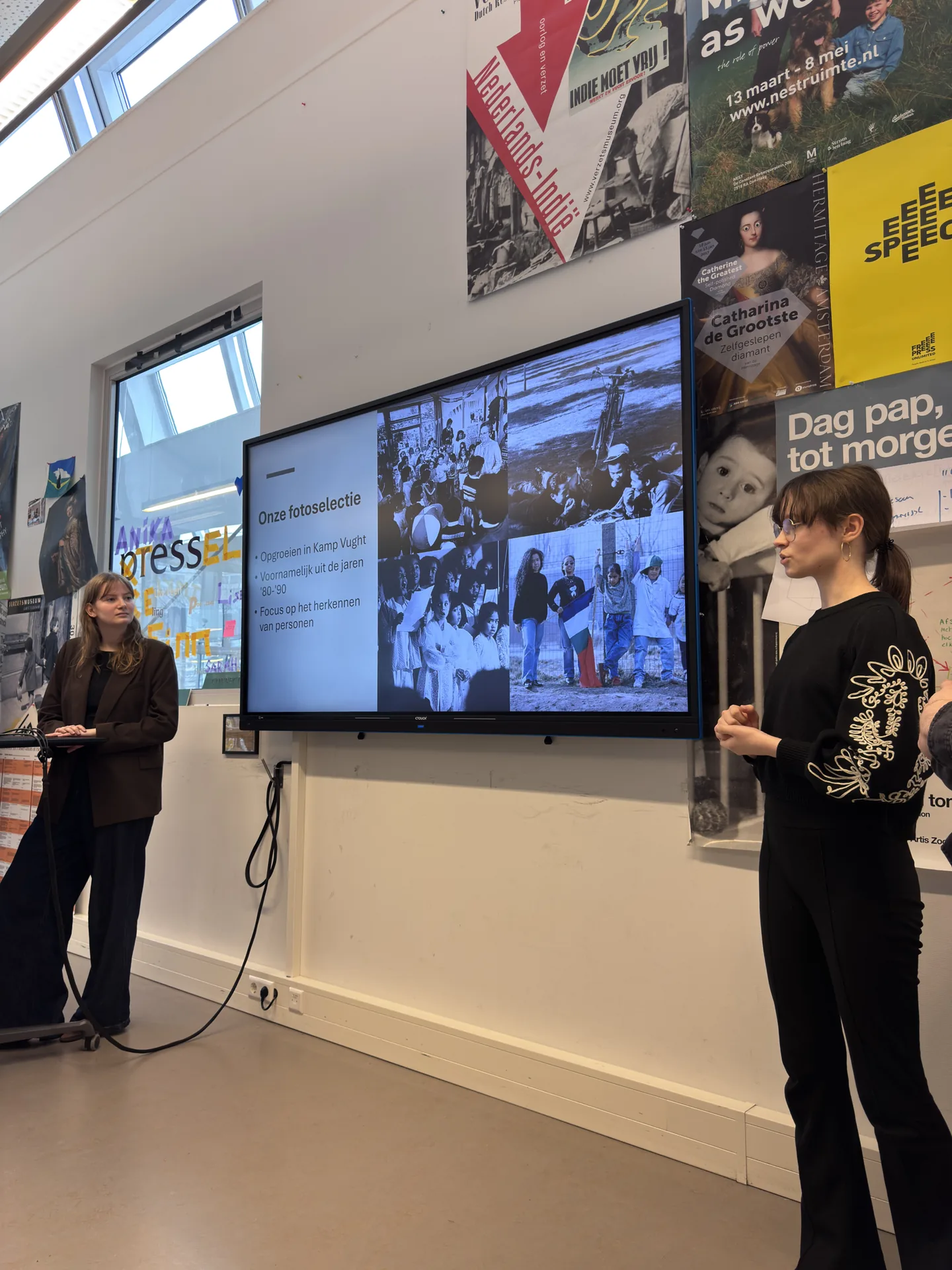
Studenten-presentatie-Reinwardt-academie
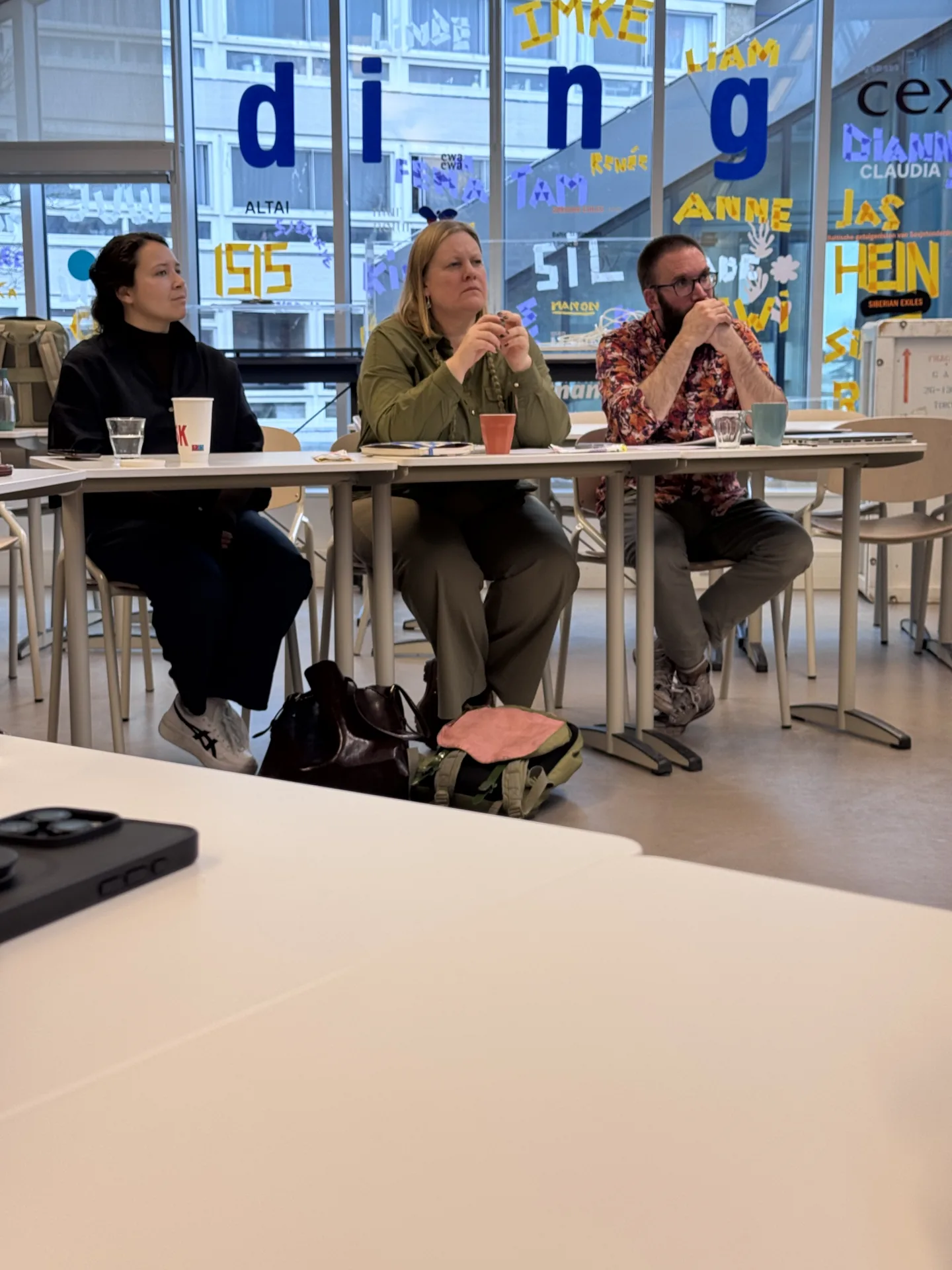
Studenten-presentatie-Reinwardt-academie
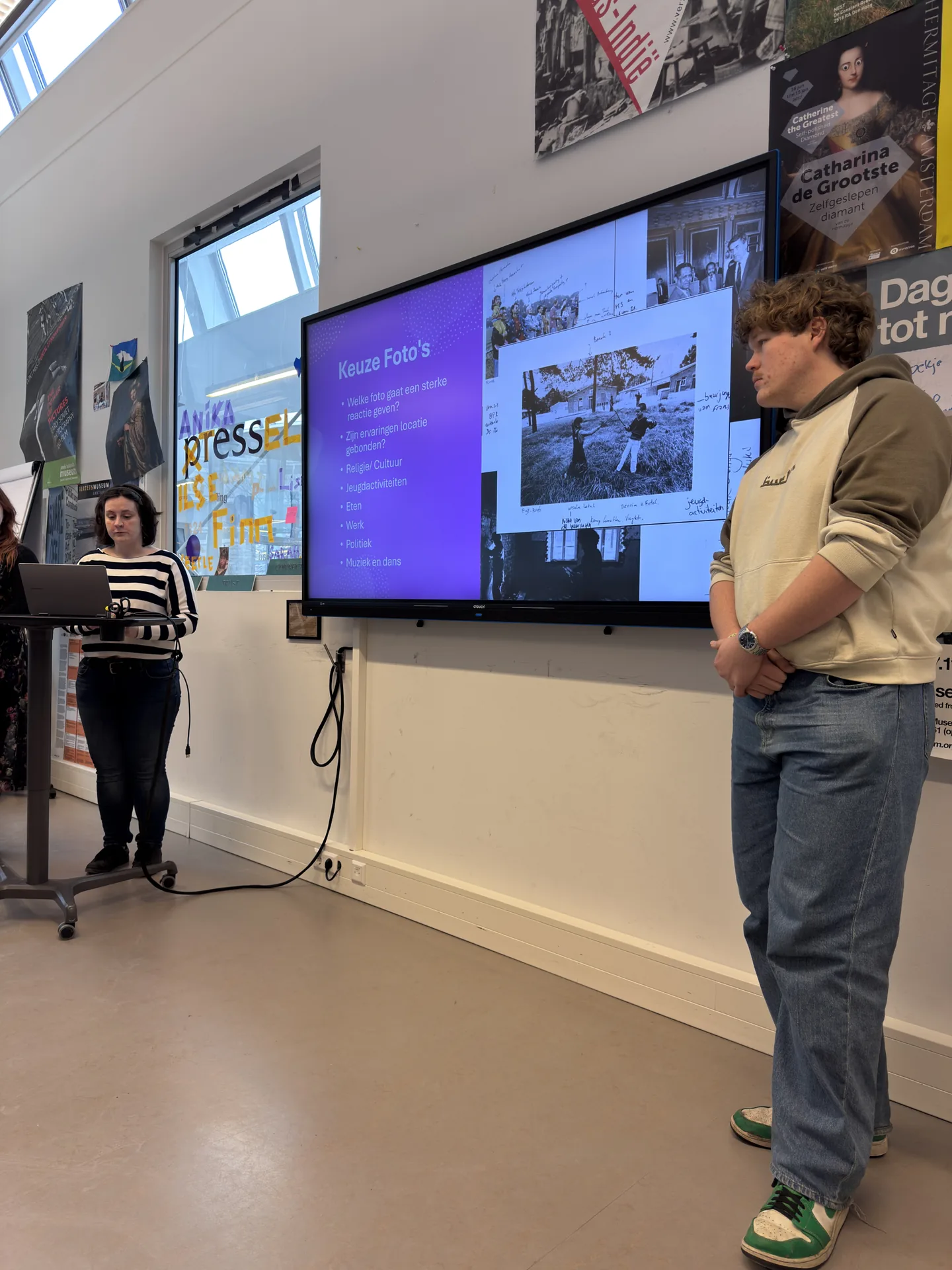
Studenten-presentatie-Reinwardt-academie
On 21 January the students presented their experiences and results. They described the process as instructive, but also stressed something else: it was enjoyable. The students got to know the Moluccan community close up as warm, open, dynamic and headstrong. In the process they discovered that their original plans were often too structured. Where they worked with schedules and formats, the evening took its own shape as soon as the encounter came first.
This experience called for flexibility and going with the flow. One of the students aptly described the process as "organised chaos": a valuable insight, showing that the wish for tightness does not always work in a context where relationship, rhythm, humour and being together set the tone. The gain lay precisely in that shift.
The students said they had come to look at history and heritage differently. No longer as something abstract, but as something fragile that can disappear when it is not protected and shared. At the same time the pilot yielded concrete insights for the future: about listening better in order to record metadata, about keywords that matter for searching the image bank, and about how community evenings can be organised from here.
In short: this pilot was a success. But more importantly: it was a beginning, Museum Maluku is taking to the road! A way of working together that revolves not only around archive items, but around people. Around the community. Around shared ownership of the past, the present and what is passed on to the future.
Would you like to know where and when the next community crowdsourcing takes place? Then keep an eye on our socials.