#
In Nederland gebleven: the story continues
With the appearance of the revised edition of In Nederland gebleven, an important milestone has been reached in the writing of the history of the Moluccan community in the Netherlands. The book, which first appeared in 2006, tells the story of the roughly 12,900 Moluccans who came to the Netherlands in 1951. They were largely former KNIL soldiers and their families who, despite the expectation of a temporary stay, are still rooted here almost 75 years later. Now, almost twenty years on, authors Fridus Steijlen and Henk Smeets add a new chapter that carries the history through to 2025.
A gift that grew into a standard work
The origin of the first book lies in the fiftieth anniversary of the Moluccan arrival in the Netherlands. "In 2001 the commemoration took place in Rotterdam," Henk Smeets says. "On that occasion minister Van Boxtel offered a 'gift': money for an academic study of the history of Moluccans in the Netherlands. The Moluks Historisch Museum was to carry this out and asked us to take care of the research and the publication."
"It began as a broad project with a team of young Moluccan researchers," Fridus Steijlen adds. "Henk had drawn up an overview of all the gaps in the history. Those had to be researched. In the end Henk and I were left to write the whole thing, using all those sub-studies and oral history." In 2006 the book was officially presented to minister Verdonk. "It sold out fairly quickly," Henk says. "Academics called it a gain because it brought new facts and corrected existing misunderstandings." "Of course there are comments too," Fridus says. "Of the 'hey, I am missing something' kind. But above all the book meant recognition of the history, and that matters."
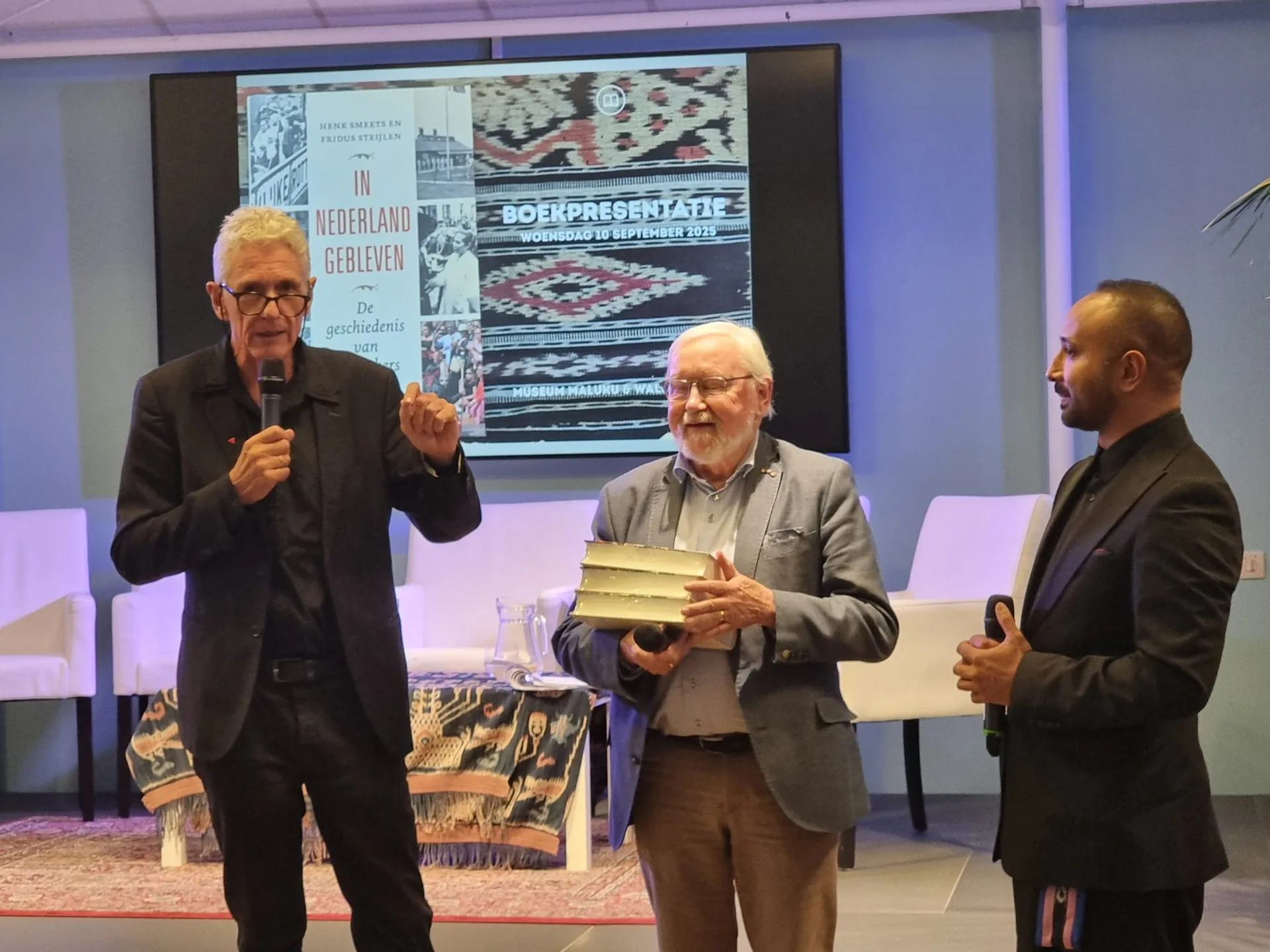
Authors Fridus Steijlen and Henk Smeets with museum director Henry Timisela at the book launch in Museum Sophiahof.
Motives and involvement
Both became closely bound up with the Moluccan community in their own way. "I lived in Vught, close to the Lunetten camp," Henk says. "When Moluccan young people received a letter in 1975 saying they had to move, I discovered that they did not know the background to that decision. I was a history student and began gathering documents and wrote a piece with which they could support their case. When national commotion arose, minister Van Doorn came to Vught. That is how I was noticed by the Inspraakorgaan Welzijn Molukkers. At first I thought: I am not going to work there, Moluccans should do that themselves. But after the end of the hostage taking at De Punt I realised that more dialogue and a strengthening of Moluccan leadership were in fact needed. I ended up working there for ten years, later helped found the Moluks Historisch Museum and so rolled from one project into another."
Fridus found his calling during his anthropology studies. "A Moluccan friend said that I was occupied with the 'non-Western', but that there are people from that 'non-West' living here in the Netherlands too. Then I thought: Dutch people have something to do with that history as well. I could look on or take responsibility, and I chose the latter. In 1977 I became a member of a Moluccan youth movement focused on education and awareness. During my studies I specialised in Indonesia and wanted to go there for my master's thesis, but was not given permission by the Indonesian government to travel. So in the end I wrote about Moluccan drug problems. In that way my involvement became part of my academic work. I am an anthropologist who comes out of the clay, as I put it. Since then I have kept writing and doing research in and with the Moluccan community."
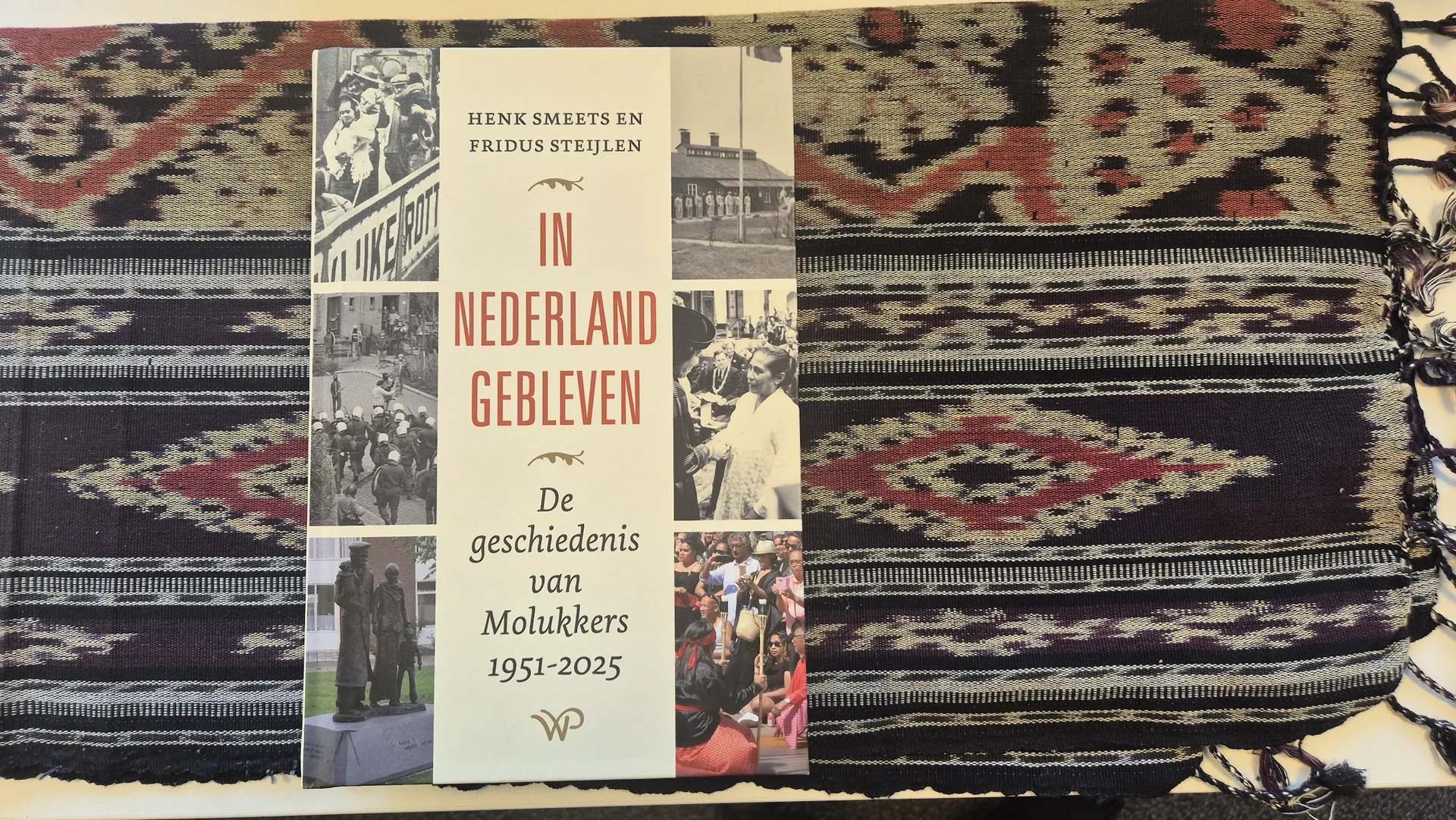
The cover of the new book.
A new generation, new forms
The revised edition offers a fresh view of the past twenty years. "We saw that facts were sometimes presented wrongly," Fridus explains. "We wanted to put that right and add current developments." He wrote the extra chapter on the basis of new research and many conversations. "The position of the third and fourth generation is different from that of the second. On issues such as anti-racism and Black Lives Matter, young Moluccans today speak out and say: this is our society too. We are co-owners. You hardly heard that in the 1980s and 1990s; people were still busy conquering a place then. Now young Moluccans use their own media, podcasts and new forms of action." Henk sees self-confidence above all: "Young people today say: 'We are here. Hands off.' Their Moluccan identity remains, but takes new forms."
The text continues below the photographs.
-
-
-
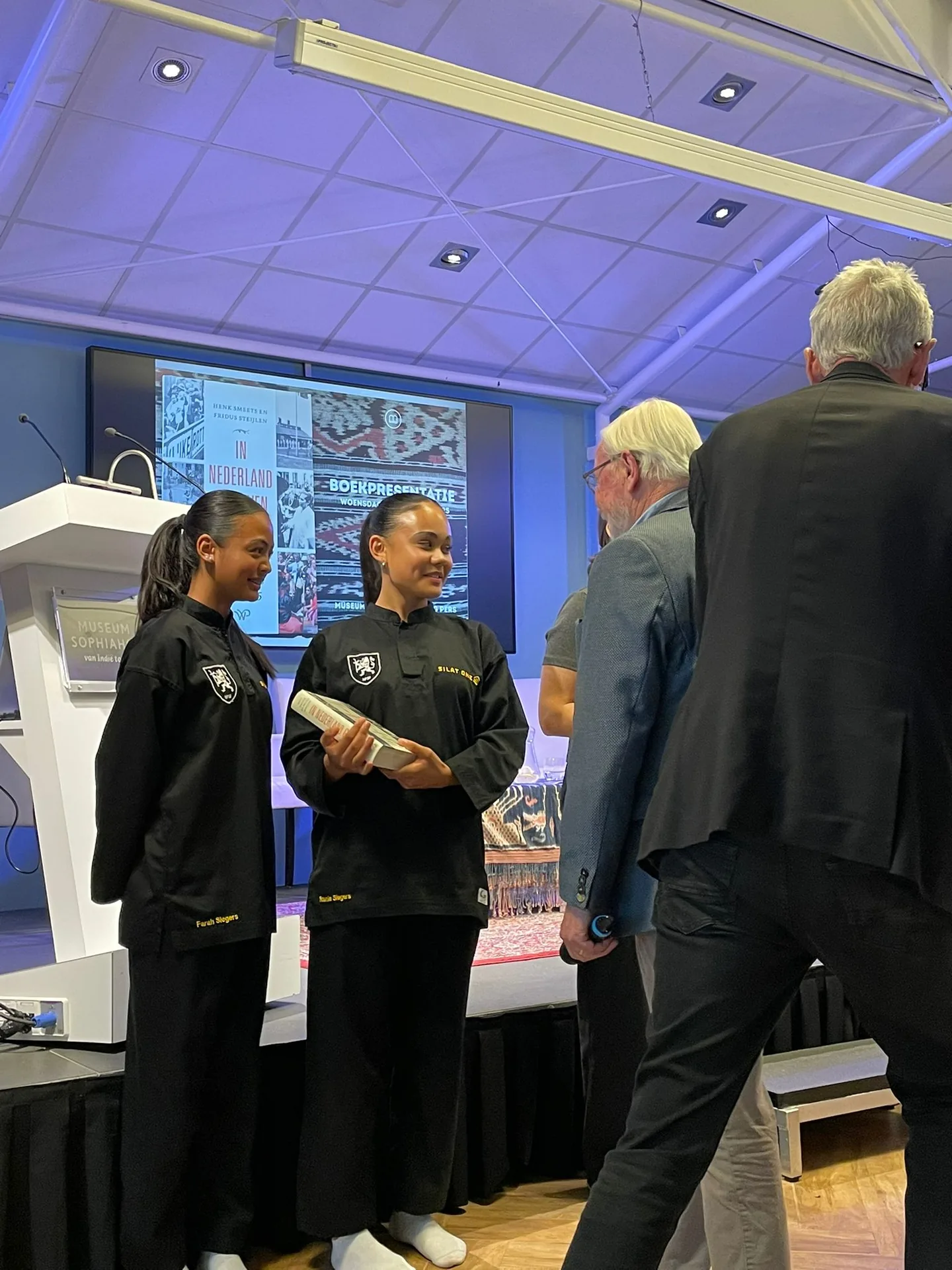
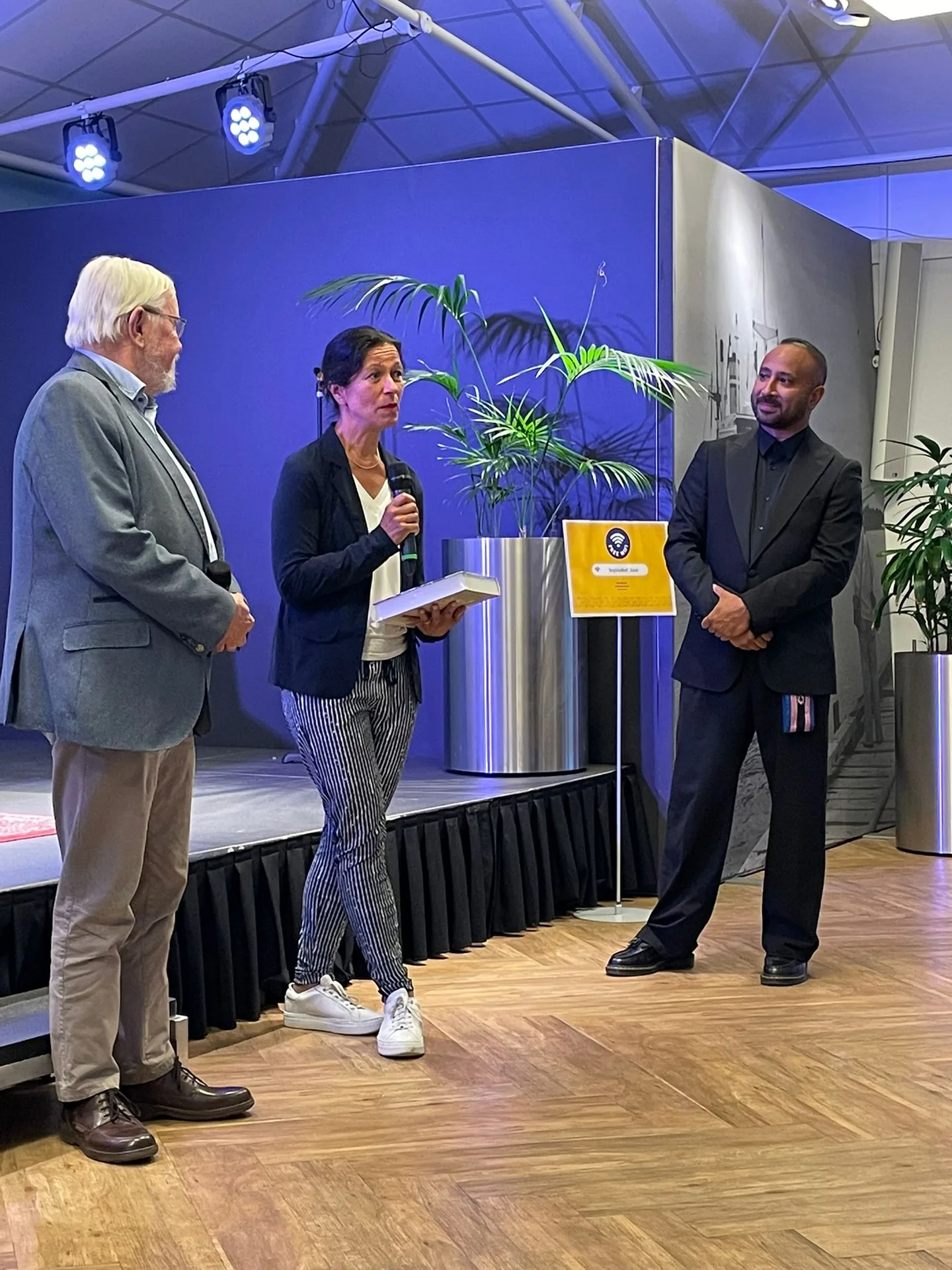
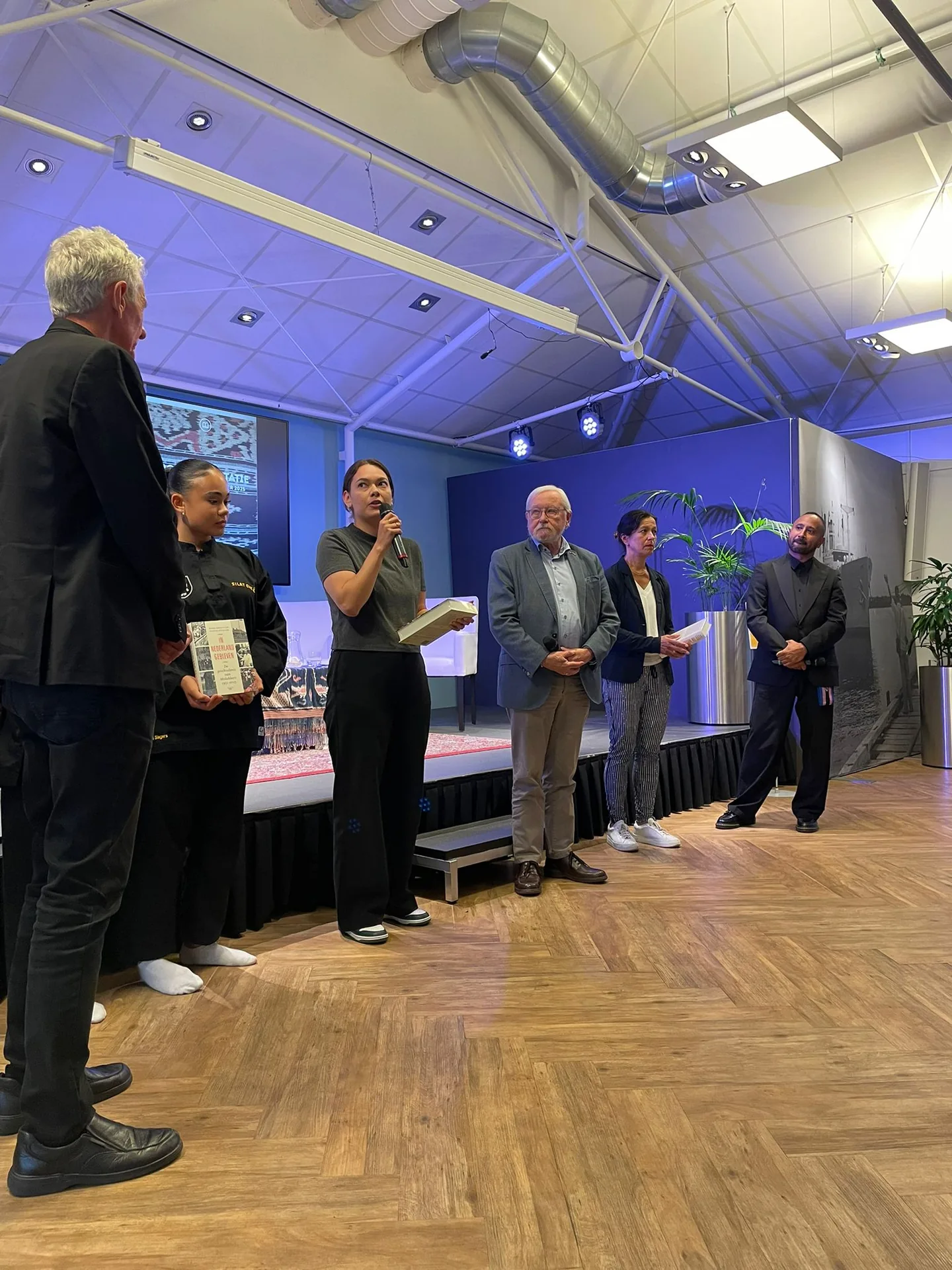
The first copies of the book are presented to three generations of Moluccans: Maria Ohoioeloen of the second generation, Joaniek Vreeswijk of the third generation and sisters Rania and Farah Siegers of the fourth generation.
Resilience as a thread
What both authors want to emphasise above all is the community's resilience. "Every generation seizes its own moments and gives shape to its position in society in its own way," Fridus says. "It is not only about victimhood, but precisely about strength. The third and fourth generations say themselves: 'we can do this because we stand on the shoulders of earlier generations.' There is a continuity of resilience, and that makes me enthusiastic."
Henk underlines the importance of factual historiography: "Certain things are often told wrongly or too simply, for instance that Moluccans were not allowed to work or came to the Netherlands under military orders. The reality is far more complicated. But also that Moluccan drug support services, the Inspraakorgaan Welzijn Molukkers and the Joint Declaration of 1986 were all initiatives from within the Moluccan community itself. It is important that this reality is recorded properly."
Order the book!
Museum Maluku contributed to this revised edition: photographs from our collection are included and the museum provided substantive comments during the writing process. That makes it not only a historical overview, but also a tangible memento in which our heritage and our voices are preserved. The book is available for €39.99 via our webshop.