#
IN THE HANDS OF THE COMMUNITY
When I have to write an account for a fund or a funder, it quickly comes down to the figures. This is not an account, but a look back and ahead. And I begin it with a feeling. A pause for breath. Because that is how it feels, now that I look back on both 2024 and 2025. A period in which Museum Maluku not only grew, but also learned to stand again. Like a tree pushing its roots deeper into the ground while its branches reach ever further towards the light.
Since 2019 we have lived in Museum Sophiahof. A house we share, a house we help shape. Over those years we have known changes; boards, directors, staff, volunteers. But through all those changes one constant remained: the community that carried us. Without them we were nowhere. Without them we are nowhere.
2024 was the year in which the pieces of the puzzle slowly began to fit. Our collection, once scattered across the Netherlands, found its way back to one place. What began between 2020 and 2023 as a difficult but necessary operation, made possible in part by support from the Ministry of Health, Welfare and Sport, the Mondriaan Fund and other partners, finally took concrete shape. The archives moved to the municipal museum depot in Rotterdam. The Piekstraat in the same port city became our workplace, our in-between space, our temporary heart. Meanwhile we kept our office in The Hague.
There, at Museum Sophiahof, we went on telling, showing, listening. 2024 brought exhibitions such as MALUKU 2.0 by Mano Som and RE:CAST, in which Moluccan perspectives on colonialism and slavery took centre stage. They were raw, honest, open and gave our visitors exactly what a museum should give: room to feel, to think, to breathe.
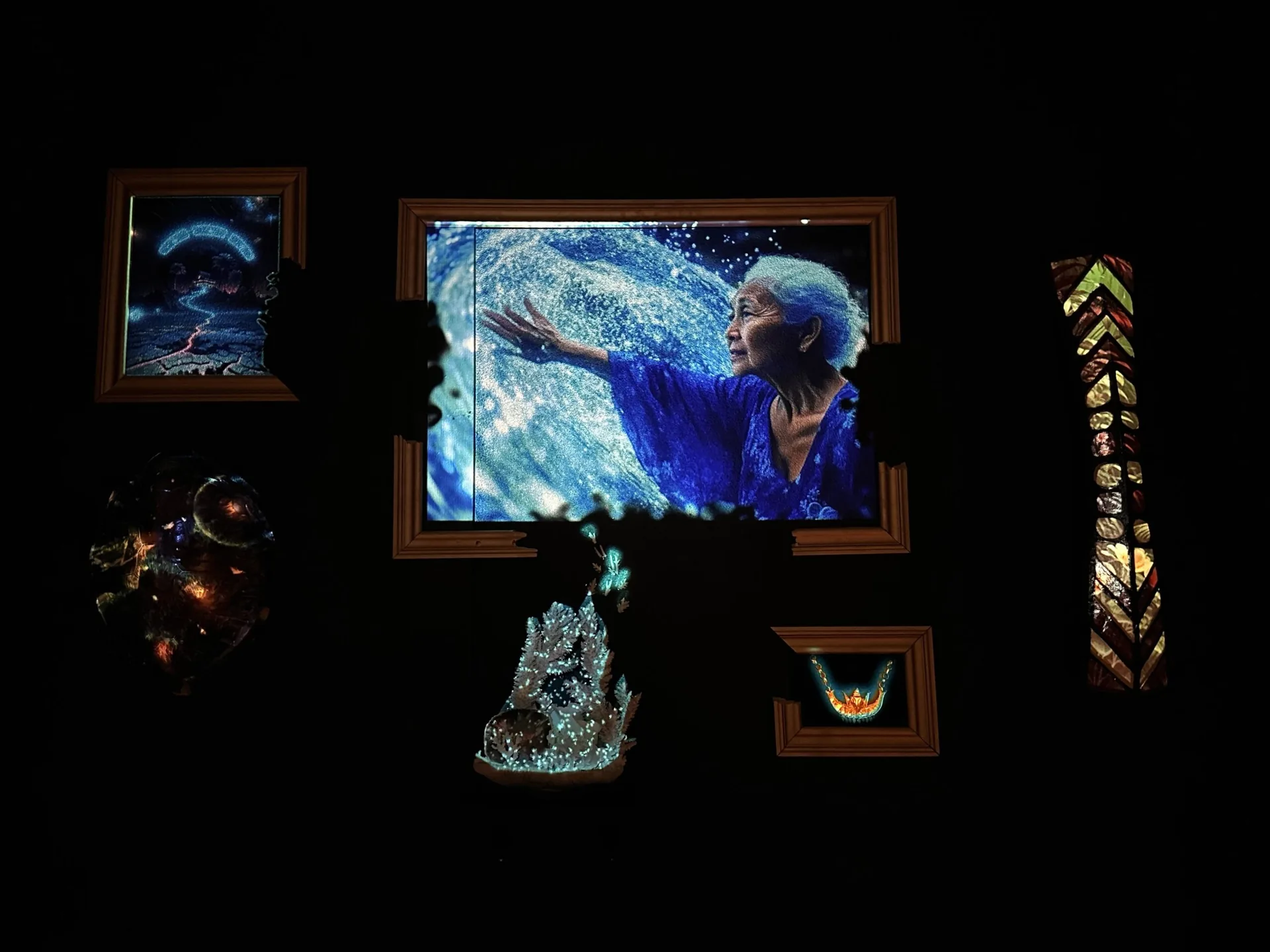
Art installation by Joao Loupatty in RE:CAST
2025 then became the year of the collection. The year in which we could really start building. We went deeper with new specialists: registration, conservation, reassessment. Special thanks here to Loïs Hutubessy. We worked closely with old hands such as Nanneke Wigard and Rob Habiboe; a reminder that our strength lies in continuity and renewal at the same time.
We saw a fine line of loans to museums and Moluccan neighbourhoods, a sign that our collection lives, moves, circulates. We worked on international projects such as Collections Connect, a remarkable exchange between artists from the Netherlands and the Moluccas. And we saw volunteers from every corner of the country come to us to help digitise archives, inventory books, identify photographs, share stories. Volunteers, partners, funds, funders, heritage institutions; every pillar of support deserves to be named here. Because what we do, we never do alone.
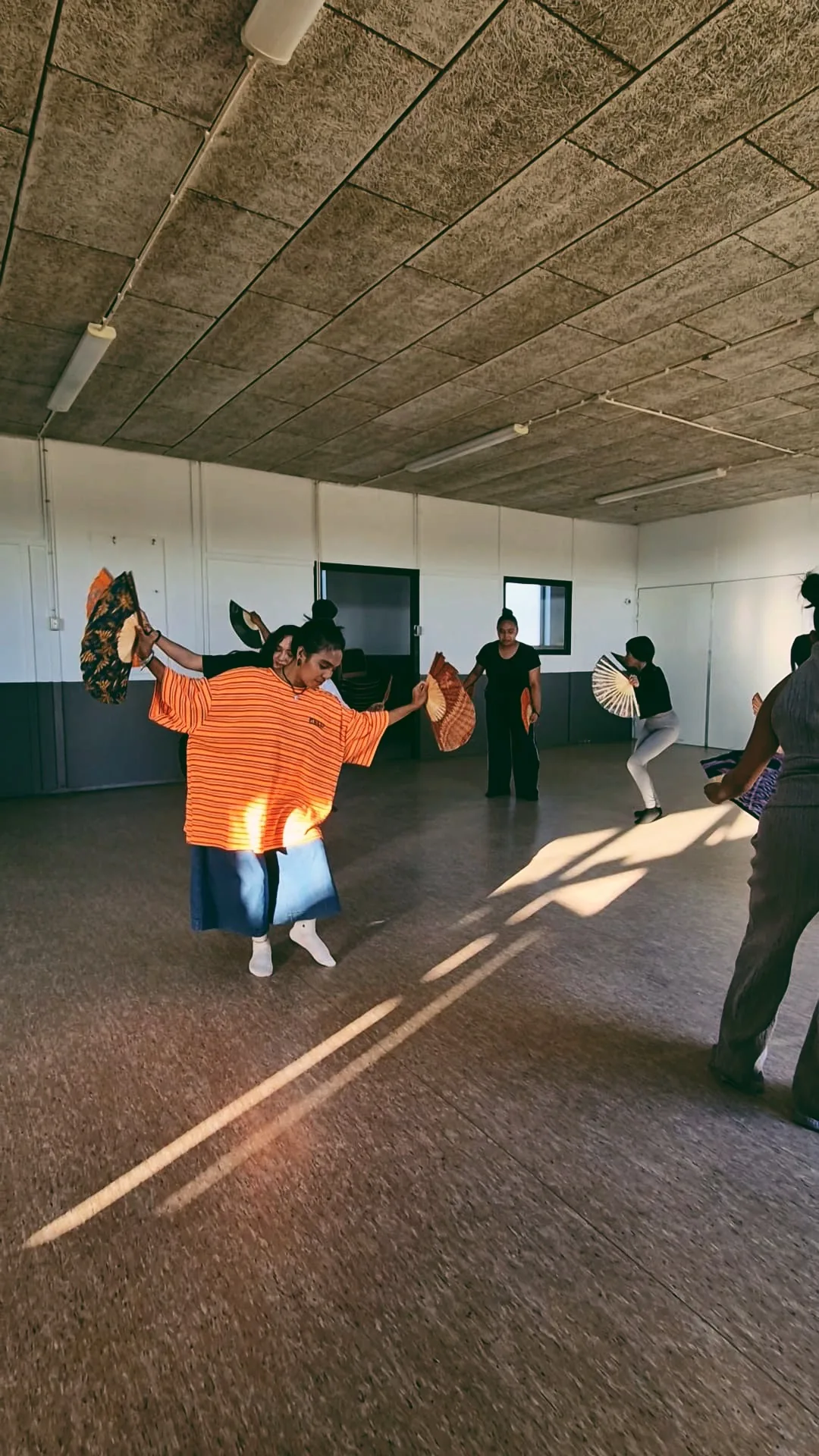
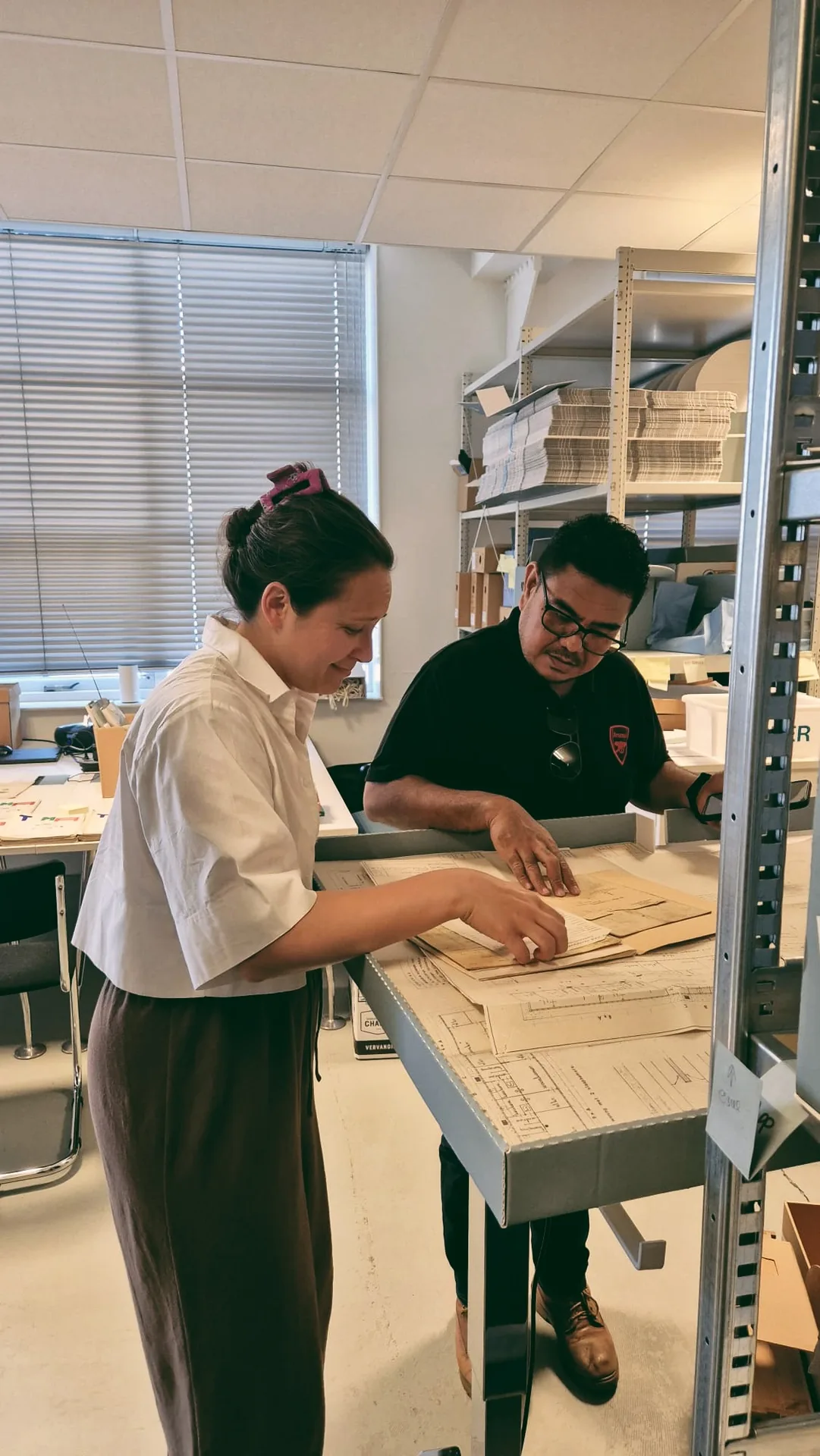
Artists Theodora Melsasail and Alvin Talabessy from the Moluccas visiting the Netherlands
The collaboration with Marinjo was given new life too, with the founding of MaLib, the Maluku Library, where our library books find a new future in Amsterdam. Researchers will soon have the space there to browse, to discover, to reconnect. And at the same time, together with Wooko Makandie and House of Hiv, we are building Connecting Community Archives, a FARO initiative that helps communities in the Netherlands strengthen their own archives. A movement that is badly needed. A movement that fits exactly who we are.
And now 2026. A year I personally look forward to. A year that, for many Moluccans, is loaded: 75 years of Moluccans in the Netherlands. But as I already said in 2021, at Beta Disini – I am here. And from here we look further.
Because our story is bigger than 1951 alone. Broader than the arrival. Deeper than the camp. We are a worldwide community with stories from Ambon, Ternate, Kei, Banda, Rotterdam, The Hague, California, Sydney, London, Hamburg. Our Moluccan-ness decentralises itself. It flows. It moves.
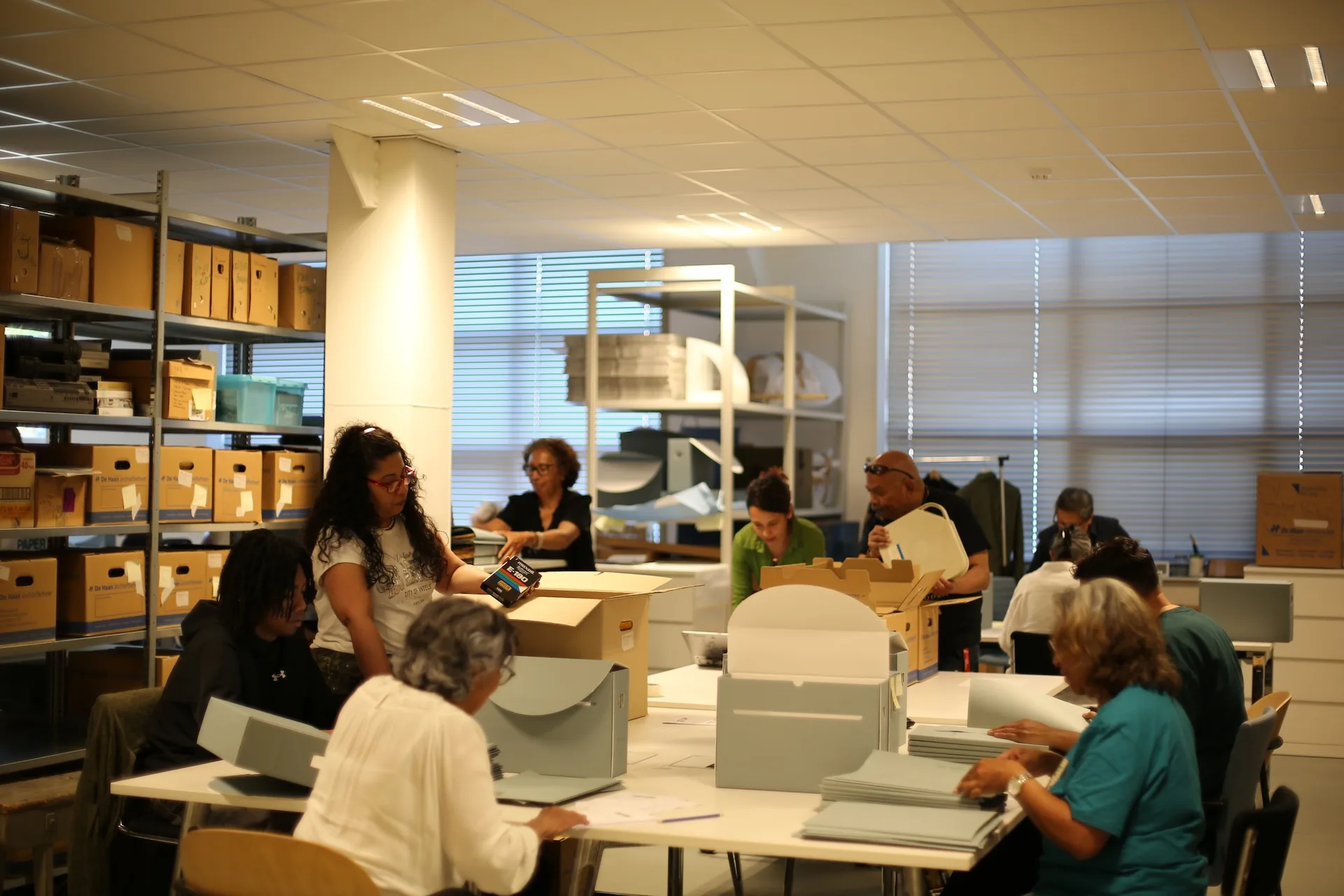
At work in our archive with a wonderful group of volunteers
Our future lies in that perspective. In connecting stories, here, in the Moluccas, and in the Moluccan diaspora worldwide. That is why we are also seeking more intensive contact with our partners in Maluku. That is why we are building long-term collaboration with universities, cultural institutions and neighbourhood archives. That is why we look beyond 75 years of presence and focus on 100 years of future.
I am grateful. To everyone who builds with us. To everyone who keeps us sharp. To everyone who carries a piece of history and wants to share it with us. 2026 will therefore be a special year for us. Not only to look back, but above all to look ahead. Because beta disini. And from here we go on.
Henry Timisela