The Moluccan community in the Netherlands is living through a remarkable period. In recent years various towns and villages have celebrated the fiftieth anniversary of their Moluccan neighbourhood, and next year it will be seventy years since the first generation of Moluccans arrived in the Netherlands. Last year the Drenthe village of Bovensmilde also began activities to celebrate the fiftieth anniversary of its Moluccan neighbourhood. When I was asked to speak at the opening of this special year, many thoughts and questions immediately came to me. Below you will find part of the speech I was able to give that day. Although I am a third-generation Moluccan and am glad to share my thoughts about Moluccan culture with you, that does not mean this is a general line of thinking among third-generation Moluccans. Even so, I think it is good to talk about it…
*Kalau dapat meja putih, jangan lupa lesa. Don't forget your roots.
For a third-generation Moluccan in the Netherlands it is sometimes difficult to keep to this apparently simple rule: never forget where you come from. I think several of my Moluccan peers and contemporaries agree with me that Moluccan culture in the Netherlands is a complicated culture. When we have to explain to fellow students, colleagues or others what is so special about "us Moluccans", we often quickly end up with stories about good food and musical families. But are we not more than that? Are we not selling ourselves short if we only speak of such basic things?
Moluccan culture is rich in so many ideas, traditions and elements of which I actually have little or no substantive knowledge. The ideas of pela, gandong, adat, perhaps even the true meaning of the RMS… All these terms often ring a bell with me, but what exactly do they mean? What, for instance, are the specific rules and traditions that belong to a pela relationship? What is the precise meaning of adat and how does it differ between families or kampongs? To what extent was the RMS founded for someone like me, and what does the RMS mean to someone like me: an adolescent, born and raised in a Western culture, growing up in a dual society with both Moluccan and Western norms and values, trying to build a career in a Western country? Am I even allowed to ask these questions, or should I look for the answers myself? I have to admit to you honestly: I have no idea.
While writing this monologue it became clear to me how important the generation of my grandparents was and is for Moluccan culture. These words are addressed to my grandmother in Waalwijk.
Even though I want to hold on to all the rituals, ideas and traditions, sometimes I have to dare to let something go because it can be limiting for my own development.
Oma, when you died in 2015 it felt as if the last directly tangible link with my history, my culture, my background had ceased to exist. The first generation held and holds for me an "authority" when it comes to Moluccan culture in the Netherlands. And for a logical reason: you brought the culture as we know it, as I think I know it, to the Netherlands. Without the direct presence of you as such an authority I was afraid of losing my roots. What had you taught me and left me? How was I to keep alive the culture you brought here when I really knew so little of it? And perhaps most important of all, how could I make sure, with my peers and contemporaries, that you could look down with pride on how we carried on when you no longer could…?
In the first months after your death I thought a great deal about what "being a Moluccan" actually meant. And in fact I still have not settled it. In the almost 20 years I was able to know you, you impressed various things on me. For instance: "Thank God every morning when you get up and every evening before you sleep…" For many Moluccans, faith comes above all else, I think. It is an indispensable part of our culture on which many other traditions are based. That perhaps makes it the strongest and the weakest part of our culture at once. Although we probably all believe, it becomes more of a challenge every day to be religious in the Western world. You can see it in my Christian peers and contemporaries. We continue to follow Christian norms and values, but are no longer to be found in church every Sunday or reading the Bible daily. We still believe, but in a "modern" way.
You also spoke about the importance of family. And by extension the neighbourhood, the kumpulans and the Moluccan community as a whole. At Christmas all the families had to be at home together, and you insisted we all come together at least once a year. And we still do. Although I grew up outside a Moluccan neighbourhood, I am aware how blessed I can feel with a Moluccan family and to be part of the Moluccan community. I never knew my grandparents Hully, but through the stories of my uncles and aunts their stories and wisdom are passed on to me all the same. But family lines and family stories fade and change too. My aunt in Negerilama on Ambon asked me: "Inda suda campur keturunan?" when I told her about my girlfriend of Dutch descent. With that she was in fact pointing out to me that I was changing my Moluccan descendants. Certainly for us as Moluccans in the Netherlands it is difficult to hold on to these family ties, which fade further with every generation. But with forms of cooperation such as neighbourhood organisations and kumpulans we get a long way. Don't we?
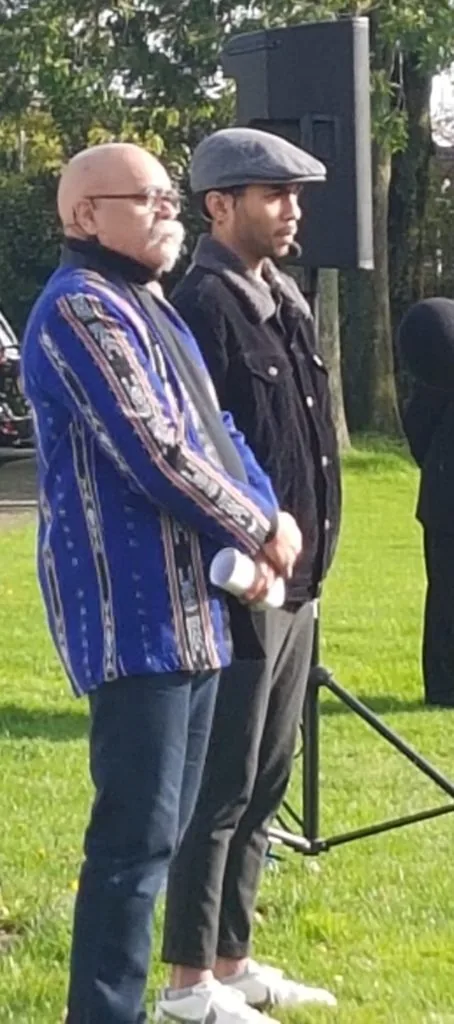
While preparing my contribution to this "conversation about our culture", two important things became clear to me. First, certain things I have to hold on to because they set me apart from others. Although we are all equal, we are also all unique and we need not forget that. Second, certain things I have to adapt because they simply do not fit the society I live in. Even though I want to hold on to all the rituals, ideas and traditions, sometimes I have to dare to let something go because it can be limiting for my own development. It is now up to us as the third, fourth, fifth generation and so on to work out what we can hold on to and what we have to adapt or add to Moluccan culture. Because is that not the finest way for us to honour our grandparents? To remember our culture not only as they brought it to the Netherlands, but to keep developing it so that it can go on existing even in a Western nation such as the Netherlands.
Oma, you always told me to do my best at school, with the underlying thought of making the most of things here. God did not bring us to the Netherlands for nothing: "show what Moluccans can do…" I think that is a good starting point to begin from.