Article photo: Ating and Thijs Ririassa (private collection Ririassa)
Saturday morning 23 June 1951: 1,089 passengers disembark from the Kota Inten at the Lloydkade in Rotterdam. The evening before, the very last troop transport carrying Dutch soldiers, navy personnel and ex-KNIL soldiers from Indonesia had arrived.
It was a long journey from Hollandia (New Guinea) via Tanjung Priok (Jakarta) to Rotterdam. This last troop transport was also the 12th and final transport of Moluccan ex-KNIL soldiers and their families. Moluccan civilians and stowaways were on board as well.
From Hollandia via Tanjung Priok to Rotterdam On 13 May 1951 the Kota Inten left Hollandia with 143 Dutch KL soldiers and members of the Navy and the Marine Corps on board. Her destination was the port of Jakarta. There a small group of Dutch soldiers and 848 Moluccans were waiting. On 21 May the Kota Inten arrived at Tanjung Priok, the port of Jakarta. Embarkation followed on 24 and 25 May.
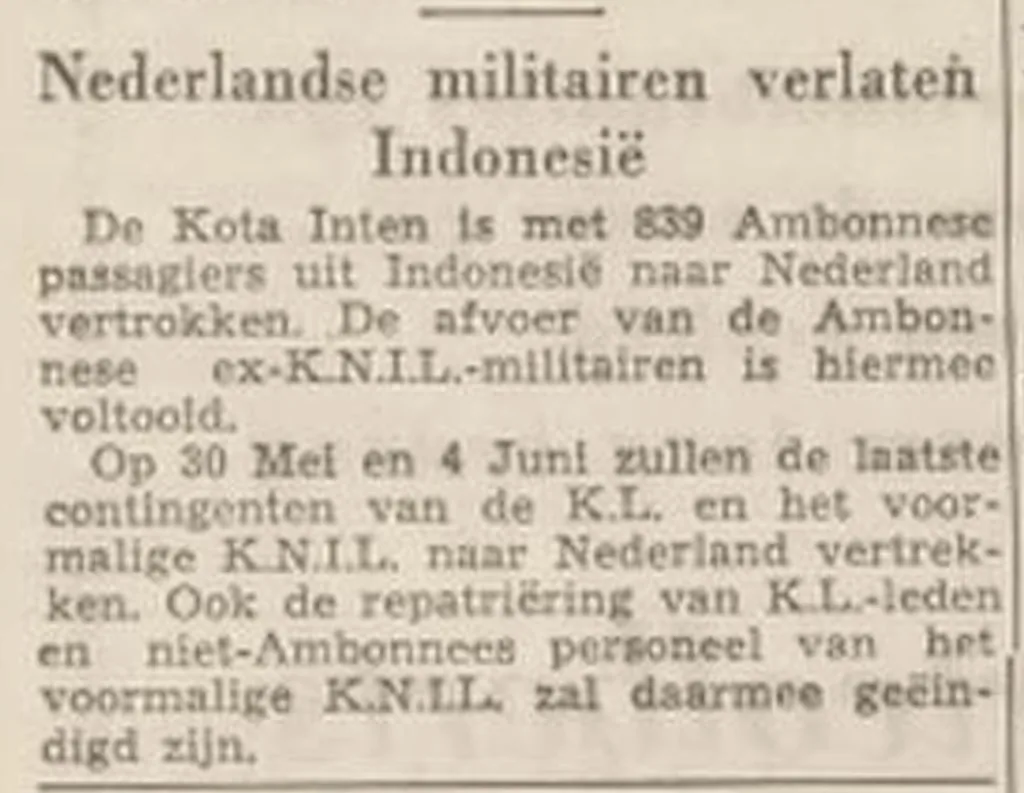
from: Het Vaderland, 29 May 1951
Departure At 4 p.m. on 25 May the Kota Inten left Tanjung Priok. The group of Moluccans consisted of 130 soldiers of the "Ambon" Subsistence Battalion from Jatinegara (Jakarta), 103 wives and 453 children. 162 Moluccan civilians had managed to find a place on the Kota Inten and so to bring themselves to safety.
Unrest and disturbances over a place Before departure there had been a great deal of unrest in the camp at Jatinegara about places on the Kota Inten. Many people tried in all kinds of ways to travel on this last transport. Around 200 Moluccan civilians could not come and had to stay behind. Shortly after departure, another nine stowaways were found on board.
"The Collection Tells…" The MHM has published before about the second voyage of the Kota Inten. Via this link you can read about the embarkation, the haste it required, the number of pieces of hand luggage that were permitted and the passes required to come aboard and sail to the Netherlands.
A difficult farewell Commanding Officer of Troops (COT) Lt. Col. W.E.C. Detiger noted in his voyage report that the departure took place in complete silence because "this is the last Ambon ship; for the Amb. families left behind, who stood on the quay, it was a heavy moment indeed!"
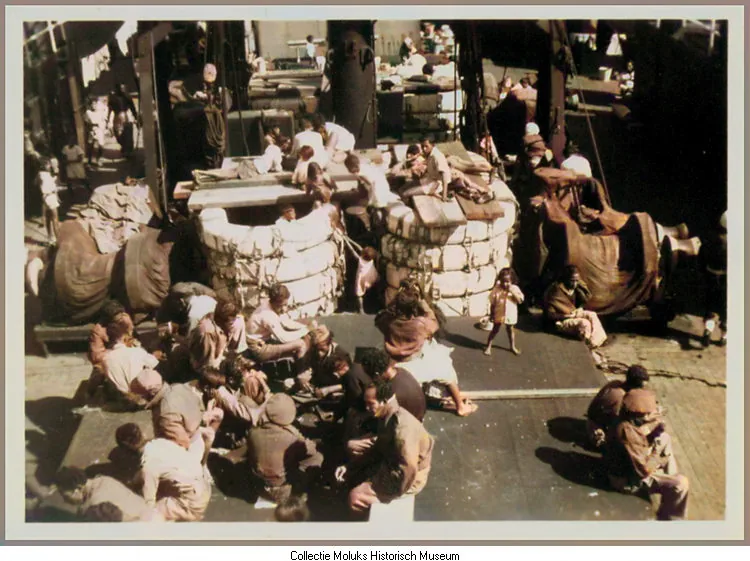
Moluccan passengers among the deck cargo on the deck of the Kota Inten
Too much luggage There was little room on the packed ship. Many people, a great deal of equipment; as much as possible had to go on this last transport, after all. It was not for nothing that strict rules had been drawn up for the luggage people could bring. Detiger notes: "with this transport of Ambonese it is the same old song; too much luggage, which had to be sorted on board; in the Ambon camp in Djakarta not the slightest care was given to this."
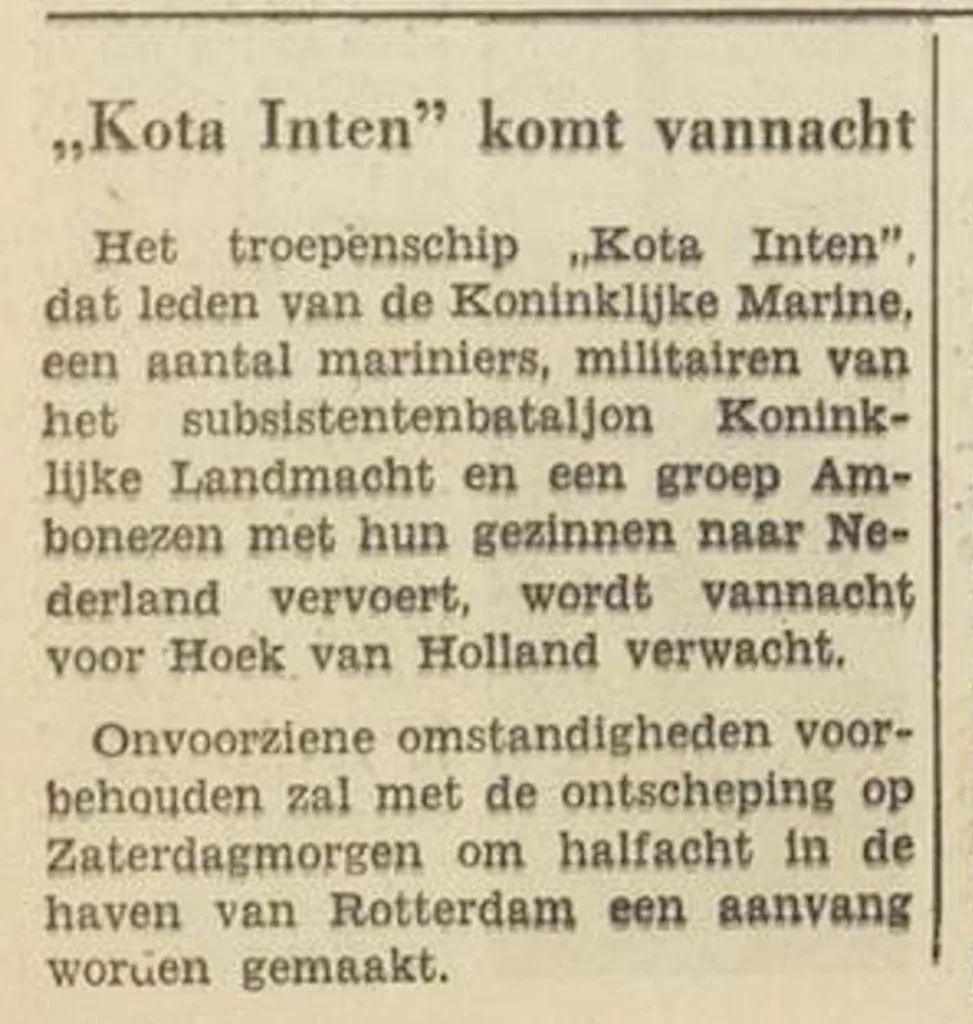
from: Het Vrije Volk, 22 June 1951
Shipping reports The shipping reports in the newspapers of 1951 tell where the ships were on a given date. On 30 May the Kota Inten was sailing south of Ceylon. On 6 June she passed Cape Guardafui (Somalia). On 12 June she called at Port Said. On 18 June she rounded Gibraltar. On Friday 22 June she appeared off Hoek van Holland. That evening the Kota Inten moored at the Lloydkade in Rotterdam.
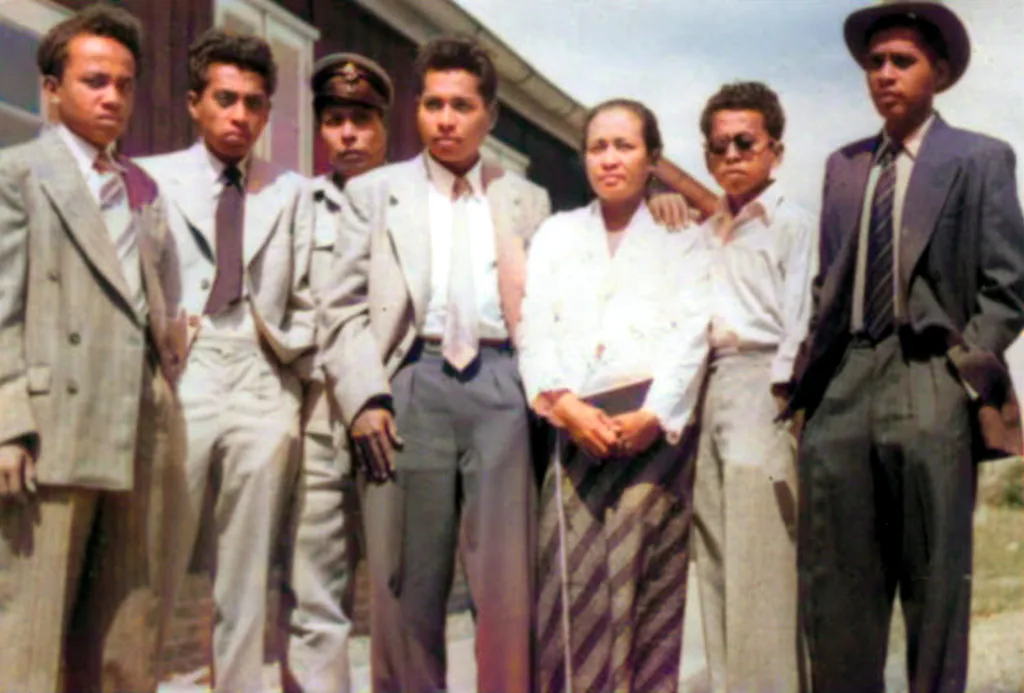
L to r: Jan Maitimu, Pede, father, Etus, mother, Tjo, Uncle Bong, 1954 (private collection Ririassa)
The Ririassa family As a four-year-old boy, Ating Ririassa came to the Netherlands with his family on the Kota Inten. On 23 June 1951 he set foot ashore. The MHM published his story and that of his family back in 2016. Click this link to read Ating's story.
Talib Turky: "We were the first Moluccans to arrive in the Netherlands."
Talib Turky "Yes, my grandfather Talib Turky and his family came on the Kota Inten too," says Dean Umarella from Ridderkerk. "Does your grandfather or your family have any good stories about the crossing?" I ask Dean. Dean will ask around in his family. A few weeks later Dean messages me. "Ma'af, my apologies! Opa Talib came to the Netherlands on the first voyage of the Kota Inten. Not on the second voyage as we always thought."
Passenger list And that turns out to be correct. On the list of names for Kota Inten I at the Nationaal Archief appears the surname "Toerkie". Private 1st class M. Toerkie, with his wife Mira, a daughter (1937) and a son T. (1939!). And son T. is Talib. On the official passenger list the name Turky even appears as "Torkkie".
Son Talib "My name is Talib Turky. I was born on 10 March 1940 in Morotai in the North Moluccas, son of my mother Mira and my father Mutiara Turky. My father was a Moluccan KNIL soldier of the XXIIIrd Battalion, stationed in Malang, East Java."
Father Mutiara At the beginning of February 1950 father Mutiara was transferred to the Kromhout barracks in Surabaya. "We had to wait there for the ship that would take us to the Netherlands." The Kota Inten lay at the quay in the port of Tanjung Perak for a week. She had come from Ambon. Talib: "If I am not mistaken, the first group of KNIL soldiers went aboard the MS Kota Inten in the third week of February 1951 and then set course for the Netherlands."
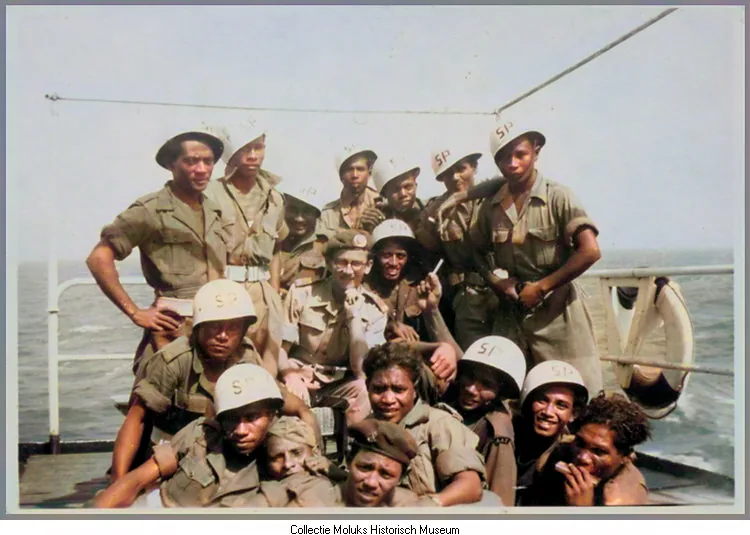
Ship's police of the Kota Inten (stowaways of the Barisan Polisi Negara). In their midst sergeant major administrator T. Smit.
67 stowaways On 20 February 1951 the Kota Inten left Surabaya for Rotterdam. Officially there were 1,024 passengers on board, including 568 men and 433 women. 23 were unknown. There were also a large number of stowaways on board. Among them were 67 men of the Barisan Polisi Negara, the special police force of the state of East Indonesia. Their lives were no longer safe after taking part in anti-Indonesian actions. With the help of the Dutch first lieutenant J.J.M. Veltman they had been smuggled on board.
Speech on board Talib Turky: "On arrival at Hoek van Holland all the KNIL soldiers had to appear on deck to listen to the speech of an envoy of the Dutch government who had come aboard."
Dismissal The soldiers were given notice of dismissal from military service. Talib: "After arriving in the Netherlands we could stay there for a while as ordinary civilians. We were the first Moluccans to arrive in the Netherlands."
-
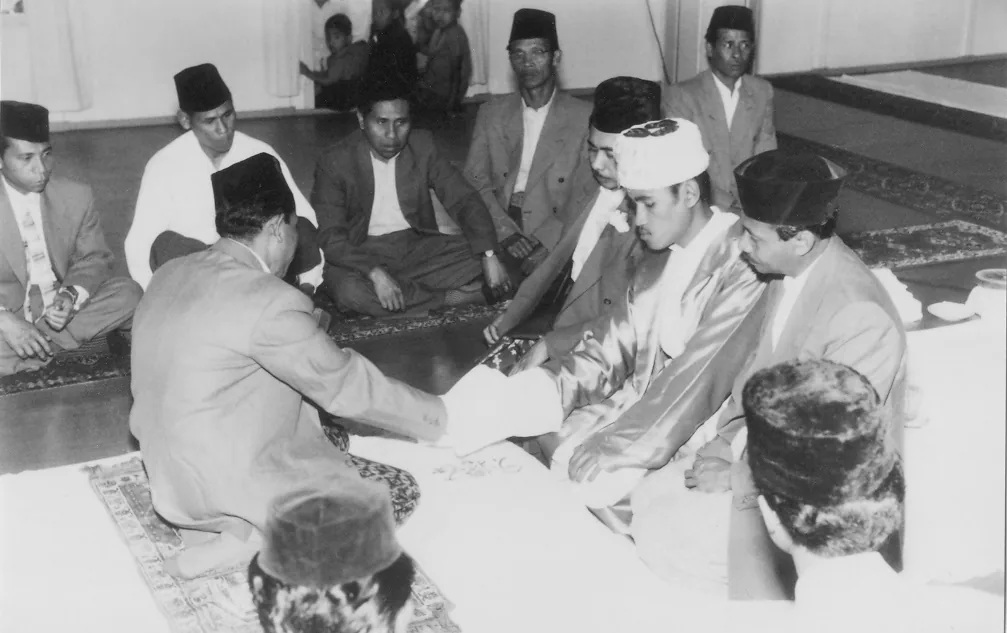
photo 1
-
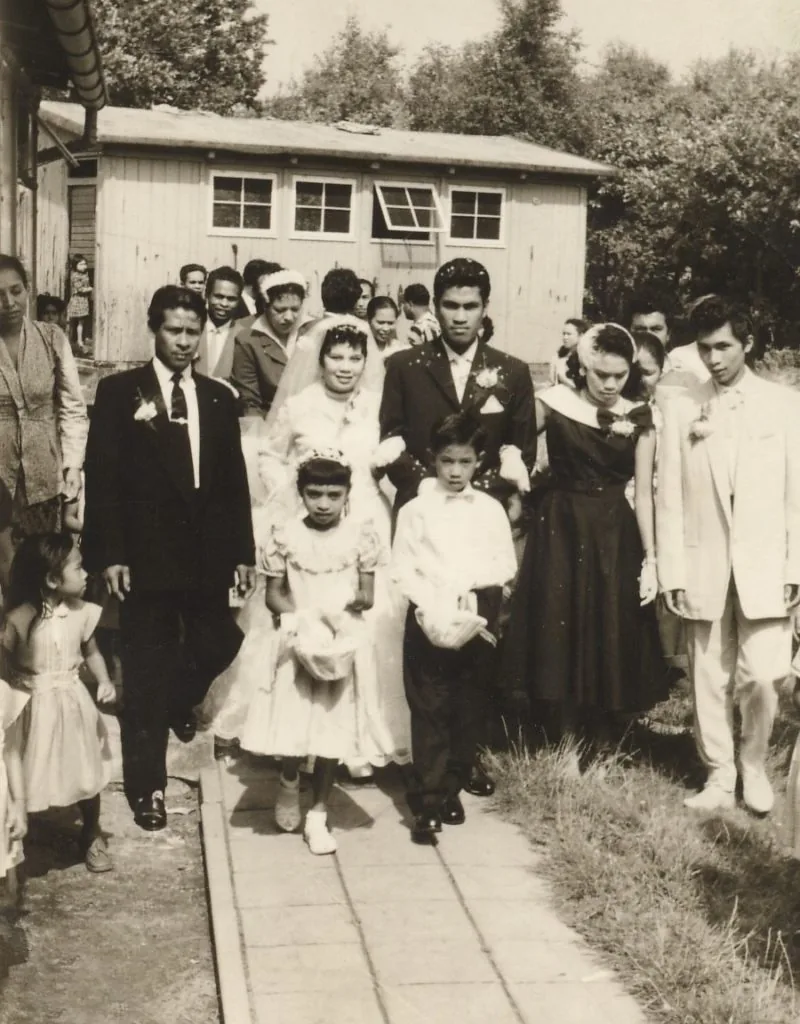
photo 2
-
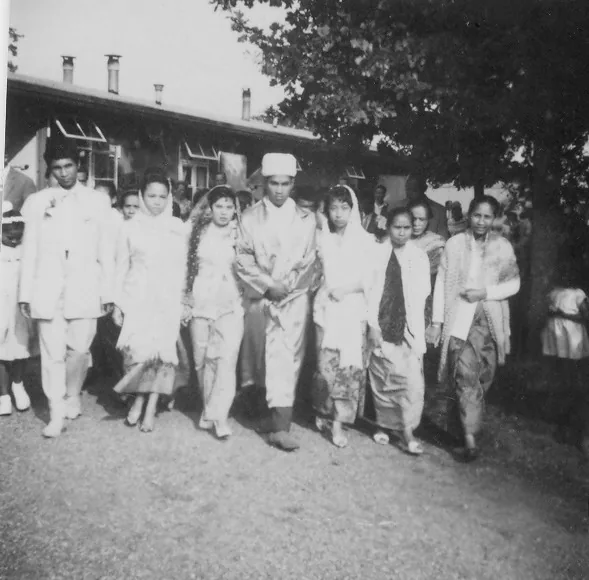
photo 3
photo 1: bridegroom Talib Turky, photo 2: the bridal couple Sarah Lesteluhu and Talib Turky, photo 3: the newly married couple walk with family to the bridegroom's parental home. Source: Ghani van den Bergh, Wyldemerck, herinneringen in beeld, Ridderkerk 2011.
To Schattenberg and the Wyldemerck After arriving, the Turky family went to live in camp Schattenberg together with other Moluccan Muslim families. In December 1954 the Muslim Moluccans were given a camp of their own near Balk in Friesland: the Wyldemerck. Talib married Sarah Lesteluhu in camp Wyldemerck.
Talib is sporty and plays football. He gains his MULO diploma. Musical as he is, he plays in bands such as The Rolling Thunders.
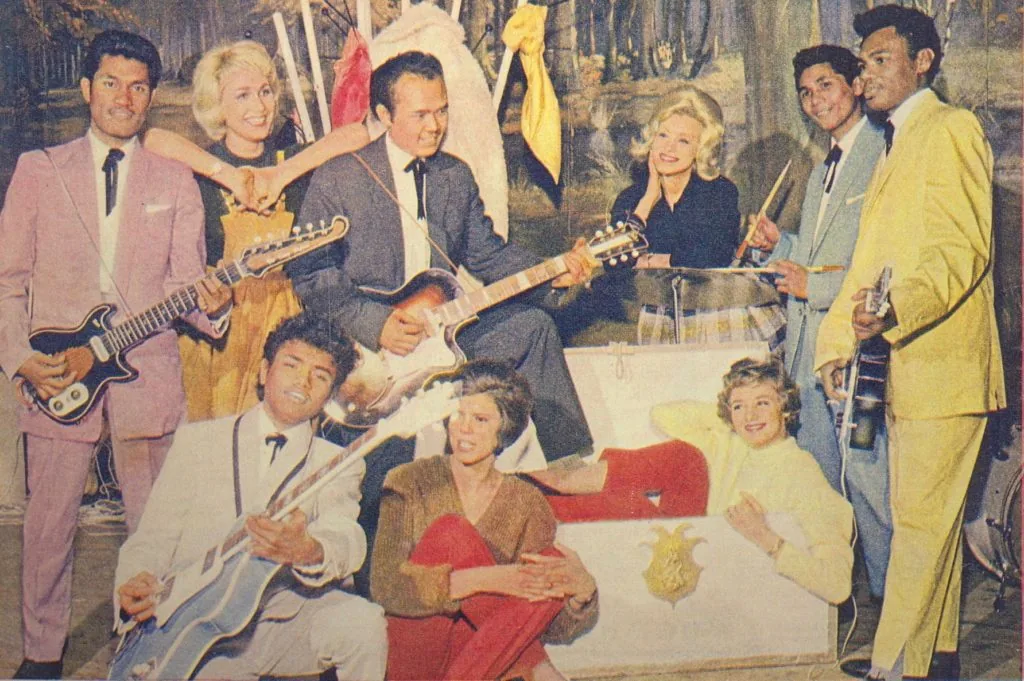
The Rolling Thunders with, l to r, Talib Turky, Samad Umarella, Darwin Renggur, Hasim Lesteluhu and Karim Oppier. The women are unknown. (Photo appeared with an article in Romance of 11 February 1961)
With thanks to Dean Umarella and family, Talib Turky and Ghani van den Bergh
Further reading:
For a detailed description of the Kota Inten see "transportschepen", website of the Nationaal Archief, The Hague
Kota Inten passenger list, 1st transport (20 February – 21 March 1951), see "Molukkers naar Nederland", website of the Nationaal Archief, The Hague
The story of Maurice Rugebregt about his father Danny
Kota Inten passenger list, 2nd transport (25 May 1951 – 22 June 1951), see "Molukkers naar Nederland", website of the Nationaal Archief, The Hague
The story of Ating Ririassa about his family
Ghani van den Bergh, Wyldemerck, herinneringen in beeld, Ridderkerk 2011.