5 June 1951, Lloydkade Rotterdam. Eight in the morning. 1,200 Moluccan ex-KNIL soldiers, women and children disembark from the Fairsea. The day before, the 10th and largest transport, with more than 1,800 passengers, had arrived in Rotterdam. On 6 June the remaining 600 passengers disembarked. The Fairsea had left the roadstead of Semarang on 10 May.
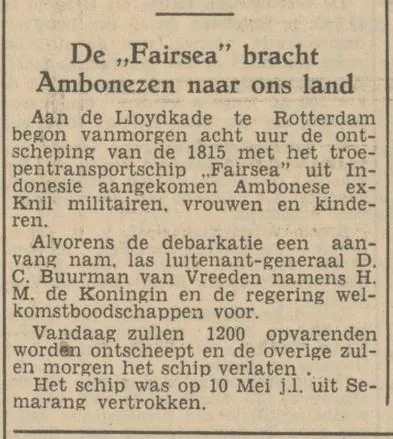
The largest transport The Fairsea carried around 800 men and women and as many as 1,000 children. With more than 1,800 passengers this was also the largest transport. The Fairsea had been made suitable for such numbers. In 1949 she had been converted into an emigrant ship with a capacity of 1,900 people. With more than 1,800 on board she was packed.
Some figures The newspapers speak of 1,815 passengers. The list at the Nationaal Archief gives 1,834, made up of 937 men and 878 women and 19 whose sex is unknown. The difference lies in those 19 of unknown sex. The Nationaal Archief list counts 965 children (sons, foster and stepsons, and daughters, foster and stepdaughters). The list counts 451 families. Some newspaper reports of 5 and 6 June 1951 also mention 1 birth on board and 1 person who died during the crossing. Names are not yet known.
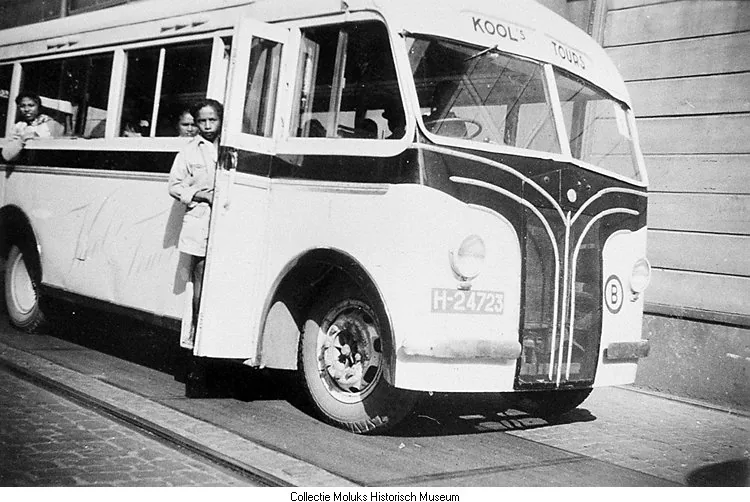
Arrival in Rotterdam. Moluccan passengers who have arrived on the Fairsea stand beside a bus in the port of Rotterdam, en route to Amersfoort.
The Plasmolen camp Most of the passengers found accommodation in camp Lunetten in Vught. The others were distributed over 20 other camps that were already inhabited. New was camp de Plasmolen near Mook.
1,800 passengers with as many stories and personal histories. 451 families on board. Here we mention a few briefly.
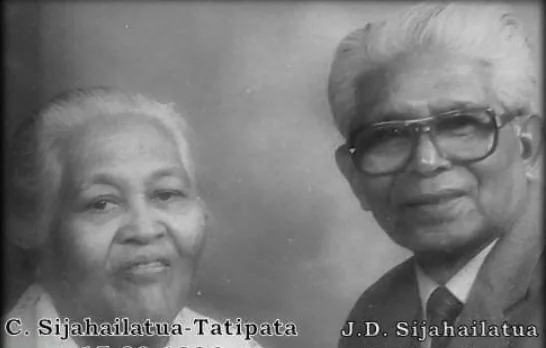
Mr and Mrs J.D. Sijahailatua (photo from the Sijahailatua family archive)
The Sijahailatua family "I do not know much to tell about my grandparents coming to the Netherlands on the Fairsea. And what I do know I found on the website of the Nationaal Archief," says Renzo Sijahailatua from Leerdam. Who? I hear you think… Yes, that Renzo, self-employed cook and joker. But above all known as a fanatical long-distance walker of the Nijmegen Four Days Marches and the Kennedy marches, together with his brother Johnny and sister Leontien.
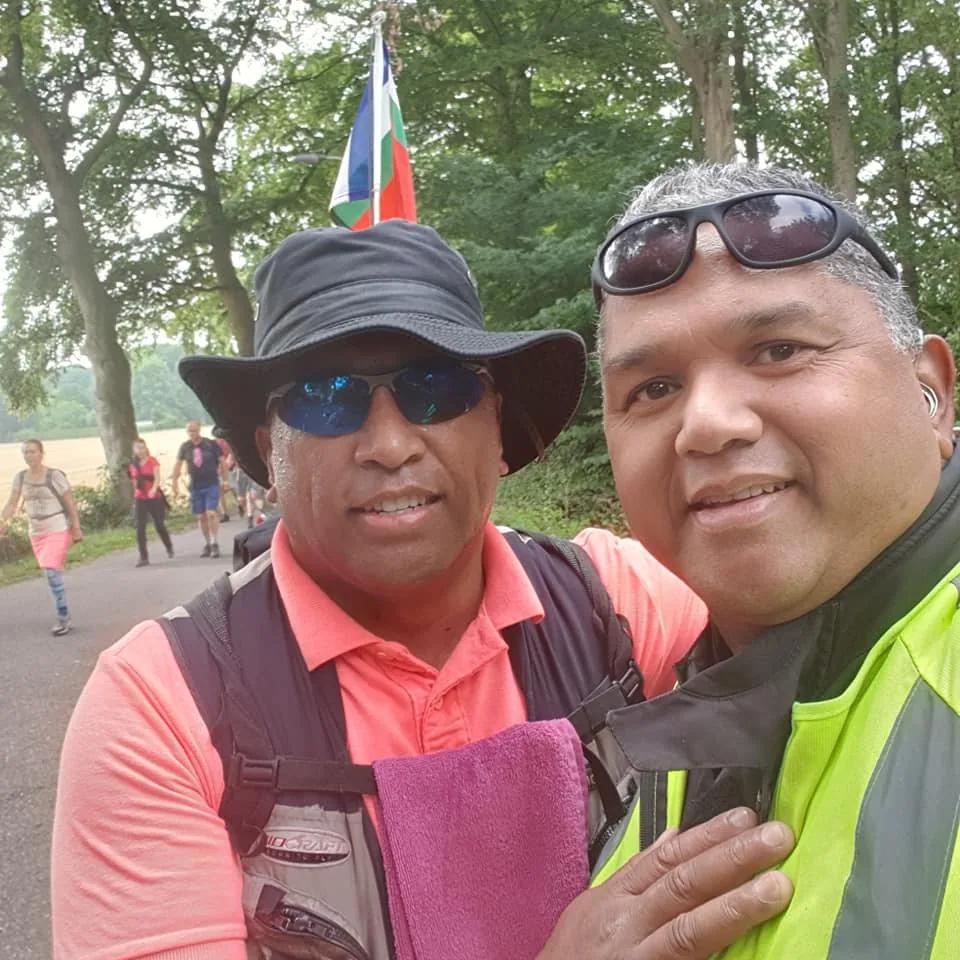
Renzo Sijahailatua (right) with his brother Johnny
Renzo's grandfather, sergeant J.D. Sijahailatua (2 Jan. 1907 – 16 Oct. 1987), came to the Netherlands on the Fairsea with his wife C. Sijahailatua – Tatipata (15 Mar. 1906 – 12 Mar. 1984) and their 5 children.
Renzo lists them proudly: "aunt Jootje (1936), aunt Nel (1937), uncle Piet (1939), my father Leonard (1941) and the youngest, aunt Christien (1950). Uncle Piet and aunt Christien have already died." Renzo put the family's passage to the Netherlands on his Facebook page back in 2016, with a photograph of his grandparents. "You may use the photo, I have aunt Jootje's permission!"
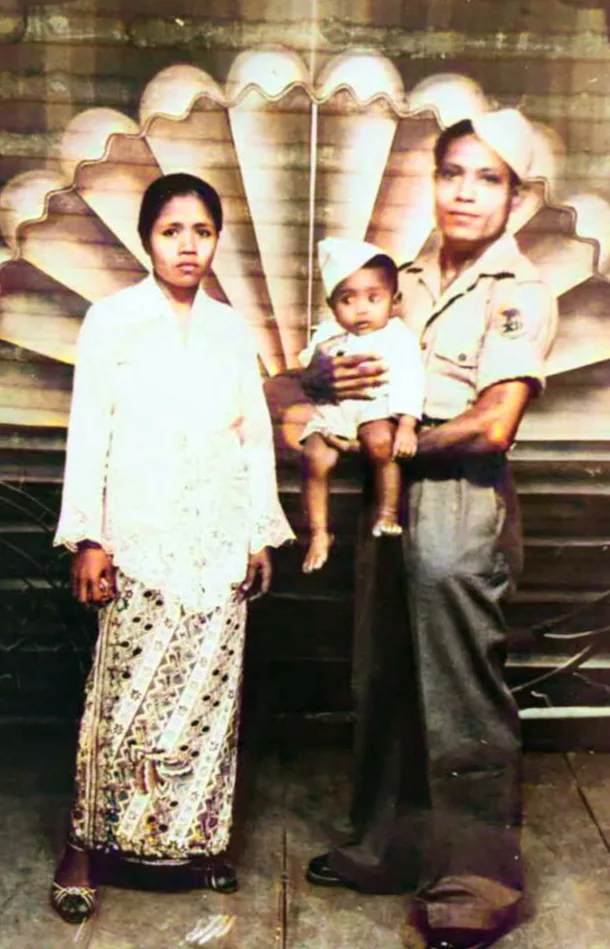
Father – Eliza Tuankotta, b. 1920 in Aboru Mother – Magdalena Cornelia Pattinussa, b. 1920 in Aboru and their son Pelipus, b. 1947 in Denpasar. Photo c. 1948. (photo from the Tuankotta family archive)
The Tuankotta family "My parents are father Eliza and mother Magdalena Cornelia. My father and my pregnant mother boarded the Fairsea at Semarang with their 2 young children, son Pelipus (1947) and daughter Elsina (1949)," says their daughter Christina Tuankotta. Father Eliza was a private 1st class. He had been stationed in Singaraja and Lovina (Bali) and also at Tanjung Aan on the island of Lombok.
Christina: "I remember a story my mother told about a child on the Fairsea who sleepwalked and could not be found anywhere. The parents both jumped into the water. From that moment on my mother tied Pelipus and Elsina to the bed at night."
After arriving in the Netherlands the Tuankotta family went to live in the Singel camp in Woerden. Christina: "That is where I was born in September 1951. After that 3 more children were born: Augustina Dina (1953), Marcus Samuel (1956) and Junus Jusuf (1958)." In 1959 the family moved to the Vosseveld camp and in 1968 to the Moluccan neighbourhood in Winterswijk.
Salomé Latuny The news item of 12 May about the Groote Beer mentions the name Salomé Latuny. She was the 15-year-old girl taken off the ship at Port Said because she showed the symptoms of smallpox. As it later turned out, she had chickenpox. The newspapers of 12 May 1951 reported that she would travel on to the Netherlands on the next ship, the Fairsea.
Aunt Magda Latuny – Kipuw, now 85 years old, travelled to the Netherlands as an older sister together with Salomé, in the care of the Latuny family. "Salomé and I are called Kipuw, but because we travelled in the care of the Latuny family we were listed as Latuny on the passenger list of the Groote Beer. Once Salomé had recovered from chickenpox in Port Said she boarded the Fairsea."
After arriving in the Netherlands, Salomé went to live with her sister Magda and the Latuny family in the Genapium camp near Gennep. "Salomé died in 1961, however, from the effects of severe burns. An oil stove fell over and caught fire," says aunt Magda Latuny. "Fortunately I still have a photograph of Salomé in my album."
*Further reading:
For a detailed description of the Fairsea see "transportschepen", website of the Nationaal Archief, The Hague
Fairsea passenger list, see "Molukkers naar Nederland", website of the Nationaal Archief, The Hague
The story of Sally Tuhuteru
Facebook page of the group of descendants of the 1st generation of Moluccans who came on the Fairsea