l. to r.: Benzelina (Ensee), Ferenanda (Inong) and Hiëronymus (Agam). (Photo: Akerina family archive)
On 15 June 1951 the Goya moored in Rotterdam. It was the 11th transport of Moluccan ex-KNIL soldiers and their families to the Netherlands. Officially there were 875 passengers on board, including 42 babies. Some had boarded in Semarang on 18 May. Others, including a few stowaways, followed a day later in Tanjung Priok, the port of Jakarta.
Figures The passenger list of the Goya on the website of the National Archives counts 875 names. Of these, 456 are men and 419 women. Also on board were 2 so-called protected persons with their families. During the voyage a baby boy was born. The shipping reports from around 18 May 1951 speak of 894 passengers. The official figures of the passenger list of the National Archives are not correct. The stowaways on board are not included.
Birth On 6 June 1951 a baby boy was born on board: G.A. Limaheluw. He was the son of sergeant major Hanoch Christian Limaheluw and Wilhelmina Klaartje Souisa. They gave him the name Goyanes, a combination of Goya and Anes. After arrival the family went to live in camp Vossenbosch near Wierden. (source: FB page Sam Limaheluw Souisa)
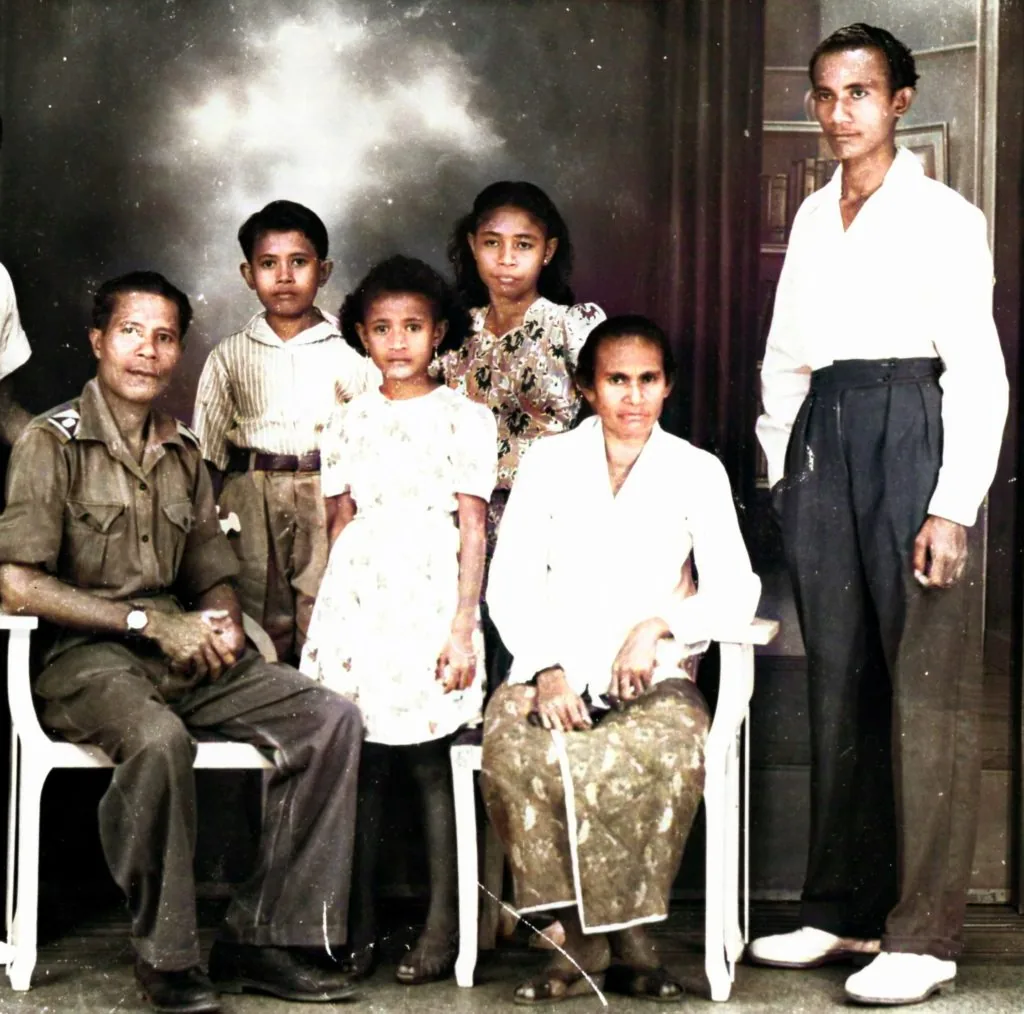
l. to r.: Frederik Ferdinand Akerina, Hiëronymus (Agam), Benzelina (Ensee), Ferenanda (Inong), Barbara Obertina (Obé) Akerina-Corputty, Daniël (Daan).
The Akerina family “My father is Daniël Akerina and he was born in 1929, and my grandfather is Frederik Ferdinand,” says Ferry Akerina. Corporal Frederik Ferdinand (born 1896 in Rumahkai, island of Seram) was married to Barbara Obertina (Obé) Corputty from the same village (born 1906).
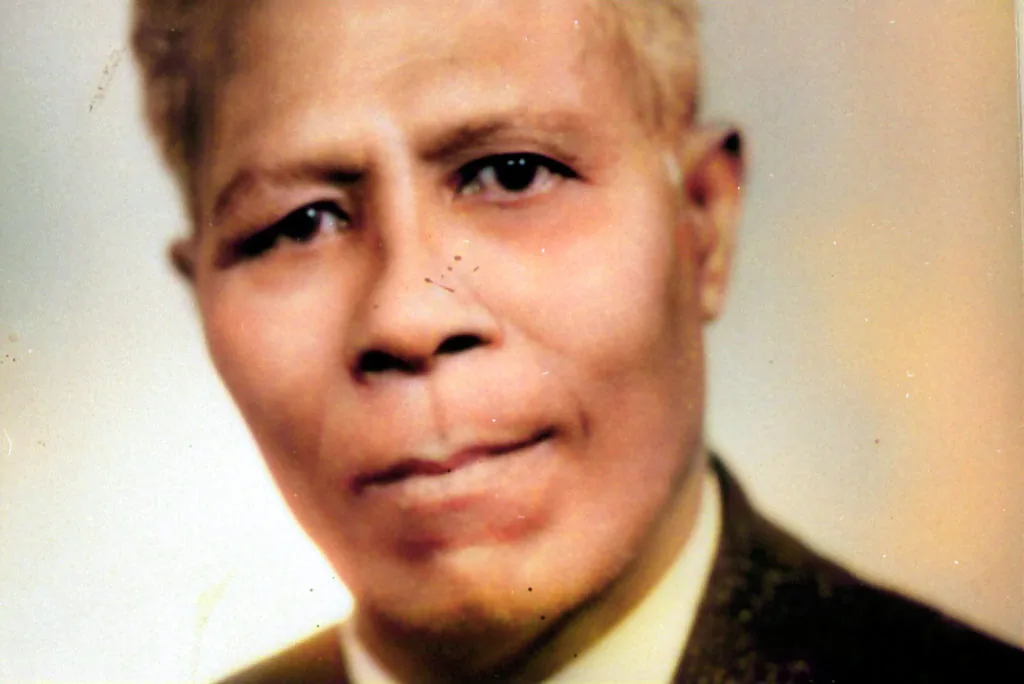
Frederik Ferdinand Akerina, Opa Pede. (17 October 1896 Rumahkai, Seram – 8 January 1976† Tiel, photo: from the Akerina family archive)
Grandfather Frederik Grandfather Frederik came to the Netherlands in 1951 with his wife and 4 children: son Daniël (1929), daughter Ferenanda (1933), son Hiëronymus (1935) and daughter Benzelina (1937). The Akerina family boarded the Goya in Tanjung Priok on 19 May 1951. Ferry: “You should ask my cousin Stan, because he knows a lot about grandpa and grandma. After all, he was raised by them.”
And cousin Stan does know a lot. Names, dates of birth and many stories. I check the family dates with him, but Stan immediately starts with an amusing detail: “To get into the KNIL more easily, grandpa made himself out to be 4 years younger than he really was. So he was born in 1896 and not in 1900, as he is registered with the KNIL.”
Inong and Agam In the 1930s corporal Akerina was stationed in the city of Medan and later in Banda Aceh. Stan: “My mother is Ferenanda and in Banda Aceh she was called Inong. Uncle Hiëronimus they called Agam.” After the war, during the Police Actions, the family thought grandpa had been killed. “We believed grandpa was dead. But suddenly there he stood in front of grandma again!” Stan says.
To camp Beugelen After arriving in the Netherlands the Akerina family moved to camp Lunetten in Vught. They did not stay there long. In camp Vught there was much friction between supporters and opponents of the Committee on the Legal Position of Ambonese Soldiers and Sailors (CRAMS). As supporters of CRAMS the family had to move to camp Beugelen near Staphorst. In 1963-1964 they were housed in the Moluccan neighbourhood in Opheusden.
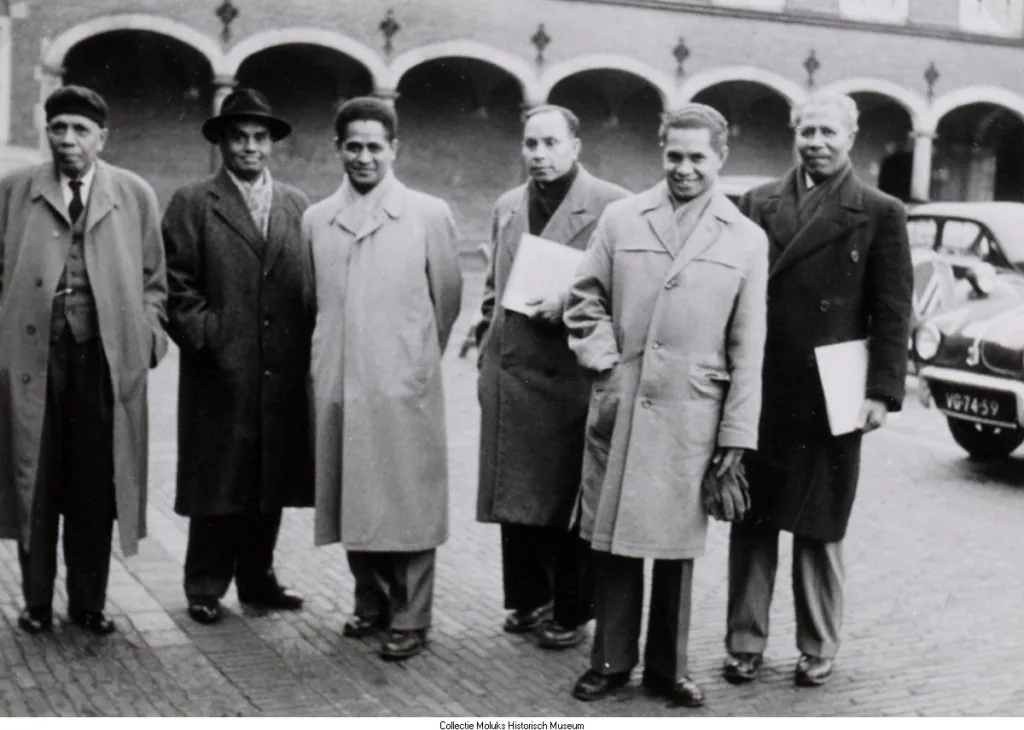
Delegation at the Binnenhof, 1972. L. to r.: Rev. Uneputty, Rev. Sahetapy, Rev. Metiarij, Mr Nahumury, Rev. Pesulima, Mr F.F. Akerina. (photo: FPP0244. MHM/coll. Pasanea-Platenkamp)
Stowaway There were several stowaways on board the Goya. Albertus Melkias Haulussy is one of them. Albert Melkias Haulussy, known as Albert or, in Moluccan, Abé, was born on 27 August 1930 in Wonokromo, south of Surabaya. In 2017 the Moluccan Historical Museum published an interview with him on YouTube.
https://youtu.be/J5dfaz_iQUE
Mr Albert Haulussy tells how he came to the Netherlands in 1951.
Up a rope “Stowaway Albertus Melkias Haulussy is my father,” Stan says plainly. In the YouTube video Albert Haulussy himself tells how he secretly climbed on board up a rope. Stan: “But my father had first asked his mother’s permission.”
A promise Grandfather Haulussy had already died and, as his widow, grandmother was not allowed to travel on the ship. Stan: “My father Abé got grandma’s permission on one condition: in the Netherlands he had to marry a Moluccan woman!”
Bachelor Once he had arrived in the Netherlands, Albert Haulussy first went to the bujang or bachelors’ camp Eind van ’t Diep near Staphorst. After that he was given a bachelor’s dwelling in camp Tienray in the municipality of Meerlo. In 1954 the Commissariat for Ambonese Care (CAZ) moved a group of bachelors, including Albert, to camp Vught. Stan: “In Tienray my father met a Dutch woman. From that brief relationship son Ton was born.”
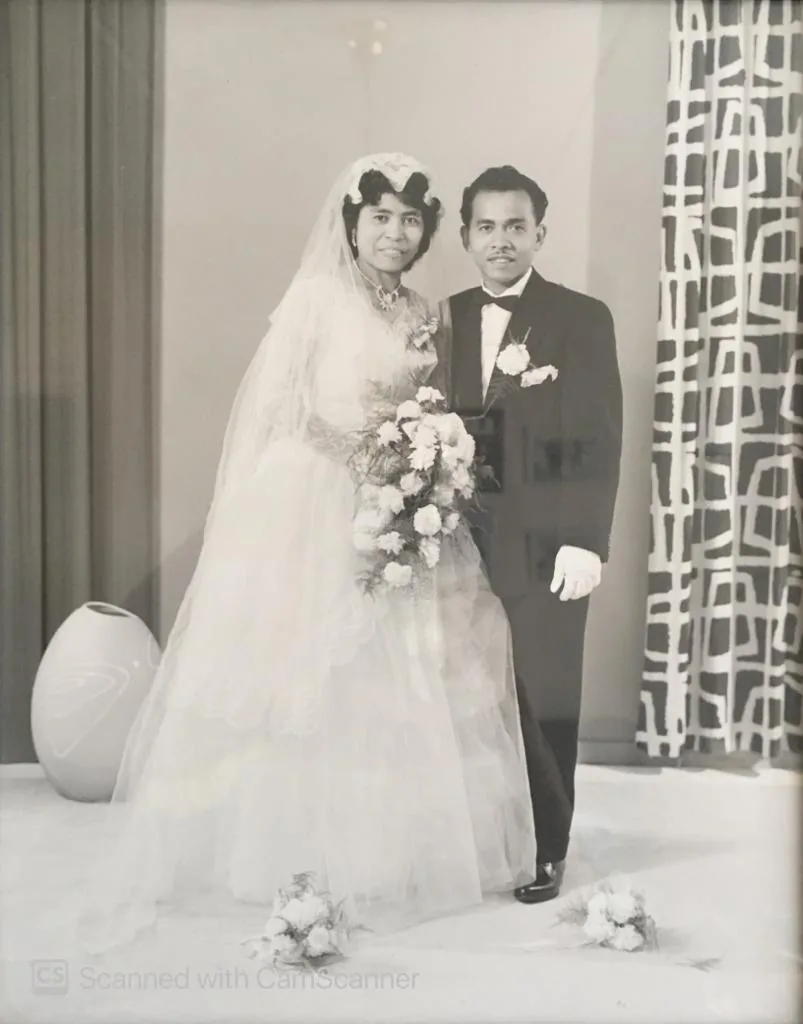
Albert Haulussy with his bride Inong Akerina. Married on 10 October 1958 in Staphorst. (photo from the Haulussy family archive)
Marriage In the end Albert did honour his mother Haulussy’s condition by marrying Inong Akerina, daughter of corporal Ferdinand Akerina, in 1958. From this marriage came 5 children. Sons Glenn, Stan, Romeo, daughter Ferenanda (Vero) and son Marthin. The couple went to live in Capelle aan den IJssel.
Stan: “My brother Glenn was once chairman of the board of the Moluccan Historical Museum. Mother Inong and sister Ferenanda died in 2013. Uncle Agam lives in Opheusden and aunt Benzelina is a widow and lives in Tiel.
With thanks to Ferry Akerina and Stan Akerina
Afterword by Stan Akerina My surname is Akerina. I have my mother’s surname, because I was the bride price my father had to pay. Opa Pede held on to an old tradition of the Akerina family. The place of an Akerina girl who leaves the family to marry must be filled. In principle by the firstborn (whether a girl or a boy) of that marriage. So that was Glenn. My father found that so hard that opa Pede relented and gave Glenn back. He did, however, want the next child that would be born. And that was me. That is why I was also raised by them. When I was 6 months old I was given to the mata rumah Akerina. From that moment on I was an anak harta of the Akerina family.
further reading:
An extensive description of the Goya see “transportschepen” website National Archives The Hague
Passenger list Goya see “Molukkers naar Nederland” website National Archives The Hague
Story of Joram Lawalata, grandson of the minister Johan Lawalata (1903-1989)