#
The importance of the fourth generation
A year ago I watched Coen Verbraak's documentary 'Molukkers in Nederland' with mixed feelings. Yes, at last our story became a little visible to a wide audience. But I was mildly surprised to see that the youngest of the fourteen people interviewed was 42 years old at the time.
That the voice of young Moluccans is not always taken seriously is nothing new. People often speak about, but not with, young Moluccans. At our editorial meetings at Museum Maluku, involving young Moluccans, and the fourth generation in particular, has therefore become a priority.
Not about, but with young Moluccans
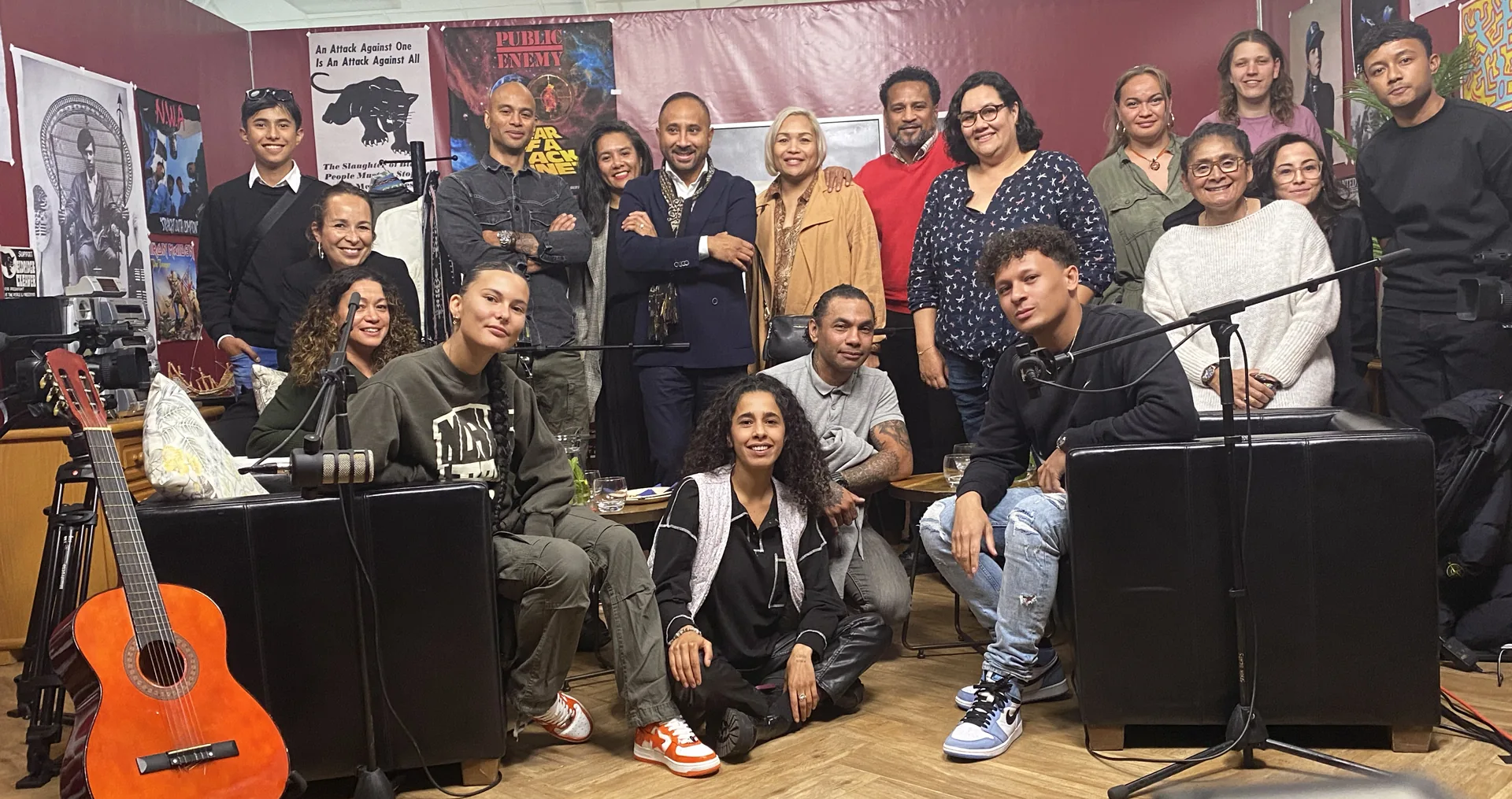
In the episodes of our series 'Maju Mundur – Duo Interviews' it is mostly young people who take a seat on our museum bench. In this setting they look at and discuss Moluccan cultural objects and works of art. In the coming video podcast about young Moluccans in the 1990s, young people of the fourth generation talk with the third generation. As an editorial team we are also working in the background on a project in which the fourth generation will take centre stage.
Another interesting project is our event 'The impact of Pattimura' during Hari Pattimura on 15 May. On that day Moluccans worldwide reflect on the life of Pattimura, who led the uprising against the Dutch occupation in the 19th century. Museum Maluku will give this day its own shape. Alongside Moluccan historians, young people will also take part in the panel discussion about Pattimura. As an editorial team we want to make sure that people do not only speak about young Moluccans, but with them.
The importance of involving young Moluccans speaks for itself, in my view. As happens between different generations, young people look at history, but above all at the future, in a different way. In the video podcast mentioned above, for instance, they discuss in what respects the Moluccan community in the Netherlands has changed since the 1990s. All these changes contribute to how different generations of Moluccans look at the Moluccan community and at Dutch society, and to how their view of the world has changed over the years.
Familiar & refreshing
While writing about these developments at Museum Maluku, it occurs to me that last week I saw how it can be done differently. The opposite of the setup of the Coen Verbraak documentary took place on 25 April at the RAI. Not in the main hall, but in a packed second hall, a Moluccan singer of the fourth generation was shining. Her name: Intan Joseph.
Whether the crowd was aware that this was Intan's first performance as a solo artist, I doubt. Intan began and ended her set with Moluccan classics. In between she sang her own released songs, and it worked, because the hall went completely wild.
Intan's performance felt familiar and refreshing at the same time. It is precisely that combination I embrace as a member of the Museum Maluku editorial team.
Editorial team Miguell Kaidel