Is it a political concept? A historical process? Or does it begin much closer to home, at the kitchen table, for example, between generations who carry the same history but do not always have the same words for it?
For many Moluccans the colonial past is not a closed chapter. It lives on in family stories, silences, memories, loss, pride and questions that sometimes remain unanswered for generations. The need to talk about it is often there, but how do you begin such a conversation? Which words do you use when the history is personal? And how do you talk about something you may never have fully learned to understand?
It is precisely these questions that are central to the research project Colonial Repair, in which Jessica Soedirgo, Charissa Leiwakabessy, Abigail Koopmans and Floris Vermeulen work together with the Moluccan community. Not about the community, but with the community. The research focuses on the question of how the colonial past still works through in the lives of Moluccans in the Netherlands today, and how room can be created for conversation, recognition and new perspectives.
During the research something remarkable emerged. There is far more need for conversation than is often assumed. “Moluccans don’t talk.” It is a statement many people recognise. As if silence were part of Moluccan identity.
But is that actually true?
Abigail Koopmans asks exactly that question: “People always say that Moluccans don’t talk, but is that so?” Perhaps the opposite is true.
Moluccans have always been storytellers. Our history was passed on orally for centuries. Songs, family lines, adat, village histories and memories travelled from generation to generation, often without ever being written down. It is precisely because of this that many Moluccan families today can still trace their origins back several generations. That is remarkable.
Many communities affected by colonialism lost a large part of their language, culture or collective memory. The Moluccan community knows that loss too. Languages disappeared, context was lost and stories were sometimes made smaller than they were. At the same time something has been preserved: the urge to pass on knowledge, memories and identity to one another.
Perhaps people were not always silent. Perhaps the questions were simply never asked in the right way.
Identity on the table
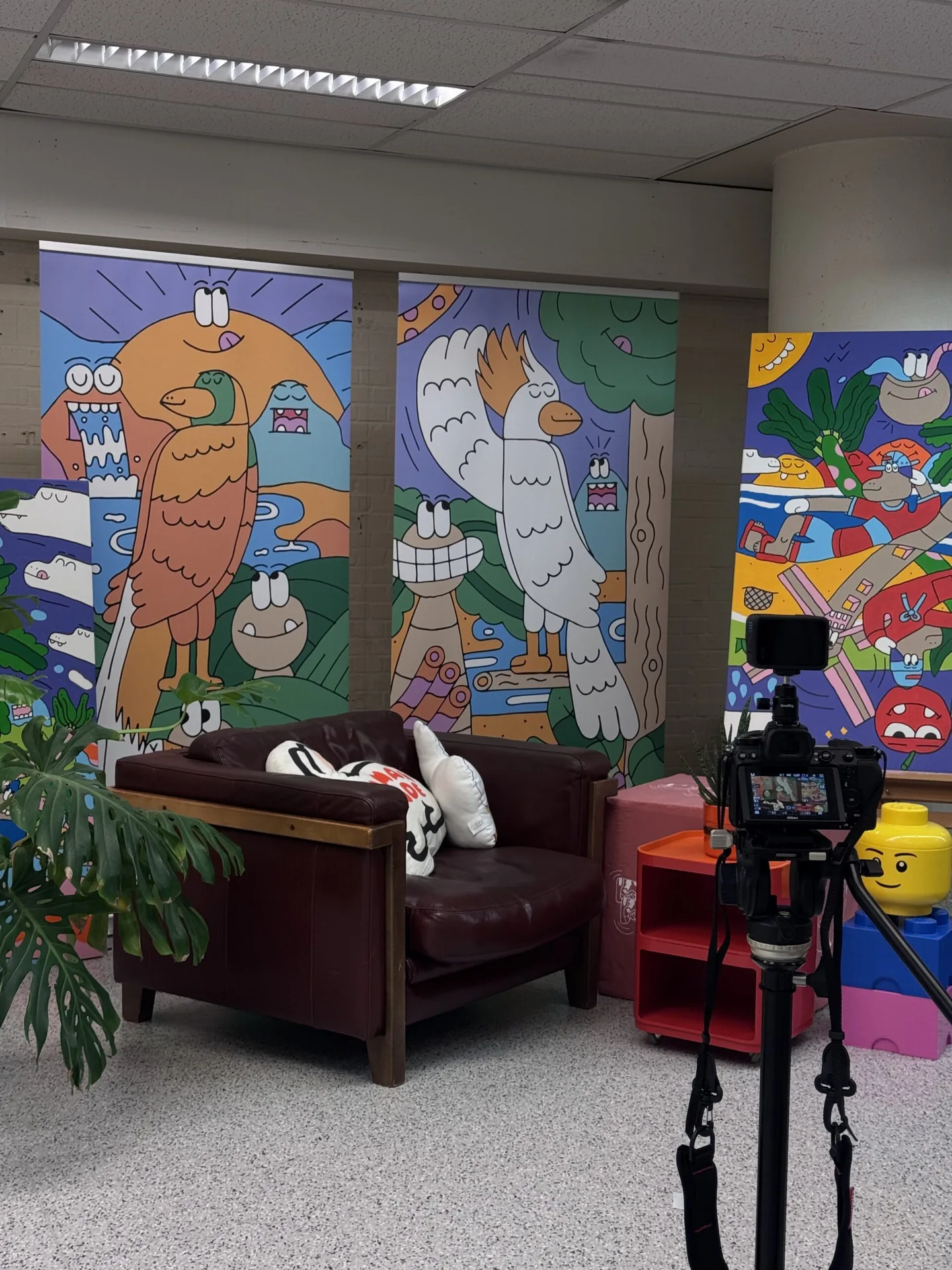
To get those conversations going, artist Lars Bogaers (SNARS) developed the Moluccan Identity Cards. Not a game and not a questionnaire, but a dialogue method.
The cards show recognisable Moluccan objects, concepts, symbols and images. Every card invites a personal story. Which aspects of your Moluccan identity do you carry with you? Which memories belong to them? Which values do you want to preserve? And which experiences have shaped your identity?
What makes it special is that during these sessions there is no right or wrong. Every participant brings a different story. And it is precisely in that that something arises which Charissa Leiwakabessy aptly describes as becoming a witness to each other’s story.
Where conversations sometimes start cautiously, room gradually opens up for memories that remained unspoken for years. Stories about migration, faith, family, loss and resilience, but also about humour, food, music and everyday memories, find their place at the table of their own accord.
Does that not make these gatherings heavy?
Above all they show how much richness is still there when people feel safe enough to share. Colonial repair is not an end point. It is often thought that repair is solely about political recognition or institutional change.
Those are important. But repair sometimes begins on a much smaller scale. With listening. With daring to be curious. With acknowledging that different generations experienced the same history in different ways.
Colonial repair is perhaps not a single event that sets the past right. Perhaps it is an ongoing process in which communities give new meaning to their history. Where room arises for multiple perspectives, for difficult conversations and for pride in what has been preserved despite everything.
That is precisely why these workshops fit so well with the mission of Museum Maluku. Not only preserving objects, but also the stories, memories and meanings that belong to them. Because heritage only truly lives when people can connect their own experiences to it. That fits the broader vision of Museum Maluku of being a living museum in which community, dialogue and a multiplicity of voices are central.
Join in!
This summer the Moluccan Identity Cards workshops can be visited in various places in the Netherlands.
Sunday 2 August
Queer Pacific Collective x MALIB
Podium Mozaïek, Amsterdam
15.00 – 17.00
Thursday 13 August
Workshop Moluccan Identity Cards
Pakhuis de Zwijger, Amsterdam
16.00 – 17.15
Saturday 22 August (subject to confirmation)
Molukkers aan de Maas
Wereldmuseum Rotterdam
More information and registration via:
bijlmerparktheater.nl
podiummozaiek.nl
dezwijger.nl
wereldmuseum.nl
Perhaps one conversation does not change history.
But every story that is shared, every perspective that is heard and every memory that is recorded brings us one step closer to a more complete picture of our shared past.
And perhaps colonial repair begins exactly there. With someone who dares to ask the first question.
Would you like to see the whole interview? https://www.youtube.com/watch?v=jCM7uEzvmHM