#
Greetings from Ridderkerk: iftar in the Moluccan mosque
Welcome to 'Greetings from…', where we share remarkable stories that highlight Moluccan art, culture and heritage. Last month, from 10 March to 9 April, many people celebrated the holy month of Ramadan. During this time our collections officer Yanise Zijlstra took part on behalf of Museum Maluku in a communal iftar at the Moluccan mosque in Ridderkerk, 'Bait Al-Rahmaan' (house of the merciful), at the invitation of Djannah Ollong. Djannah is part of the Wyldemerck archaeology project, which we told you about in the previous 'Greetings from…' . Her father was the chairman of the first Moluccan student association in Vlissingen. Even so he left for the Wyldemerck, and eventually with his family to Ridderkerk, where we meet Djannah in the mosque.
Waiting for sunset "The first stone was laid in 1983," Djannah Ollong says as we stand in the prayer hall of the mosque. There are no chairs or tables. A warm green carpet with baroque patterns covers the floor, while a prayer niche points east and wooden pillars give strength to the distinctive dome. The last daylight filters through small windows and fills the space. Men gradually gather in the prayer hall, some in small groups on the carpet, others standing against the wall. At the back a black curtain divides the space. Behind it the voices of women and children can be heard. With the sun slowly setting, the Maghrib prayer (evening prayer) and then the iftar are about to begin.
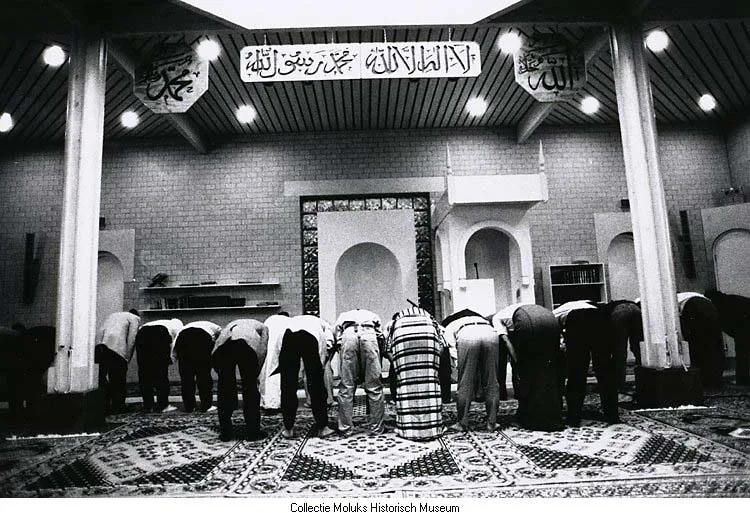
Prayer in the mosque.
From dwelling to mosque The Moluccan mosque was given in 1984 by the Dutch government to the first generation of Muslim Moluccans in Ridderkerk. The Islamic Moluccan community was housed in Waalwijk and Ridderkerk after the closure of the Wyldemerck camp near Balk in 1969. There, from 1956, stood a mosque with a minaret (the first in the Netherlands). But in Ridderkerk the municipality allocated a dwelling as a mosque, which soon proved too small. There are stories of people hurrying to the mosque, sometimes even sprinting, because "if you were late, there was no room left. Full was full. For the festivals we even had to hire a sports hall," Djannah remembers. A delegation reminded the Dutch government of a promise: "The Moluccan community is entitled to a house of prayer if it is large enough."
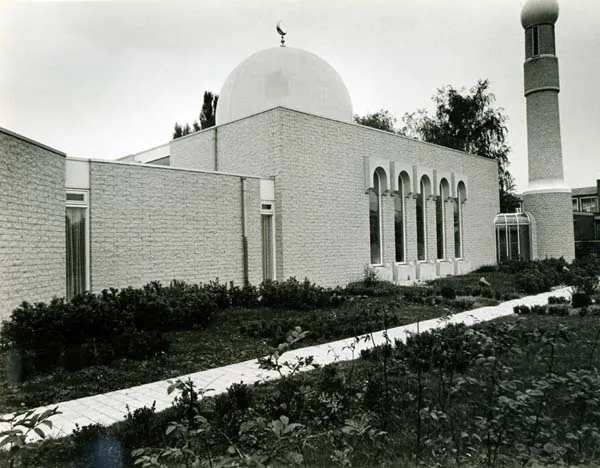
Mosque in Ridderkerk.
A legacy: a place of gathering And so the first stone was laid in 1983. "That is the greatest thing you can leave behind for your children and descendants," Djannah says. "Our (grand)parents were KNIL soldiers. There were no scholars or experts on Islam among them. And yet they left a mosque behind." It is a fine demonstration of this community's resilience. And now we stand in this Moluccan heritage, which will keep telling the story of Muslim Moluccans in the Netherlands. The first generation left more than a house of prayer. The mosque is more than a place to pray. "It is a place of gathering for Islamic Moluccan communities," Djannah says. "When there is a wedding, it is held here. When someone dies, the funeral prayer is held here. When there is a memorial service, everything takes place in these rooms." So the 'house of the merciful' is and remains a Moluccan mosque.
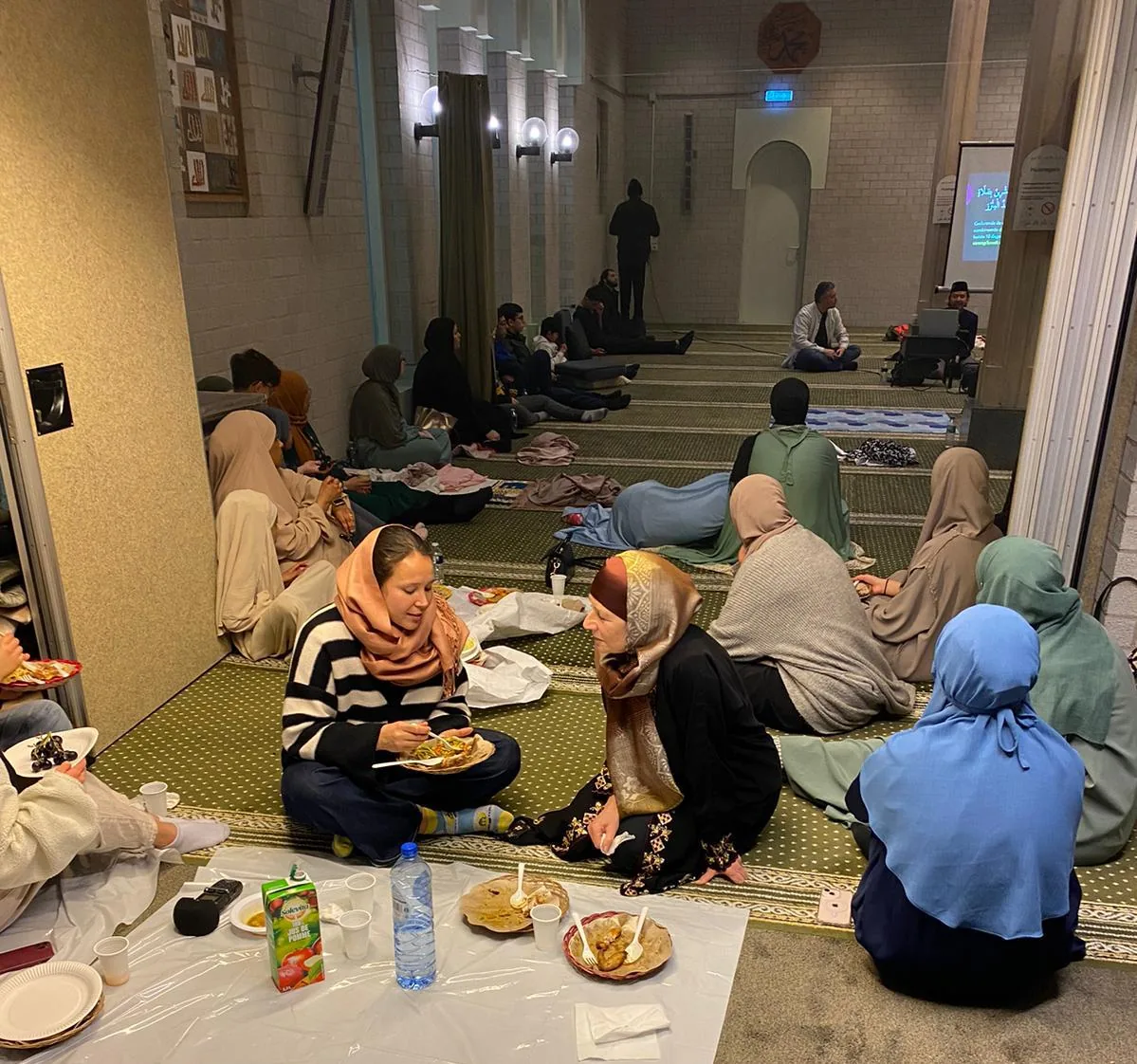
Everyone is welcome and brings something The Moluccan mosque welcomes more cultures and has become a reflection of society. Moroccan, Syrian, Afghan, Dutch and more. As the sun almost sets, men and women separate into their own spaces. A table full of sweets and drinks is ready to break the fast, traditionally with dates and a glass of water. But the bright green kelepon balls are of course not missing in a Moluccan mosque. Before we begin the communal iftar, the Maghrib prayer is performed. The mix of cultures translates clearly onto the long buffet table set out for the iftar. Pans and oven dishes with nasi goreng, telor, beautiful Afghan and Syrian rice dishes, spicy curries, lentil soup, pastas and of course chicken drumsticks. Makan dulu.