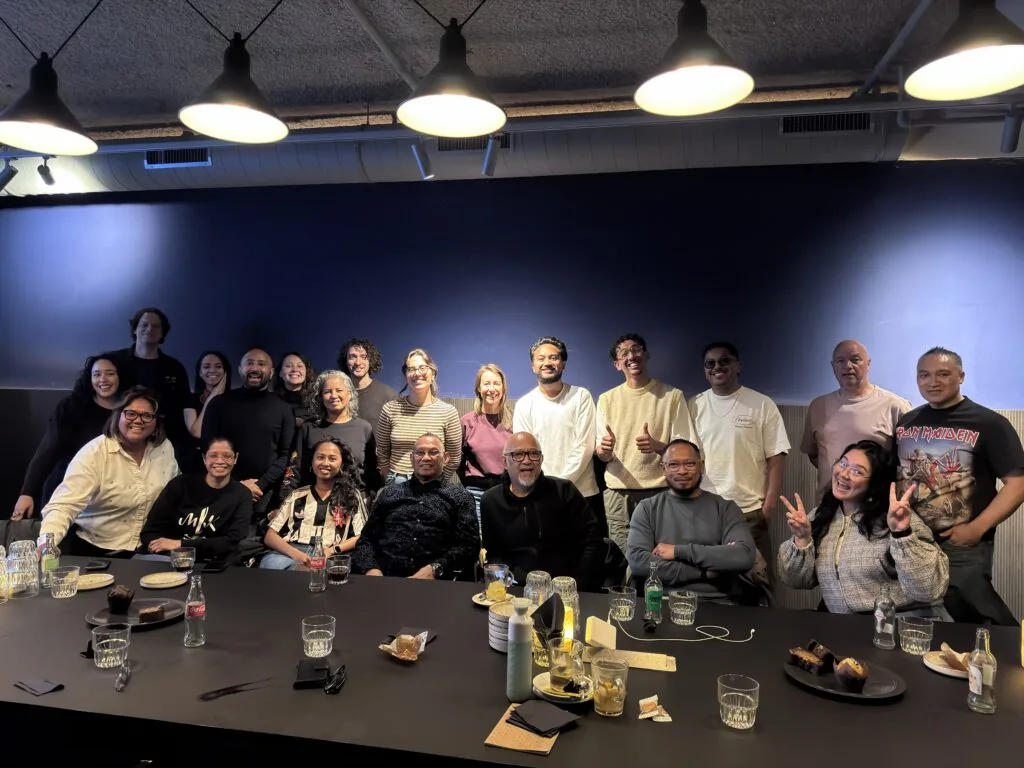
That is exactly where Sounds Familiar touches the heart of the matter. In this research programme, Sound & Vision works with various communities, among them Museum Maluku, to make audiovisual archives more inclusive and more layered. Not only by opening up material, but above all by adding perspectives that were long missing.
During the co-creation sessions in Hilversum that becomes immediately palpable. Fragments once broadcast as finished stories turn out to break open again as soon as they are viewed through other eyes. For Willem Hully (second generation, director and programme maker) this was a new perspective on his own work. During one of the sessions he saw a fragment again from the NMO (Dutch Muslim Broadcasting), images he had once edited himself, early in his career as a video editor. What was technical work at the time suddenly took on a different weight. He describes how the images still stir something in him. Not only because of the content, but because of the awareness of context, or precisely the lack of it. To the almost obvious question of whether he would edit it differently today, the answer comes without hesitation: yes. Where the narrative used to be determined implicitly from a dominant, largely white perspective, he now sees room and a need for more layeredness. "I would make much more room for the storyline now."
Recognition, a say, and the strength of co-creation
The first session made immediately clear how personal and loaded the archive can be. A fragment from the episode Tjandu (loosely translated: drugs) visibly moved the group. In the fragment a man talks about his addiction in the 1980s, his search for (spiritual) help, his estrangement from family and surroundings, and finally his way back to himself and his faith.
For many participants this was not a distant story but recognition. The images evoked memories of a period in which drug problems cut deep into Moluccan communities. Room emerged to share experiences, sometimes cautiously, sometimes openly. At the same time another story became visible: how within families this period in fact became a reason for involvement and care, and how it motivated some to work in (addiction) care to support their own community.
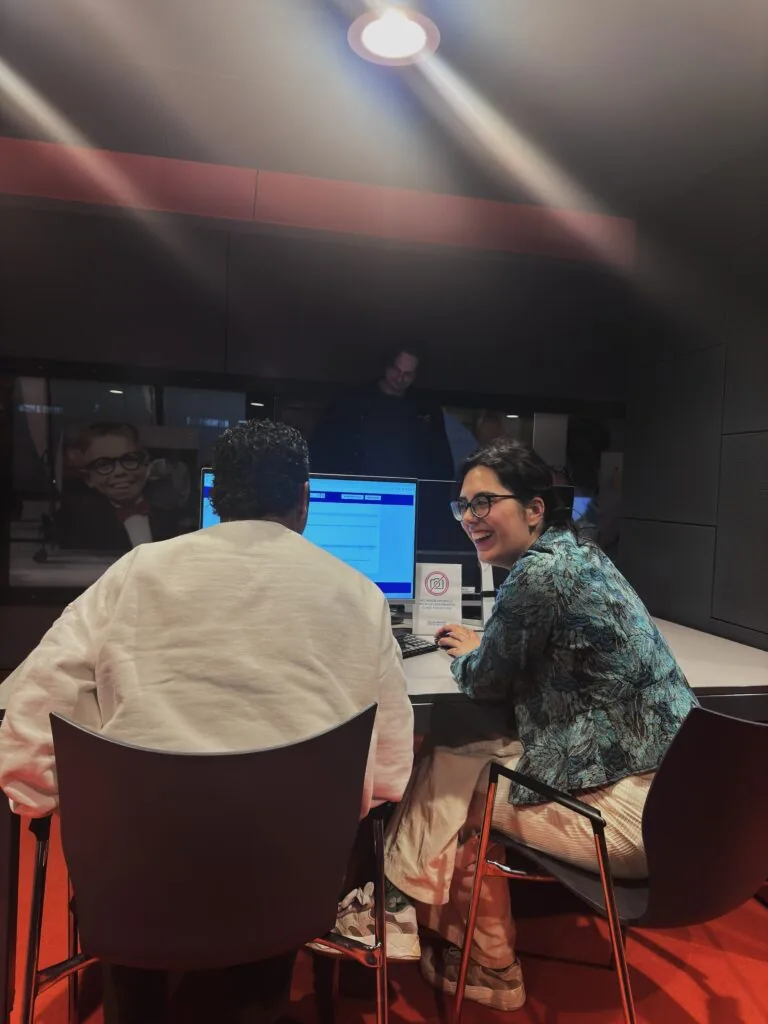
"During a Sounds Familiar co-creation session at Sound & Vision, participants work together at a computer searching audiovisual archive material. In an informal setting, knowledge is shared, there is laughter, and new perspectives within existing images are actively sought."
For Adája Matahelumual (third generation, researcher and maker) too, Sounds Familiar became not only a research environment but also a place of recognition. In other people's stories she recognised elements of her own background, her family history and her identity. That shared recognition made the sessions not only valuable in substance but also familiar and connecting.
The three co-creation sessions form a focused working method in this. In small groups, existing Moluccan archive material is viewed together and given new interpretation. Not as a correction of the past, but as an addition to existing descriptions, with more context, more voices and more precision. The concluding search session then makes visible where systems fall short: where stories are hard to find, have been categorised differently, or are missing altogether.
She describes how looking at archive material together and exchanging perspectives created room for new insights. Not only about what is visible, but precisely also about what is missing. Listening to each other's stories, without judgement and with attention, she experiences as an essential part of the process. At the same time she stresses how important it is that communities themselves have a say in how their history is described and retrieved. For her that is where the strength of Sounds Familiar lies: in actively making room for voices that have been overlooked for too long.
A concrete example makes this immediately clear. One of the groups went looking for fragments of traditional Moluccan dances and used search terms such as "Moluccan war dance", "Tjakalele" and "Menari Lenso". To their surprise this yielded barely any results. Not because the material is not there, but because it has been described differently.
Many of these fragments date from before 2000, when terminology was used differently. Moluccan communities were then often referred to as "Ambonese" and traditional dances as "folk dances". By searching from present-day, culturally specific terms, relevant images remained out of view. This example underlines the core of the project: archives are not neutral. The way material has been described determines what becomes visible and what does not. Enriching and updating this metadata is therefore essential to making stories more findable and more representative.
What happens here is fundamentally different from traditional archive formation. It is not one-way traffic, but a process of shared ownership. This project makes clear that archives are not static collections but living structures. They are shaped continuously, by choices, by perspectives, and by who does and does not help write them.