It took a while before a second book appeared after 'Njonja' (2016), which was about Njonja Soumokil, wife of Chris Soumokil, the second president of the Republic of the South Moluccas. But with 'Barak 85 kamer 10' (Barrack 85 room 10), Dinah Marijanan makes another important literary contribution to preserving Moluccan heritage. In the book, which she presented on 16 November together with the Moluks Historisch Museum at Museum Sophiahof, she returns to camp Westerbork with her sister, who has dementia, in the hope that the visit will bring memories back.
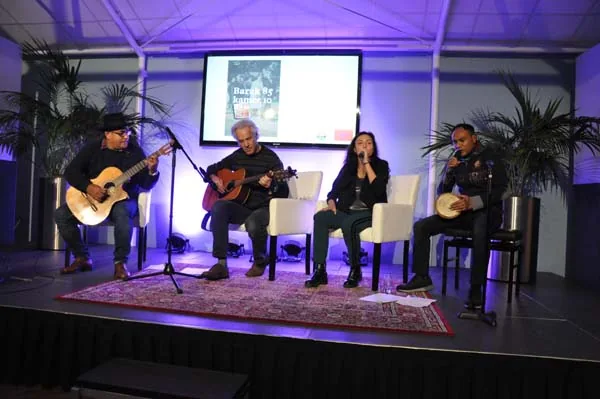
Before a large audience, the book was officially handed over to two sons of Dinah Marijanan's sister. 'Barack 85 room 10' was the family's address in Schattenberg. Dinah lived there from the age of five to nine with her older sister Marie and the rest of the family. Son Addy: "It is a loaded day and it is hard to come here, because it was not so long ago that mother died. But it is a fine moment at the same time." Son Marcel is proud of his aunt: "The story she has written down is not known to many. Not to people of my generation, let alone to younger generations."
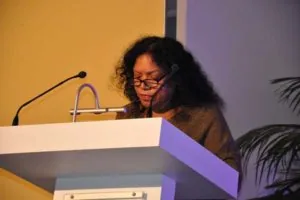
During the book presentation Dinah read several passages from the book. About how the parents' traumas resulted in a harsh upbringing, for instance. Often it did not stop at a slap: 'The worst thing you ever told me about was a boy who stood on a chair in his underwear in front of the window of his barrack, his hands tied behind his back. So that everyone could see him. His father made his little brother round up as many children as possible to come and watch the spectacle. And that is not even to mention uncles who took the belt to their children at the slightest provocation', the book describes. Marijanan: "I am very aware that in doing this I am bringing out things people would rather not hear. But the effect of this upbringing on my generation is serious. In the 1970s people chose violent actions. That is not so strange when you grow up in a world full of violence and aggression."
With this book, Dinah Marijanan also wants to reach the younger generation of Moluccans and people who did not experience life in the Moluccan camps themselves. Especially for the book presentation Dinah had invited two 'first readers': Jacintha Pesulima and Jan van Leeuwen. Jacintha recognised a great deal in the book: "My mother told similar stories about the Genapium camp in Gennep. Sometimes I had to put the book down. What broke my heart was the passage describing how Moluccan children were given the names of members of the Dutch royal family, so loyal were they to the Netherlands. My mother is called Wilhelmina."
-
-
-
'She is still staring at me with wet eyes. There is one more thing I want to share with her. 'Fathers like mine gave their first son the name Bernard and their daughters, born here, the names Juliana, Christina, Wilhelmina or Beatrix. Even after they were dismissed from military service on arrival here, they remained loyal to the Dutch royal house.''(From: Barak 85 kamer 10)
Jan van Leeuwen is married to a Moluccan woman, but she only came to the Netherlands in 1985. The history of the arrival in 1951 and the reception that followed was unknown to him for a long time: "I read the book in one go. Until 1975 I had never heard of Moluccans. What stayed with me from the book is the powerlessness of the parents, the drug addiction of the second generation and also the passage in which Dinah describes how astonished she is when a Dutch girl kisses her parents. These forms of affection did not exist in the Moluccan families she knew. My own experience of that is different."
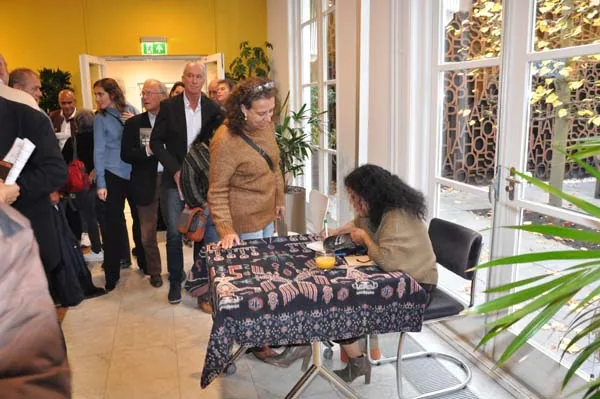
Dinah Marijanan's book is on sale for 17.95 euros in the museum shop at Museum Sophiahof, in various bookshops and of course online.