Speed dating during the Digital Decolonising course
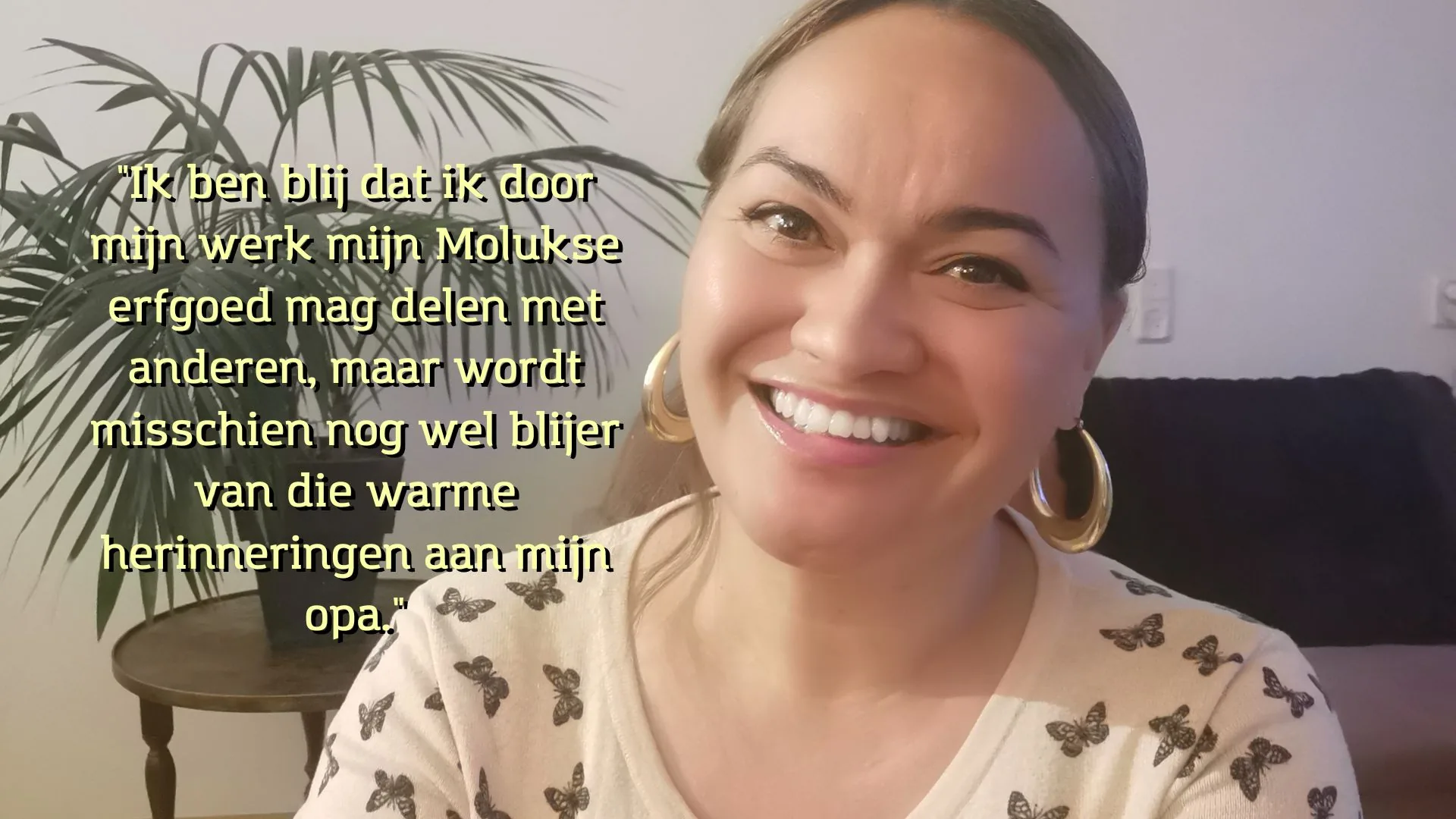
In the last week of February 2023 our colleague Jaimie Pattipeilohy was invited as a speaker for the Heritage Lab’s ‘Digital Decolonising’ course. The course was aimed at people who want to orient themselves practically around decolonising and to learn more about what they can do themselves. Drawing on her knowledge and experience as digitisation project manager at Museum Maluku, Jaimie went speed dating with various participants and discussed themes such as decolonisation, diversity and inclusion. For two hours she had fascinating conversations; she takes you along.
Online course digital decolonising
As digitisation project manager at Museum Maluku I have, since 2021, been responsible for coordinating and carrying out various digitisation projects, among other things. My work mostly takes place behind the scenes. Small changes you may have noticed are, for example, the digital friends’ pass that gives you access to Museum Sophiahof and the online donation form. Making a donation is now easy via iDeal.
Over the past year I have mainly been busy with preparations for digitising the collection, arranging the two new locations the collection is moving to, and all the organisational matters involved in getting the collection to those locations.
Last week I was invited as a speaker for the Heritage Lab’s ‘Digital Decolonising’ course. Together with NDE (Netwerk Digitaal Erfgoed), the Heritage Lab organises further training for heritage professionals. As part of the course, participants could go ‘speed dating’ with invited speakers. They could choose for themselves who they wanted to talk to for 20 minutes and submitted a question or topic in advance. I had never been asked for anything like this before and modestly wondered what I could contribute. I did not train as an archivist or a curator, I am a project manager. What could I teach these heritage professionals? Then it occurred to me that the theme of Digital Decolonising fits my work at the museum perfectly. I can talk about that for hours. It will be fine.
Fittingly for the theme, the event was held digitally via Zoom. Every speaker had their own breakout room. Between the speed dates in the breakout rooms there was also a general room where everyone could join. The event opened in that general room. I enjoyed seeing Moluccan names among those present. Jeftha Pattikawa (National Archives) was there as a speaker and Asmara Pelupessy(Heritage Lab) did the organising. It gave me a sense of representation. And because this particular event had Digital Decolonising as its theme, that sense of representation carried extra weight.
Speed dating with participants
For two hours I had interesting conversations with people from all sorts of corners of the cultural field. Among others, I spoke with a curator from **Museon-Omniversum **about whether or not to revise object descriptions written through a colonial lens, and with a staff member of the Catholic Documentation Centre – part of Radboud University Nijmegen – about a digitisation project to encourage the exchange of archive material from the colonial era with Indonesia.
Another special speed date was with a researcher on a project about mission and missionary collections held outside museums. During her research she came across archives dating from the colonial era of the former Dutch East Indies. Alongside archives, the collections she is researching also contain images of missionary work in, among other places, the Moluccas. These items are managed by private collections or foundations. “The people who manage such a collection are often elderly,” she says. “Sometimes they do not really know what will happen to the collection if they die, because there are no successors or there is no money to preserve it.” She asked whether Museum Maluku would be interested in such collections. “Absolutely,” I said. Although she had no concrete offer yet, she would keep us in mind as her research continues. Off screen she reached for something on her desk and showed the book Molukse Kerk in de Polder by the Zendingserfgoed foundation. I did not recognise the book straight away, but after a quick search on our website I see that the publication is included in our library. We leafed through the book together and spoke briefly about the major role the church played within the Moluccan community at the time.
Reflection & memories
After the event I made a cup of tea and flopped onto the sofa. I reflected for a while on the conversations I had had and on how Moluccan-Dutch history is still so often unknown, even to professionals working in the heritage field. I had no expectations of the day beforehand, but I am glad I took part. Not only could I share my professional experience, but at the same time my personal heritage as well.
While writing this piece I think back to the last conversation, about the Moluccan church. My thoughts go to my ancestors in the Moluccas who were converted to Christianity by missionaries. I think of my grandfather and the Sundays when the whole family came to his house. It gives me a warm feeling in my stomach. Or is that the tea after all? I am glad that my work lets me share my Moluccan heritage with others, but perhaps those warm memories of my grandfather make me even happier.