#
Learning, sharing and connecting in Drenthe
Earlier this month we swapped our workplaces in The Hague and Rotterdam for a day in the far north. In and around Assen we visited three heritage institutions, each connected in its own way to Moluccan heritage: the Westerbork Memorial Centre, the Drents Archief and the Drents Museum.
The day centred on collaboration and sharing knowledge. How can we open up our collections digitally, strengthen one another and together make Moluccan stories visible within wider Dutch heritage? As Museum Maluku we see making those connections as our task.
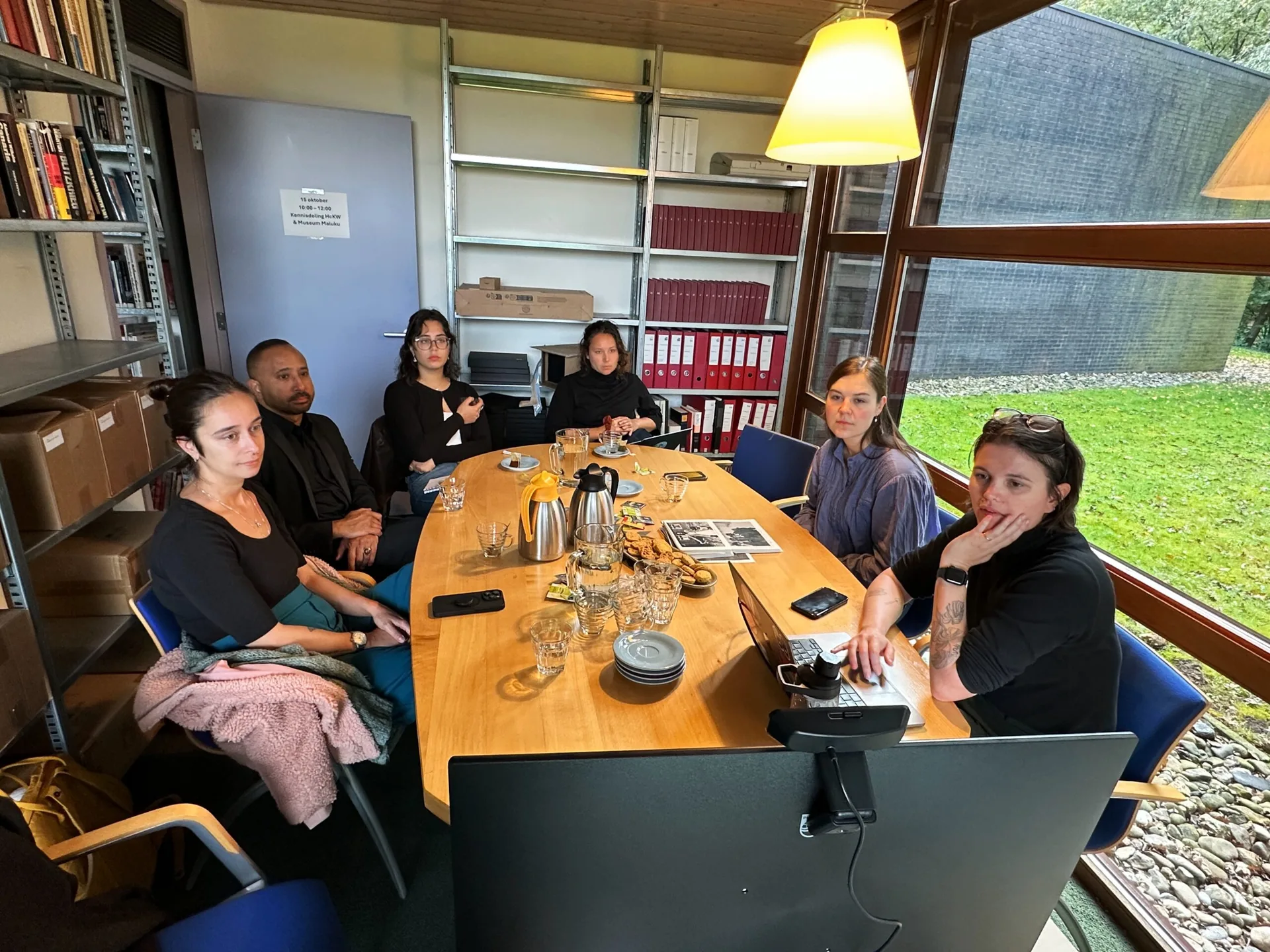
Westerbork Memorial Centre
At the Memorial Centre we talked about digitisation and crowdsourcing. Like us, they are working on making their collections digitally accessible. We shared experiences: what do you run into, how do you deal with matters such as copyright and privacy, and how do you involve communities in adding to the stories?
A fine example was their project in a Moluccan neighbourhood. With an enormous stack of printed photographs, staff went to the community centre, where older people sat down together at a table to recognise faces and add names. It yielded not only a great deal of valuable data but also an enjoyable afternoon full of memories.
Drents Archief
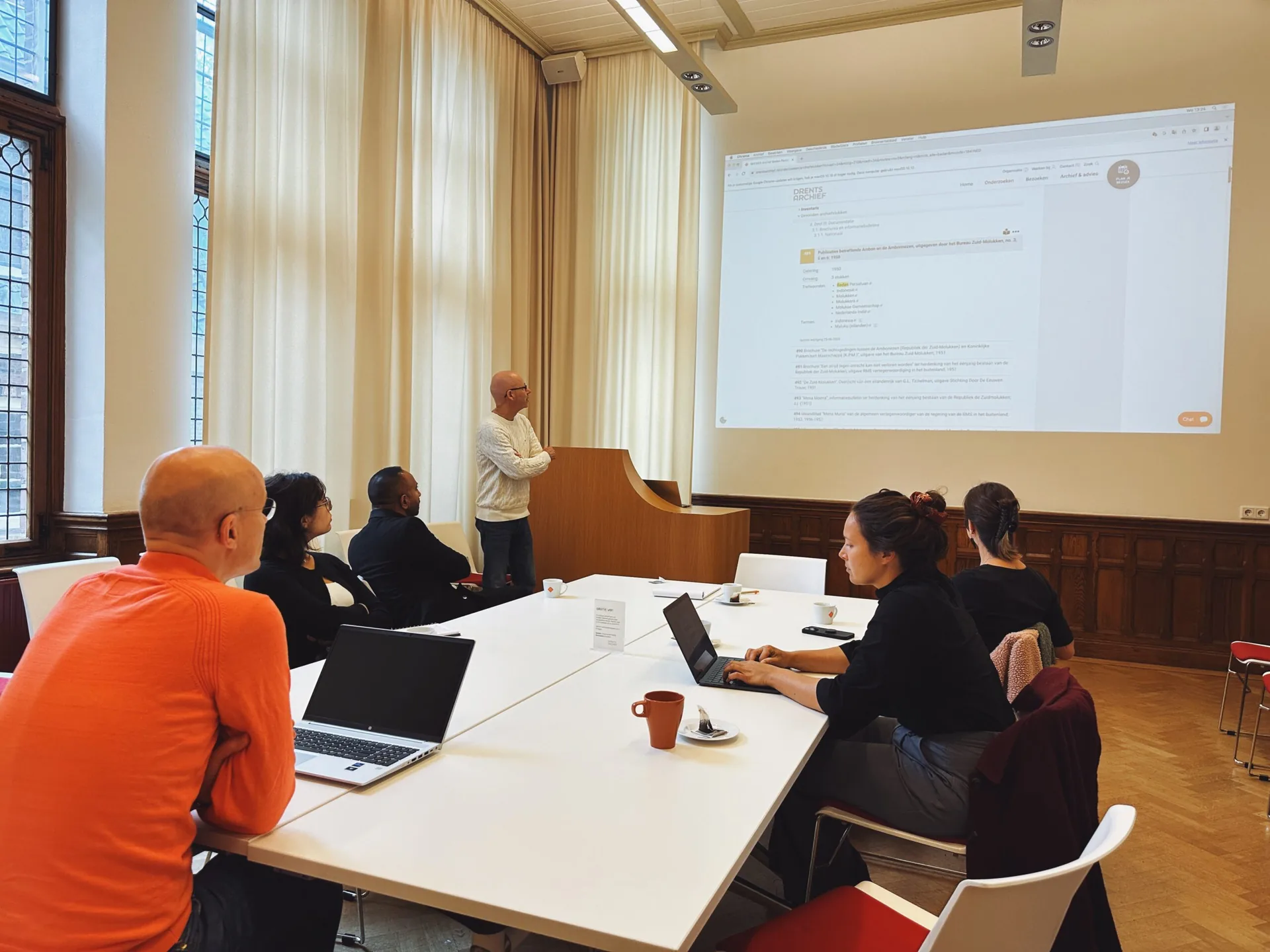
At the Drents Archief, too, sharing knowledge was central. Like us, they hold part of the archive of the Badan Persatuan (BP), the interest organisation founded in 1966 that long acted as the most important representative of Moluccans in the Netherlands. The archives complement each other well. The part in the Drents Archief covers the period from 1950 to 2004 and contains, among other things, documents about the rapprochement between the Dutch government and the Moluccan communities, the Inspraakorgaan Welzijn Molukkers (IWM) and the Lubbers–Metiarij agreement of 1986. There are also reports of orientation trips by Moluccans from the Netherlands to the Moluccas in 1978. The part held by Museum Maluku covers mainly the period from 1950 to 1970 and includes papers of the Bureau Zuid-Molukken (BZM), such as telegrams and correspondence about the RMS struggle and the occupation of the Indonesian ambassador's official residence in Wassenaar. During the visit we talked about how we can make this coherence more visible. In that way we ensure that the collections strengthen one another and become easier for researchers and other interested people to find.
Drents Museum
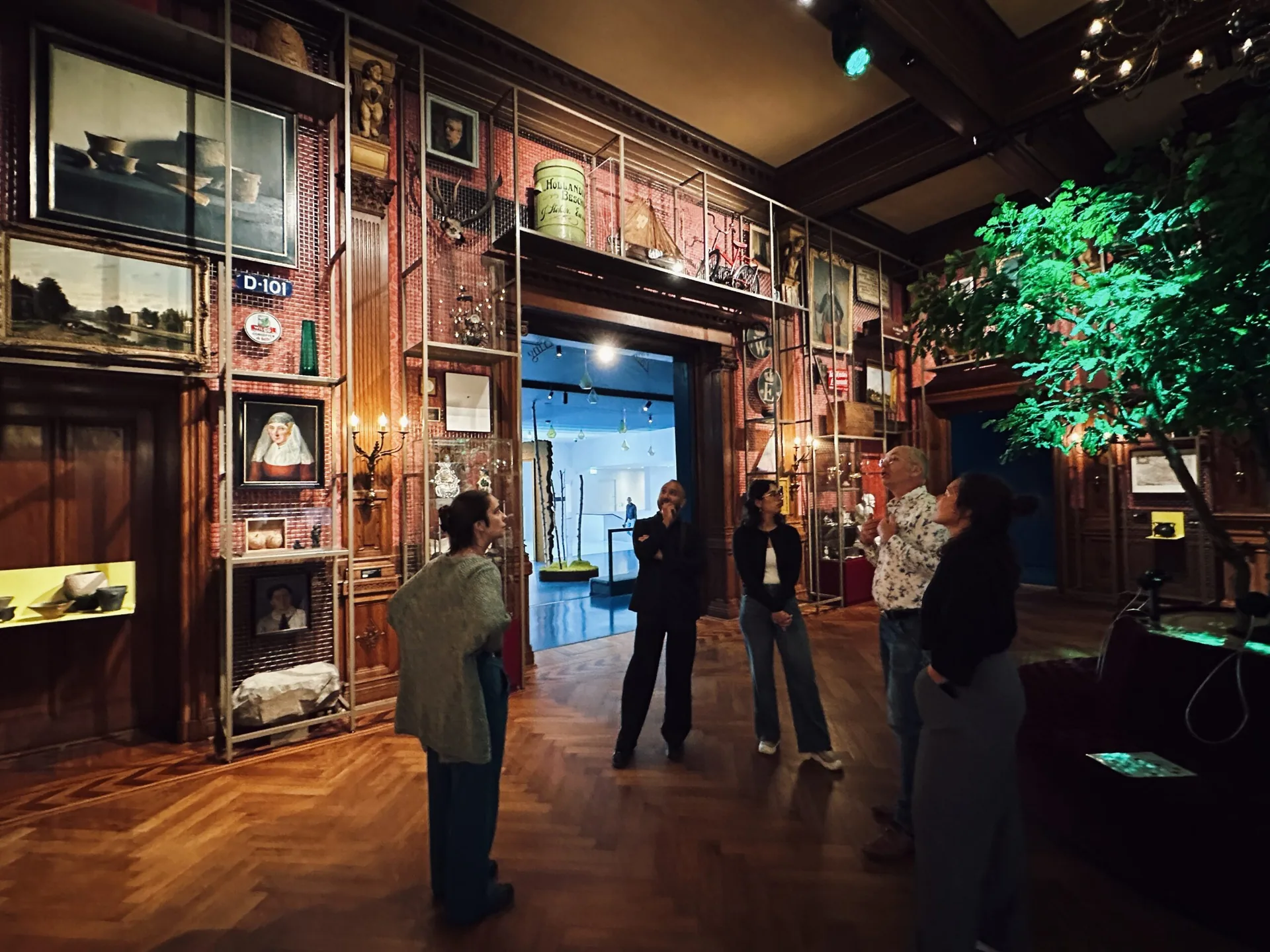
The visit to the Drents Museum centred on meeting and collaboration. Museum Maluku was a partner of the exhibition Menyala – The extraordinary history of the Moluccans in Drenthe, on view at the Drents Museum in 2023. In that same year Museum Maluku signed a declaration of intent together with the Drents Museum and Stichting Heka Leka to support the future development of Museum Siwalima in Ambon. We were given a tour of Labyrinthia, the Drents Museum's permanent collection display, and talked about how we can keep finding one another in new initiatives and shared ambitions.
"We see the collaboration with (Drenthe) heritage partners as a way of placing Moluccan history in context anew. Not as a separate chapter, but as part of a larger story. We believe that the Moluccan story lives not only in the Moluccan community, but also in the archives, depots and exhibitions of our partners. We are taking steps to connect these with one another," says director Henry Timisela.
Digitisation project leader Yanise Zijlstra adds: "Digitisation is the first step for all of us. But the next step is at least as important: thinking about how best to open up our collections. Many institutions, such as Museum Maluku, the Westerbork Memorial Centre and the Drents Archief, have collections that touch on one another. By working together and sharing knowledge, we can align our collections better. In that way we strengthen one another and make sure our collections become available to our public in an accessible, careful way."